This week, Firmus withdrew its application to list on the ASX, citing recent market volatility and prevailing market conditions. The float was to be one of the biggest in Australian history, at a $44 billion valuation. The company now says it will pursue capital from private markets and consider alternative public and private market options.
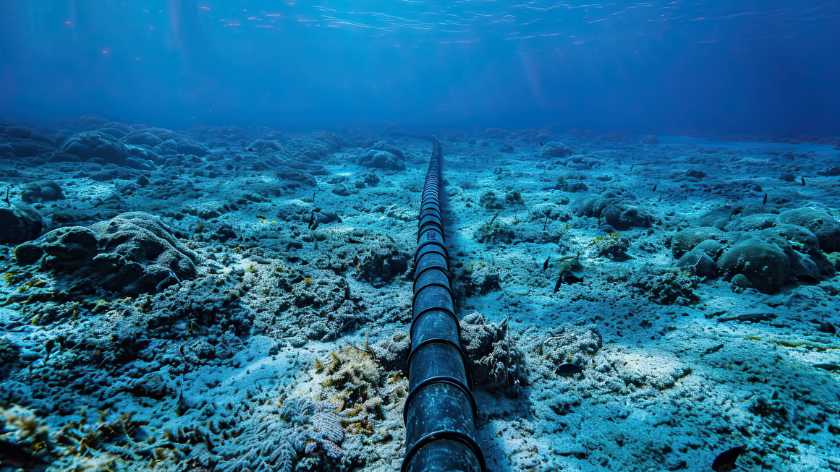
For most of the market, this is a story about AI valuations and investor appetite. For those of us in subsea cables, it raises a more specific question: what happens to APX East?
The connection
In early September, Firmus committed approximately US$300 million for up to 150Tbps of dedicated capacity between Australia and the US over 25 years, becoming the cornerstone customer of SUBCO’s proposed system. The target is Ready for Service in Q4 2028. For a cable still in development, that kind of anchor commitment is what turns an ambitious route into something financiers and suppliers can work with.
What we don’t know
Plenty. The public announcement gave no landing locations, supplier, installation schedule or financing breakdown beyond the investment amount, contracted capacity, term and target date. We don’t know how the US$300 million is structured, what is payable and when, or what protections exist if a customer’s funding position changes. Those details matter far more than the headlines.
Why I wouldn’t call it dead
Firmus isn’t a company without options. It is Nvidia-backed and in talks with existing investors and others for a private round, and its growth case rests on large compute programs in Australia and Southeast Asia. The cable was bought to carry the output of those facilities, and that demand hasn’t vanished because a share offer didn’t price. Private capital may be more expensive and more dilutive, but that is a very different thing from no capital.
Why it still matters
The risk is less about Firmus’s survival than about timing and bankability. Subsea cables run on tight sequences: anchor commitments, financing, supplier slots, permits, marine surveys. A Q4 2028 delivery date leaves little slack for a system without an announced supplier. If lenders or suppliers want more certainty about the anchor customer’s funding, the final investment decision could slide, and in this industry a slid decision usually means a slid RFS.
It also exposes a broader concentration issue. AI-driven demand is reshaping how new trans-Pacific capacity gets underwritten, and a single well-capitalised anchor can make or break a project’s financing story. When that anchor’s own capital-raising turns uncertain, the whole structure gets a harder look.