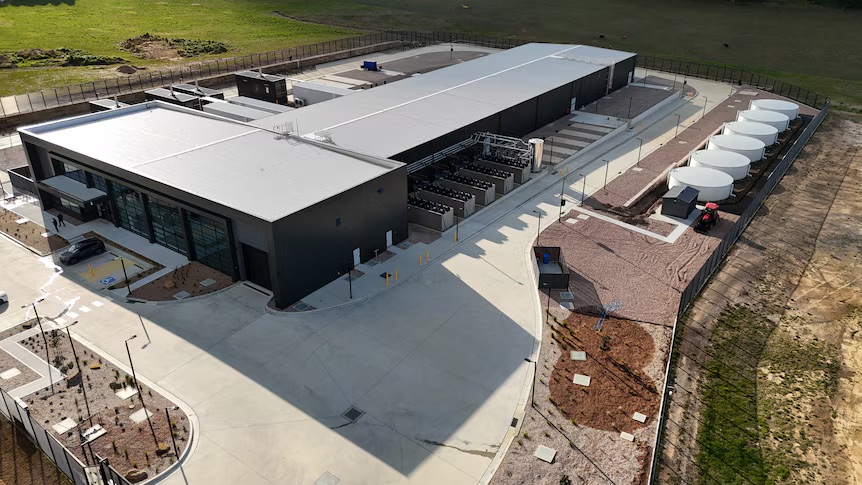
Centuria Industrial REIT (ASX: CIP), Australia’s largest domestic pure-play industrial REIT, is developing a second data centre at its existing Clayton site in Melbourne’s south-east, after agreeing with tenant Telstra to partially surrender underused land on the property. The new facility, to be built at 1822 Dandenong Road, will offer up to 40 megawatts of capacity and sit immediately adjacent to the existing Telstra-occupied data centre.
The deal lets Centuria add significant new data centre capacity without acquiring additional land or materially disrupting Telstra’s operations on site. Centuria originally bought the Clayton property, which includes two data centres totalling around 12MW, in 2020 for A$417 million as part of a long-term sale-and-leaseback arrangement, granting Telstra a 30-year lease with two 10-year extension options.
A development application for the new facility was lodged earlier in 2026, and Centuria confirmed the plan again in its Q1 FY2026 results. Centuria fund manager Grant Nichols said the company’s in-house development expertise lets it capture value from underutilised space at a site he described as well-connected, and that the new facility would let Centuria serve a wider range of potential data centre and AI infrastructure tenants.
Industry tracking site DataCenterMap lists the project’s current stage as “Announced,” with development approvals and power allocation underway; construction is expected to begin once Telstra’s existing infrastructure is decommissioned, targeted for mid-2027.
The Clayton project is part of a broader push by Centuria into data centres. The company’s data centre portfolio has grown to more than $450 million in value as of December 2025, and it has stated an ambition to exceed 250MW of data centre capacity across Australia, having already submitted power applications on several other industrial sites it owns. Centuria has also partnered with ResetData to deliver what it describes as Australia’s first sovereign AI Factory and largest supercomputer, converting underused Melbourne office space into AI infrastructure — a separate initiative to the Clayton data centre build.
The Clayton expansion is a useful illustration of a wider trend reshaping Melbourne’s industrial property market: with data centre demand surging and land near major power infrastructure increasingly scarce, established industrial landlords are finding they don’t need new greenfield sites to participate in the AI infrastructure boom — they can unlock capacity from land they already own, as Centuria has done here, or from tenants willing to give up underused portions of existing leases. As that dynamic continues, access to grid capacity, rather than available land, is increasingly becoming the real constraint determining where the next wave of Melbourne data centres can be built.