Direct trains are running again between Bristol Parkway and Swindon this morning after Network Rail completed a four-week programme of work to improve the railway for passengers and freight users.
Extensive work has been completed in and around Chipping Sodbury tunnel to improve the reliability and resilience of the railway, including major track renewals, drainage improvements, tunnel repairs and the strengthening of railway embankments.
Inside Chipping Sodbury tunnel, engineers installed more than 3,000 yards of new rail, sleepers and ballast (track stone), creating a stronger and more reliable track for passenger and freight services. Teams also cleared drainage channels and carried out repairs to the tunnel lining to help protect the railway from water-related issues.
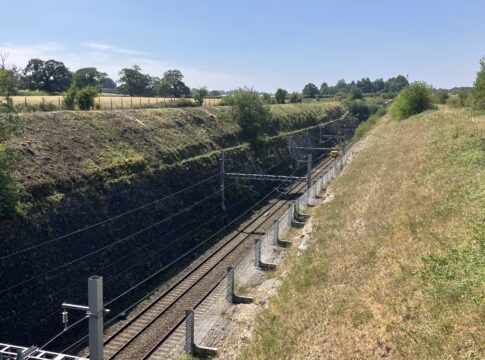
To the east of the tunnel, railway cuttings have been strengthened through the installation of 2,000 steel soil nails driven up to six metres deep, alongside new protective soil netting. These improvements will help stabilise the slopes and reduce the risk of landslips affecting services.
The work builds on a major resilience programme completed last year, which saw 200 metres of track raised by up to 20cm at the western end of the tunnel to reduce the impact of flooding. Two of the four pumps serving the area were also replaced.
Michael Pinkerton, portfolio manager for Network Rail’s Great Western route, said:
“I’d like to thank passengers for their patience as our engineers carried out a huge amount of work in and around Chipping Sodbury tunnel to make this stretch of railway more reliable and resilient.
“We’ve renewed track through the tunnel, repaired tunnel infrastructure, improved drainage and strengthened the slopes alongside the railway. Together, these improvements will help reduce the impact of extreme weather and make the railway more dependable for passengers and freight operators.
“This builds on the resilience work completed here last year and means the railway is in a much stronger position for the future.”
Image credit: Network Rail