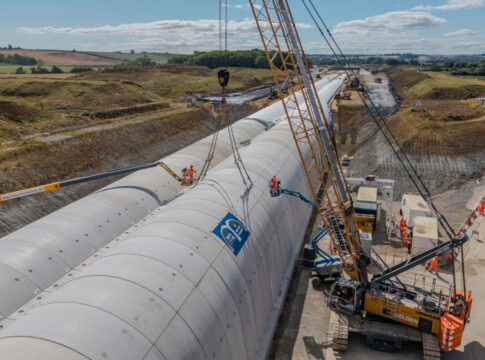
The construction of one of the longest ‘cut and cover’ tunnels on the HS2 project took a major step forward this week with the last of 5,020 reinforced concrete segments lifted into position at the site near Chipping Warden in Northamptonshire.
Set to stretch for one-and-a-half miles (2.5km), the ‘green tunnel’ is being built inside a cutting, with the earth put back on top afterwards, helping to blend the high-speed railway into the landscape and cut noise and disturbance for people living nearby.
There are five green tunnels on the HS2 project between London and Birmingham with two others, at Burton Green, in Warwickshire, and Copthall, on the outskirts of London, rapidly approaching completion.
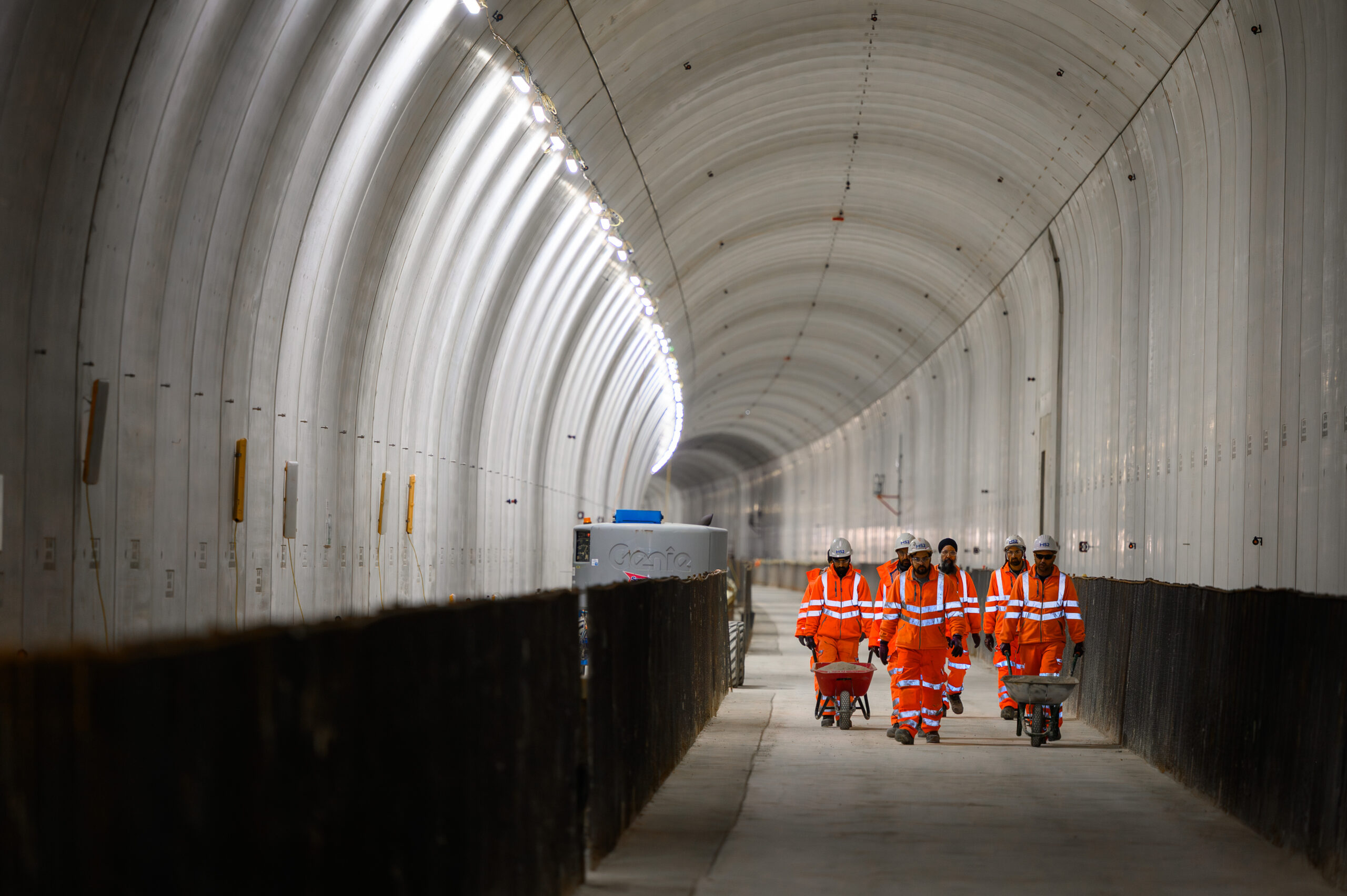
Assembled from precast concrete segments, Chipping Warden green tunnel is in an ‘M’ shape, with separate halves for northbound and southbound trains. With the pre-cast wall installation now finished, the team are focused on completing the waterproofing and internal floor slab and all other internal works, including the emergency walkways that will run alongside the track.
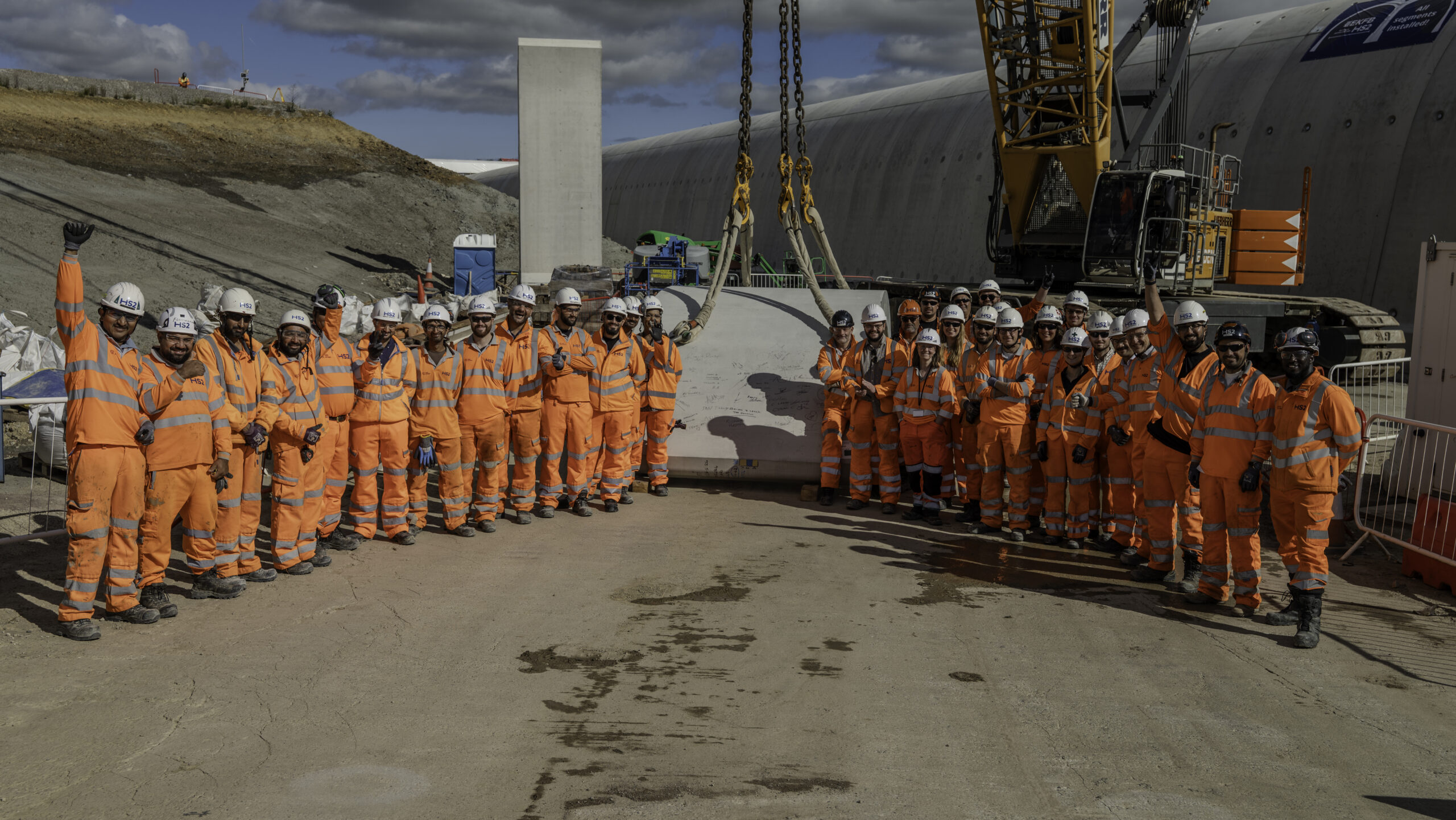
To speed up construction, the tunnel was built in two parts, which joined together this week with the final segments lifted into position near the A361. Whenever possible, excavation, preparatory work, construction and backfilling were also happening simultaneously at different points along the structure to further improve efficiency.
In total, more than two million cubic metres of material – mainly mudstone – was excavated to form the level base for the tunnel. This was stored on site and is now being carefully put back and compressed to ensure that the weight is spread equally across the structure.
This will then be carefully landscaped to blend into the surrounding countryside, with trees planted and hedgerows restored.
HS2 Ltd Senior Project Manager Sam Arrowsmith said: “It’s great to see the final segment slotted into position at Chipping Warden and I’d like to thank everyone who pulled together to find ways to optimise all the stages of construction – from excavation, tunnel construction, and backfilling.
“We’ve still got a long way to go, but with the tunnel precast structure complete, we can now focus on finishing the interior works and the earthworks and landscaping that will blend the railway into the surrounding countryside.”
Once complete, HS2 will become an integral part of the UK rail network, helping to improve journeys and free up space on the existing West Coast Main Line for more freight and local services.
Chipping Warden is one of three tunnels being built by HS2’s main works contractor in this area, EKFB – a team made up of Eiffage, Kier, Ferrovial Construction and Bam Nuttall. Lessons learnt are also being applied to the tunnels at Wendover and Greatworth, which both use a similar pre-cast approach.
EKFB Senior Project Manager Chris Barrett commented: “Watching the final tunnel segment being lifted into place is the outcome of 18 months of rewriting the playbook, learning, innovating and putting the right solutions forward when challenged, all of which have boosted on site productively.
“This success has allowed EKFB to safely work at twice the speed compared with the start of construction works in 2023. Now our focus shifts to completing waterproofing and internal works as well as backfilling earth around the tunnel and by the end of winter, it’ll be buried and largely out of sight.
“Thank you to my team, our client HS2, and our supply chain partners for their unwavering dedication and hard work to get to us to this milestone – placing the last remaining segment out of 5,000 is worth a celebration.”
The construction of EKFB’s three tunnels is happening in stages, with the cutting excavated first and then a layer of ‘blinding’ laid to form a concrete base for the structure. To speed up the process, the steel reinforcing bars are delivered as a ‘roll mat’ with the parallel bars connected by mild steel tape so they can be quickly rolled out ready for the concrete pour.
The next stage involves the assembly of the five concrete segments that form each of the ‘M’ shaped sections of tunnel. Continual improvements were made to the delivery and installation process to improve the speed and accuracy of assembly.
Once the segments have been assembled, a concrete ‘invert’ slab is poured to form the base for the track. Efficiency has been improved by changing the direction from which concrete is delivered and by introducing prefabricated reinforcing cages with bespoke gantries for installation which has doubled the speed of the process.
The valley in the top section of the ‘M’ is now being filled with an aerated concrete mix, which is faster and easier method than aggregate.
Where possible the improvements used were developed & trialled on site at a specially built section of test tunnel, allowing the team to experiment with new approaches offline without risking delays to construction and fine tuning before executing in the permanent works.
The methodology and design improvements, and a rigorous focus on improving the logistics of the complex process, which is now directly delivered by EKFB, contributed to a doubling of the install rate for tunnel segments from an average of two segments a day in 2022/23 to five-and-a-half per day this year.
The backfilling process has also been sped up with the use of larger plant and equipment, including rollers, dozers, and dumpers on top of the tunnel. This was permitted following detailed safety testing to ensure that the added weight wouldn’t affect the structure of the tunnel below.
Taken together, some of these improvements also help to reduce interfaces between separate teams working at the very restricted space at the face of the tunnel and build flexibility into the programme to help manage any unexpected delays.
Image credit: HS2