HS2 enters 2026 in a curious position. Britain’s self-proclaimed largest infrastructure project is simultaneously at peak production and undergoing what ministers describe as a “reset”. They may as well have put up signs to the effect of “under new management”. In just over a year, there’s been a new chief executive, a new chair, and, don’t forget, a new Transport Secretary. The only thing that’s constant is RailFreight UK Editor Simon Walton, and his outlook for the year.
Control is the new watchword along the HS2 ribbon of concrete and steel, preceded by “cost”. The scope of the high-speed rail project has been dramatically reduced, and yet the physical progress on the ground, and below, is undeniable. For rail freight, the question is not whether HS2 is being built, but whether it offers anything tangible in the near term, and whether the long-promised capacity benefits remain credible after the project’s political retrenchment.
A reset, not a reckoning
HS2’s reset should not be read as a rebuke to rail freight. New chief executive Mark Wild announced his intentions to rein in spending, without reference to the squadrons of freight trains supporting the construction phase, largely moving aggregates and materials. Although the originally referenced figure of 15,000 trains over the life of the project is less prominently promoted these days. Perhaps the lack of evidence that rail freight operations have been excessive or inefficient is a testament to one of the quieter successes of the programme – and less in need of a “reset”.
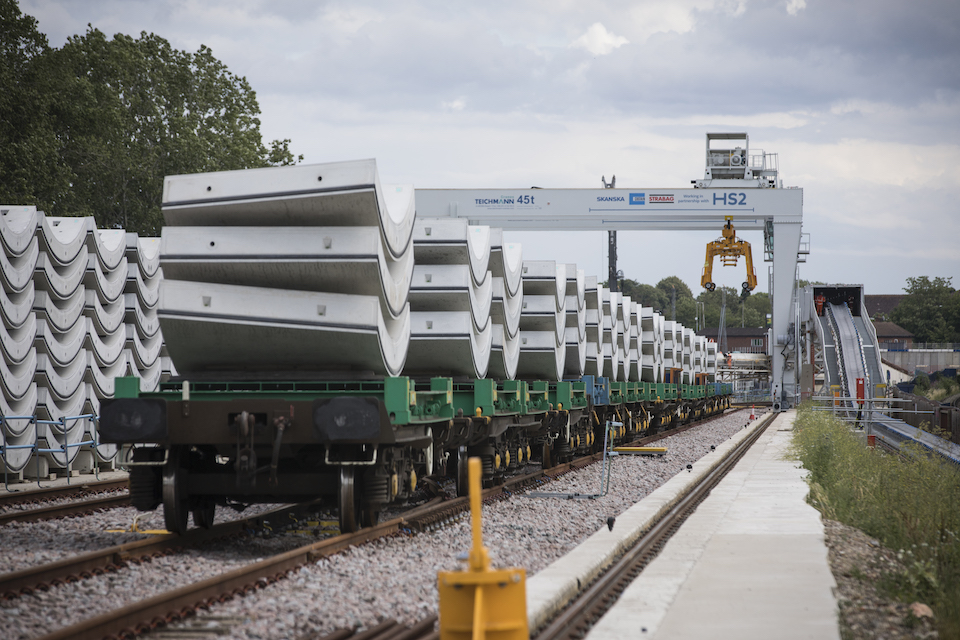
What the reset does imply is a sharpened focus on delivery discipline. The government’s June 2025 Spending Review confirmed £25.3bn (about €30bn) over four years to deliver HS2 between London (be that Old Oak Common or Euston) and Birmingham in the West Midlands, with priority given to completing tunnels, viaducts, embankments and cuttings.
The mission standing orders are now to finish the heavy civil engineering, stop scope drift, and get the railway ready for systems installation. That all matters for freight, because 2026 will still be a year when HS2 needs trains – lots of them.
Peak production means peak logistics
The holiday period is usually reserved for sneaking out bad news (like stubborn inflation, unemployment figures and stealthy tax rises). The figures published by HS2 at the end of December were anything but gloomy. Indeed, they underline how far HS2 has come. All 23 miles (37km) of deep-bore tunnels on the Old Oak Common–Birmingham Curzon Street section have now been excavated. Seventy per cent of the vast earthworks programme is complete. Almost 300,000 tonnes of steel have been used, nearly 70 per cent of the total requirement.

This is not a project winding down. It is one transitioning from excavation to assembly. For rail freight, that means continued work moving aggregates, precast concrete, structural steel and remaining tunnel lining components. While the spectacular tunnelling phase is over, the logistics challenge is far from finished. Viaduct decks, station structures and permanent way materials will all require rail-served supply chains throughout 2026 and beyond.
HS2 may no longer be expanding its geographic reach, but it is still absorbing freight capacity in volume.
The capacity question after the cutbacks
The harder question is what HS2 now offers freight in return. With the Eastern Leg to Leeds cancelled and the Manchester connection abandoned (yes, it has been abandoned, Mr Greater Manchester Mayor), HS2’s ability to transform national rail capacity has been curtailed. That inevitably weakens the original freight case, which rested on the substantial release of paths on the West Coast Main Line (WCML) – Europe’s busiest mixed traffic route (my favourite cliche, in case you hadn’t noticed).
Intermodal freight, in particular, was meant to be a beneficiary. In practice, any released capacity may be quickly reabsorbed by passenger services. The WCML remains politically sensitive, commercially attractive and passenger-heavy. There is a real risk that freight finds itself squeezed into the margins, routed elsewhere or pushed into overnight paths. HS2 may still relieve pressure, but the prize has shrunk.
Freight on HS2? Not yet – but not unthinkable
Is it outlandish to suggest freight might ever use HS2 itself? Possibly. But not absurd.
Nothing of the sort will happen before the mid-2030s at the earliest, and no one is designing intermodal terminals at Old Oak Common. Yet the precedent exists elsewhere for high-speed infrastructure being used by non-passenger traffic during off-peak or overnight periods. If capacity is underused, the question may eventually be asked.

For now, HS2’s direct relationship with freight remains overwhelmingly about construction logistics, particularly aggregates. Some prefabricated sections have already been moved by rail, and more will follow as the programme advances.
East West Rail: a freight-first reality check
It is also worth noting what is happening elsewhere. East West Rail, originally conceived as a passenger-only scheme, has so far carried freight – and only freight. That is not ideology. It is an operational reality – and the product of yet another ongoing industrial dispute in the British railway industry.
HS2 and EWR physically cross at Calvert, a quintessential Buckinghamshire village. The symbolism is hard to ignore. Britain’s most expensive railway is being built with freight support, while a supposedly passenger scheme finds its early purpose in freight flows. It is a reminder that freight often delivers first, even when it is an afterthought. Make note – there’s no physical connection between the two routes.
Who is really investing in freight?
Recent data (endorsed by government sources) shows HS2 absorbed around 69 per cent of UK rail enhancement and rolling stock investment in 2024–25. Its funding has been effectively ring-fenced within the Department for Transport, a political choice rather than a constitutional one.
The consequence is a perception that other schemes wait endlessly for cash. It’s a valid argument. The cancellation of the Manchester Leg of HS2 yielded nothing more than rhetoric – cash for other rail projects is hard to account. Ely Area Capacity Enhancement (EACE) is the obvious example. Freight-critical, strategically vital, and perpetually deferred. Funding? Awaited.
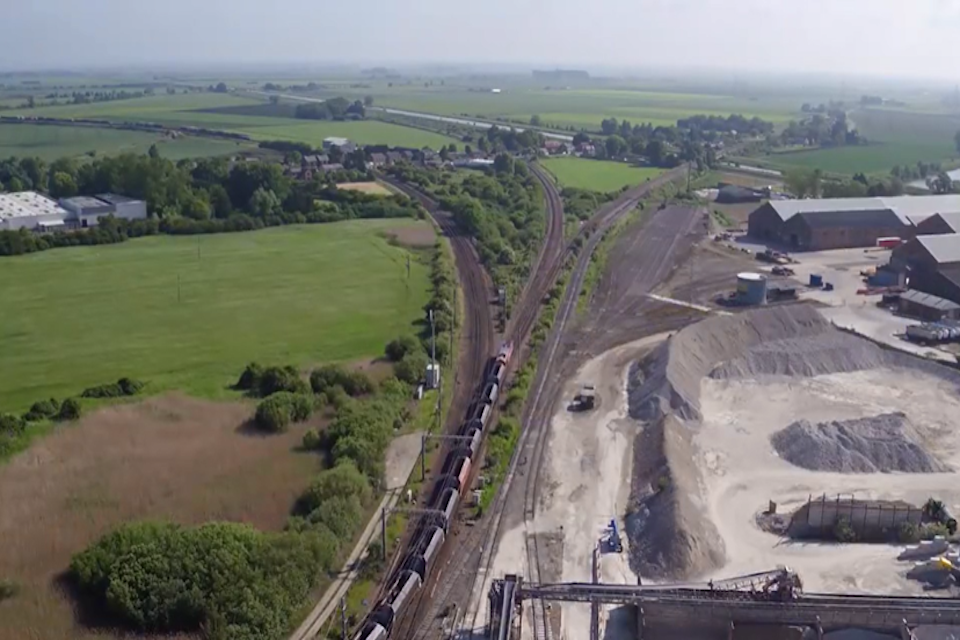
In contrast, much of the momentum in rail freight investment is now coming from the private sector. London Gateway continues to expand rail throughput with minimal fanfare. Mossend, on a smaller scale but with no less significance, shows how targeted investment can unlock national freight benefits without megaproject drama. Although, in fairness, the national infrastructure agency, Network Rail, deserves an honourable mention for enabling works.
A year of work, not yet a dividend
So does HS2 offer a year of progress for rail freight in 2026? Yes – in work, not yet in reward.
Freight will remain essential to delivering HS2, moving the materials that turn tunnels and viaducts into a railway. The long-term benefits, however, remain uncertain. Capacity released on the WCML may favour passengers first, with freight left to adapt.
HS2 still promises transformation. For freight, the reality is more modest. 2026 promises another year of trains, and another year of contribution. However, with delivery dates among the reset agenda, there is the prospect of an even longer wait to see whether the dividend ever truly arrives.