Most European countries are currently on a quest to renovate their railway networks after years of negligence. However, sticking to deadlines remains a challenge and the larger projects often cause long-term disruptions. Germany and Italy have now decided to take a new approach on two key projects: instead of one big closure, there will be several smaller ones.
Interestingly enough, both the lines in question lead to Austria and are tied to the Brenner Base Tunnel. For Germany, it is the Munich-Rosenheim route, which then goes all the way to Innsbruck. In Italy, the initiative concerns the Udine-Tarvisio section, connecting the port of Trieste with the rest of Europe via the Villach border crossing.
Munich-Rosenheim
For the Munich-Rosenheim line, the original plan envisioned a complete closure between 21 January and 23 June 2028. However, the German infrastructure manager DB InfraGO wants to divide construction into two phases: one in 2028 and one in 2031. This “revised concept minimises impact on local and freight traffic”, the company said.
The first phase will last from February and April 2028. During this time, “the outdated and error-prone relay interlocking systems will be replaced” and additional work will be carried out on tracks and switches. The new interlocking system will be commissioned between the end of 2028 and beginning of 2029.
The second phase will take place during the first half of 2031, DB InfraGO specified. “This phase will focus on the renewal of tracks, switches, overhead lines, bridges, and stations”, it added. Moreover, there will be measures to increase capacity and plans to equip the line with ETCS. Spreading out the works in this way will create a more reliable and efficient line in time for the completion of the Brenner Base Tunnel, according to the German IM.
Udine-Tarvisio
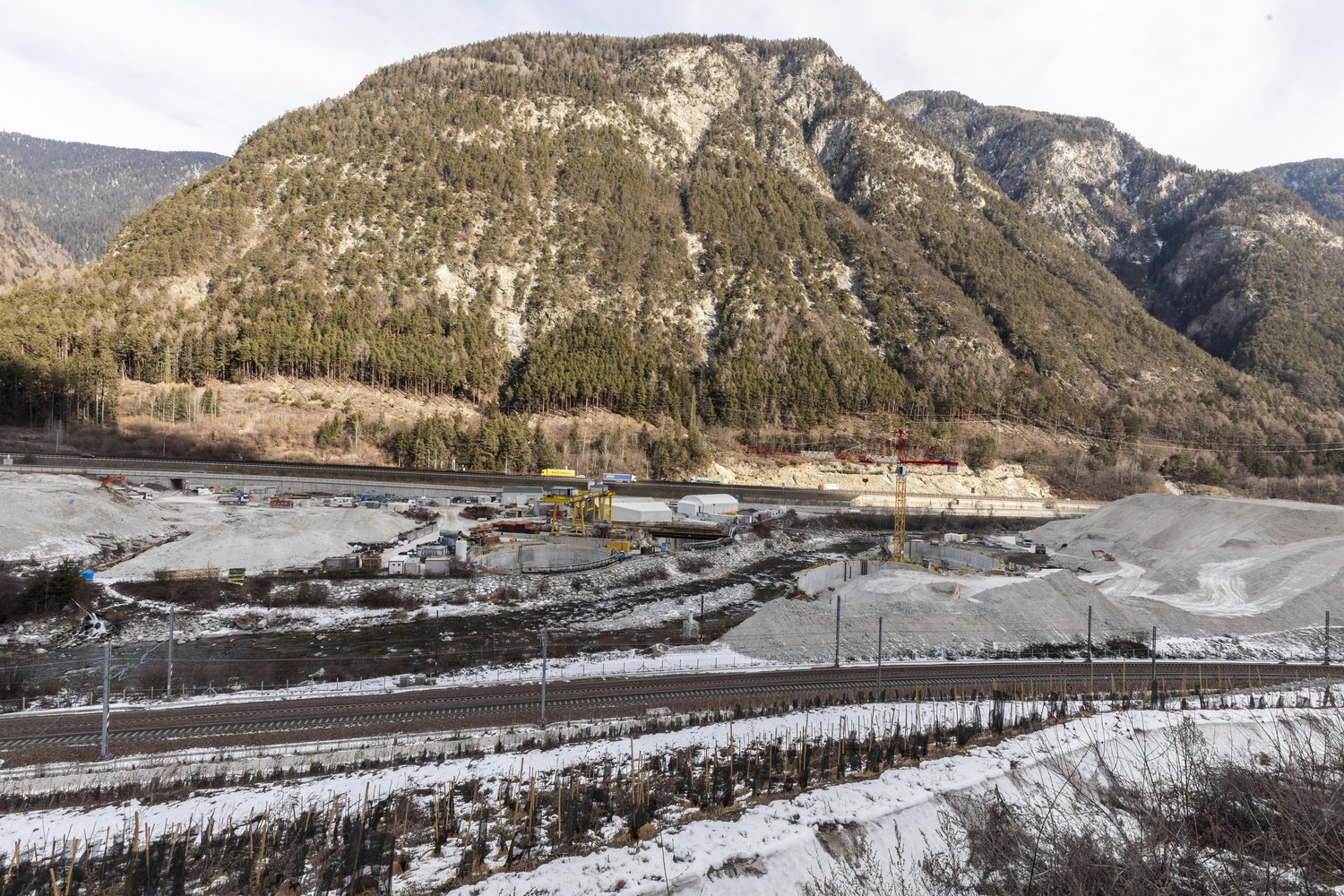
A similar approach seems to be taken for the Udine-Tarvisio line in northeastern Italy, albeit with fewer specifics. The Italian IM Rete Ferroviaria Italiana and the Friuli Venezia-Giulia (FVG) region (where the line runs) recently met in Rome to make “the necessary structural interventions more sustainable for the entire regional logistics system”, as the region explained.
Initially, the railway was meant to be closed between 22 August and 20 September 2026, allowing less than half of the usual traffic. However, the parties are now open to opt for multiple shorter closures until 2028. One of the issues here is that Austria is also planning to close the Tauern Tunnel between February and July 2027. An overlap of closures here must be avoided, the FVG region underlined.
What does this all mean?
Despite being only two examples, the decisions of taking a ‘softer’ approach when it comes to infrastructure works may provide a needed sigh of relief for rail freight operators. Having several railway construction sites open all over Europe has been underlined multiple times by industry players as a significant obstacle, especially in Germany and Italy. Both countries launched incredibly ambitious plans though for different reasons.
Germany suddenly realised that decades of ignoring the railway network led to quite dire consequences. Berlin is now trying to catch up with a plan of unprecedented scale, but not everything is going according to plan. One clear example is the renovation of the Hamburg-Berlin corridor, which is running late. At the same time, routes that were designed as alternatives to this corridor are now also being renovated, causing significant disruptions to one of Europe’s biggest ports.
Italy, on the other hand, decided to invest heavily in its railway network in the context of the EU’s post-pandemic funds, which need to be spent before deadlines expire. Hence, the next few years are constellated with infrastructure projects, with 800 in 2026 alone. Many agree that, without robust financial aid, Italy might enter the 2030s with a great railway network but no freight operators to utilise it.
Is this a valid solution?
Only time will tell if opting for multiple shorter closures instead of single longer ones will be the right move. One certainty is that the current scheme, where important rail arteries are closed for massive overhauls, is not working as intended. Meeting deadlines has become the exception rather than the rule, and not only for Germany and Italy.
Moreover, customers who are forced to abandon rail freight for longer periods of time during construction works are likely harder to bring back than having episodical closures. On the other hand, undertaking this approach will also mean that projects will be commissioned even later and probably at higher prices.