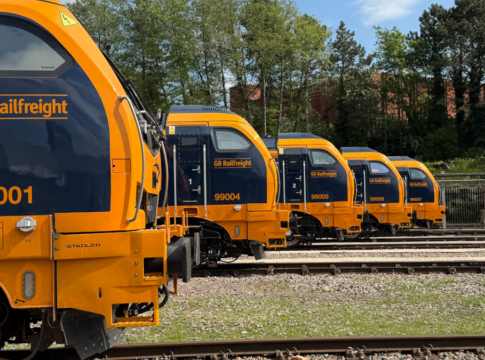
GB Railfreight (GBRf) has reached two significant milestones in the introduction of its new Class 99 locomotive, marking an important step towards their entry into commercial service.
Network Rail has granted the Class 99 fleet an Interim Network Rail Statement of Compatibility (NRSC). This allows the Class 99 to operate across Britain’s rail network, marking an important stage in its introduction. GBRf and Network Rail will continue working together towards full certification.
GBRf has also accepted the first six Class 99s into its fleet. This will enable driver training to scale up ahead of the locomotives entering commercial service this summer.
Manufactured by Stadler and designed for the UK market, the Class 99 is a bi mode locomotive capable of operating on overhead electric power where available, with a Stage V compliant diesel engine for non electrified routes. This provides the flexibility required for nationwide freight operations while reducing emissions.
By maximising electric operation, the Class 99 delivers lower emissions and reduced fuel consumption compared with traditional diesel only freight locomotives, alongside enhanced haulage capability, improved reliability and greater network flexibility by removing the need to change traction between routes.
The fleet will support the decarbonisation of rail freight while maintaining the resilience and reach required by customers across the UK.
John Smith OBE, chief executive officer of GB Railfreight, said: “The granting of the Statement of Compatibility for our Class 99 locomotives is a significant moment for GB Railfreight and the wider sector.
“I would like to thank the teams at Network Rail and GB Railfreight who have worked tirelessly to reach this point. Achieving compatibility on Britain’s complex railway infrastructure is no small task, and this has been a collaborative effort throughout.
“The Class 99 represents the future of rail freight, combining improved performance with clear sustainability benefits. With this approval secured, we are now focused on bringing the locomotives into service.”
Image credit: GB Railfreight