Is Britain’s rail freight sector in a state of readiness? Probably yes, but they don’t call it a supply chain for nothing. The links between geopolitics and logistics are tightening again. A war that feels distant can quickly assert itself in timetables, traction costs and terminal throughput. The UK network may appear insulated, but it is anything but immune, as RailFreight.com UK Editor Simon Walton points out.
We should not trivialise the prospect of a widening conflict in the Middle East. Yet it would be equally naïve to ignore the operational consequences for rail freight. From energy pricing to shipping disruption, the impacts are already beginning to register. What feels abstract today can become painfully concrete tomorrow, especially in a system as tightly balanced as Britain’s modern logistics chain.
Energy shock travels fast
Before anyone in the cab of an electric locomotive feels too comfortable, consider the source. Oil shock means energy shock. It ripples through every generation mix, every tariff, and every contract. Prices rise across the board, often faster than operators can react, hedge or recover.
We are reminded from cradle to grave that everything in the modern economy depends on oil. From baby wipes to coffins, from plastics to packaging, hydrocarbons underpin production and distribution. Those goods, or the materials that make them, arrive on our shores before moving inland by rail and road. When oil markets tighten, the entire system feels the strain.
Shipping disruption is the hidden threat
Global shipping routes are the second front. The Trades, as the industry calls them, are already shifting under pressure. Ultra Large Container Vessels (those behemoths with twenty-thousand TEU on board) are being forced out of position, creating imbalances that cascade through port rotations and inland schedules. British port managers remain highly adept, masking much of the disruption for now, but the pressure is building.
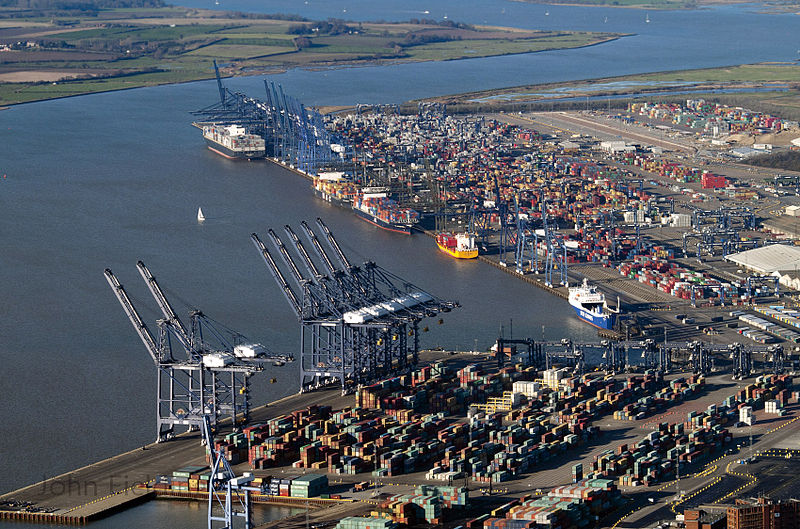
Rest uneasy. The disruption will come as surely as fuel prices climb. Delays and diversions at sea translate directly into delays and diversions on land. Containers arrive late, or not at all, and the carefully choreographed dance between quay cranes, rail terminals and inland hubs begins to falter. The rhythm of the network is disturbed, and recovery is rarely immediate.
There is only so much strain the freight system can absorb. Britain benefits from a high degree of intermodal interoperability. Scheduled services connect ports to inland terminals with near-metronomic regularity. But “near” is doing a lot of work here. Even small perturbations can propagate quickly when margins for error are thin, and capacity is tightly allocated.
A just-in-time system under pressure
Britain’s logistics model compounds the problem. The country has a chronic shortage of modern storage. For years, we borrowed from the Japanese concept of Kanban and just-in-time supply. In practice, we adapted it with a distinctly British mentality. We make do, mend, and hope that timing remains perfect. That approach works until it does not. Unfortunately, Britain is not so adept at adopting Kaizen, that other Japanese technique of continual improvement.
The result is a system with minimal slack. Warehousing capacity, particularly A-grade, rail-connected space, is in short supply. There is no shortage of planning applications for new facilities, but delivery lags demand. Much of the existing stock will fall out of compliance or become uneconomic within a decade. Unfortunately, the need is immediate, not theoretical.

When ships fail to arrive just in time, Britain finds itself in a bind. Delayed shipping means delayed inventory. Without adequate storage, there is nowhere to buffer the disruption. Goods either pile up in the wrong place or fail to arrive where needed. Rail freight sits in the middle of this imbalance, expected to respond but constrained by infrastructure and capacity.
We muddle through until things go wrong. Right now, things are going wrong on a scale that could yet deepen. War in the Middle East may feel distant, but its consequences are already reaching the Midlands and beyond. Supply chains do not respect geography in the way we might like to imagine.
What happens next for rail freight
Predicting the next phase is a hazardous exercise. If you can do it accurately, you are probably already profiting handsomely. For the rest of us, the outlook is uncertain. Freight trains will continue to run. Operators have tools to manage short-term cost shocks, including fuel hedging, which can soften the immediate impact of rising diesel prices (and electricity, you smug overhead wire-types).
The greater risk lies not in the trains themselves, but in what they carry. Volumes are vulnerable to sudden swings. Intermodal services may continue to operate according to the timetable, but with fewer containers on each consist. Frequency could also come under pressure if demand weakens or becomes erratic. Operators dislike volatility, and this is volatility writ large.
There is also the broader economic context to consider. If commodity prices drive inflation higher and suppress consumer spending, the downstream effects will be significant. Warehousing schemes may stall. Projects that look viable today could remain on the drawing board. And without goods to store, the rationale for new logistics infrastructure begins to weaken.
Railways as barometer and bellwether
We often talk about freight in abstract terms, much like the railway itself. Tonnage, paths, capacity, utilisation. Yet the railway is more than a set of metrics. It is an industrial barometer, an economic bellwether, and a national lookout. Changes in flow patterns, volumes and commodity mixes tell us a great deal about the health of the wider economy.
In times of stress, that role becomes even more pronounced. The rail freight sector is both resilient and exposed. It can adapt to disruption, but it cannot escape it. What happens in distant oil fields and contested shipping lanes will, sooner or later, be reflected in train loads, terminal activity and balance sheets across the UK.
Let us hope that the coming months do not force the railway into an even more ominous role. For now, it remains a vital indicator of how well the system is coping. But if the shocks intensify, it may also sound a warning signal. That is one alarm the industry, and the country, would rather not have to hear.