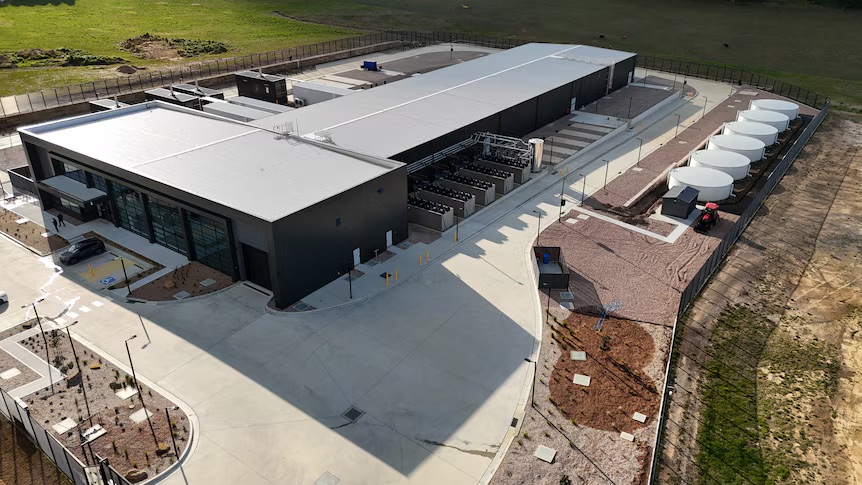
A small town in the NSW Southern Highlands is watching the AI revolution take shape in its backyard, as plans emerge to build one of the state’s largest gas-fired power stations to run a data-processing complex.
The proposal from Sydney company Cloud Carrier would see three data centres and a 700-megawatt (MW) power station built on a site six kilometres from Moss Vale.
The power plant would be made up of 21 reciprocating engines, rather than the turbines used in traditional peaking power stations, generating enough energy to run 70,000 homes
As the state prepares for more and more data centres to come online in the AI age, the project provides an insight into their enormous energy requirements.

Professor Toby Walsh is chief scientist at the University of NSW AI Institute.
“I don’t think we fully appreciate the physical size of the infrastructure that’s needed to give us AI services, to give us the digital services that we’re increasingly using,” he said.
“If we’re not careful, this is going to be another major sink of electricity and also a use of valuable water.”
“We’ve got to roll this out in a responsible way.”
There are already 90 data-centre projects up and running in NSW and dozens more approved or in the planning pipeline.
“NSW is really keen to see the investment and the potential in terms of data centres,” Environment Minister Penny Sharpe told Budget Estimates last week.
“You can’t go anywhere without people talking about AI, talking about the importance of data centres.”
Gas for data
Cloud Carrier has already constructed one small data centre on the site, and hopes to have the full “campus” up and running in five to eight years.

Its lead engineer, Greg Jackson, said the company was building essential infrastructure needed for the country’s future.
“Potentially, you could support the data requirements of the federal government in this space,” he said.
He said the project would use no town water, thanks to a chip-cooling system that recycled water harvested on site on a loop.
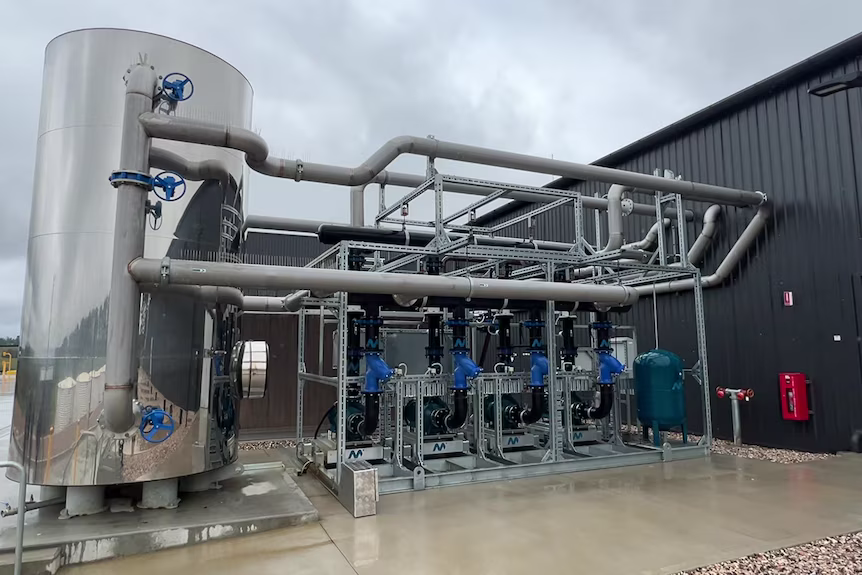
But he said the amount of power needed for the high-capacity chips used to store and process AI exceeded the grid’s capability in the area.
“For reliability and economic reasons, pipeline natural gas is a suitable fuel,” he said.
“That is transitioning to more renewable fuels and as they become available, we will transition our plant to use those fuels.”
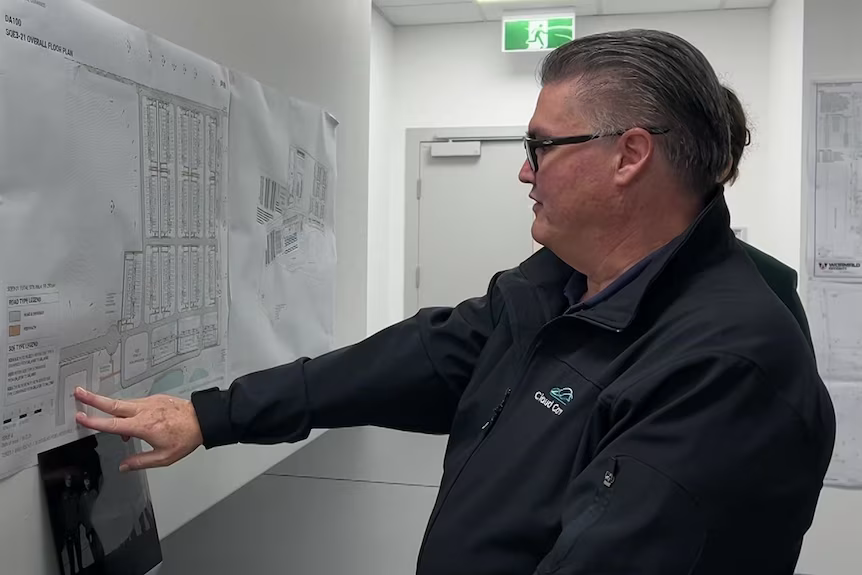
Mr Jackson said the company would treat its emissions and reduce the plant’s pollutants to well below the NSW Environment Protection Authority’s limits for the area.
He said the company wanted to be “a partner in the region,” and was committed to employing from the local area.