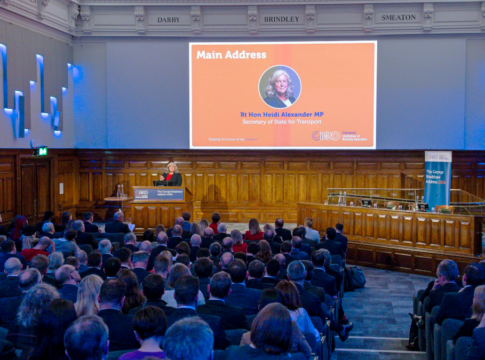
Since 2011, the Bradshaw Address seen a high-profile speech delivered to rail industry leaders. It is inspired by George Bradshaw, who is well known for his guides and published the first comprehensive railway timetables. This year the event was hosted by the Chartered Institution of Railway Operators (CIRO) and its keynote speaker was Secretary of State for Transport Heidi Alexander MP.
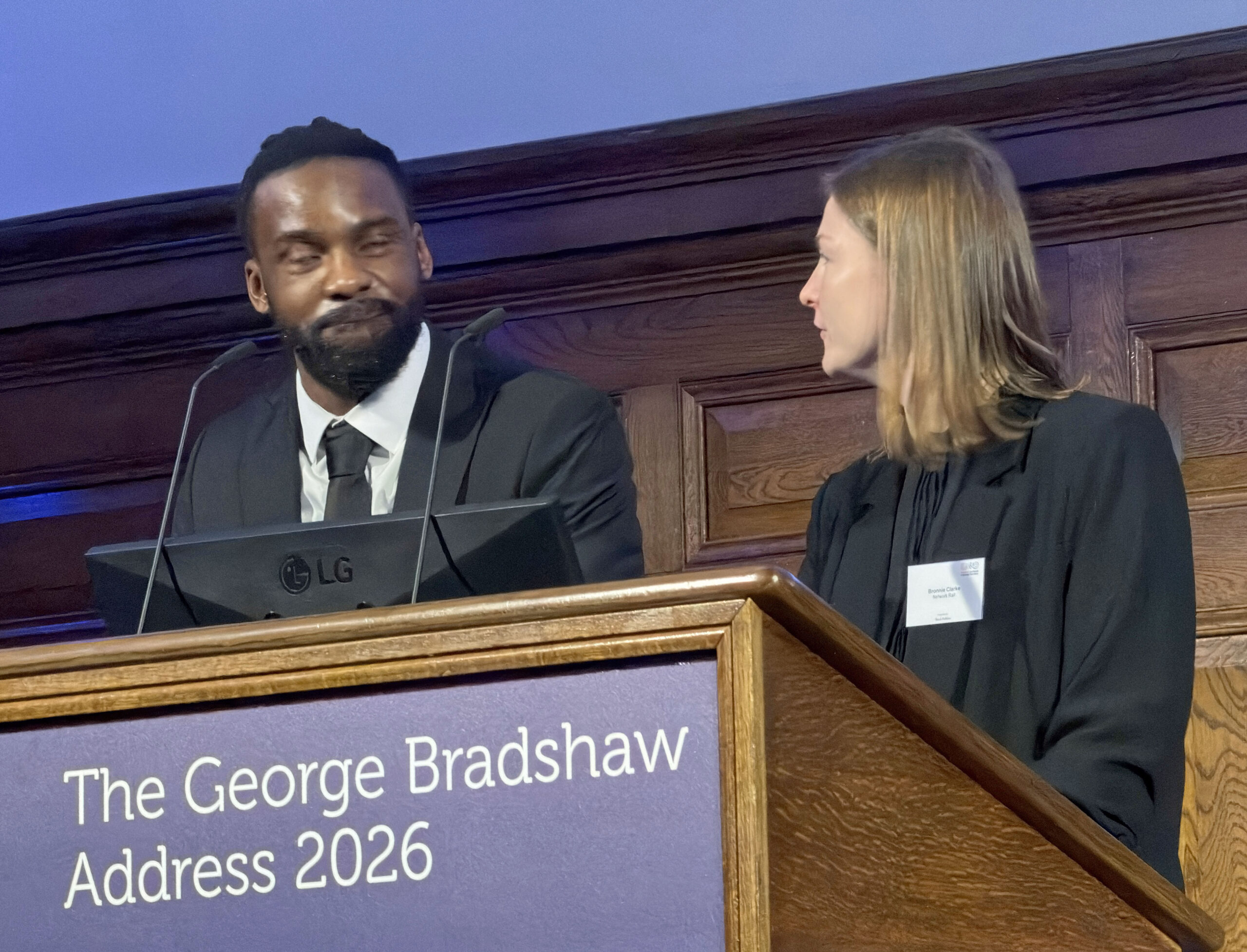
This invitation-only event was attended by around 200 people. It was opened by CIRO Chair Mark Hopwood who, in a nod to Bradshaw, stressed the importance of delivering the timetable and that, during National Apprentice Week, he wished to stress the importance cultivating skills to do this within the industry. In this respect CIRO’s educational programme had an essential role to help colleagues learn skills, and. in particular, develop expertise in railway operations. To illustrate this, he then introduced two railway professionals who spoke about the impact CIRO had on their careers.
These were Bronnie Clarke, Head of Control (East Midlands Route) at Network Rail, and Maro Sakpere, Fleet Service Engineer at Govia Thameslink Railway who both outlined the education that CIRO had provided and how it had helped them during their careers.
The minister’s speech
Heidi Alexander also alluded to Bradshaw at the start of speech as his timetables had brought order to the early fragmented railway as Great British Railways (GBR) will by by providing a directing mind. The railway her government had inherited was expensive for passengers, costing taxpayers £12bn per year and hamstrung by rigid contracts and blame culture.
She noted that in its first 18 months the government had ended two years of national rail strikes, introducing the Public Ownership and Railways Bills, launched the Great British Railways (GBR) brand, frozen rail fares for the first time in 30 years, brought private-operators into the DfT-run operation, and allocated £45 billion for Northern Powerhouse Rail. Government had also overseen the introduction of the East Coast Mainline (ECML) timetable change.
However, it was wrong that Rail Minister Peter Hendy had had to personally approve the ECML timetable as politicians should not take such decisions. In future GBR will provide the required directing mind. It will also have a single profit & loss structure, an integrated business plan, have simplified access rules for capacity allocation and facilitate more local decision‑making with devolved regions.
The current culture currently encourages blame and fragmentation. She argued that GBR will resolve this by providing a “one railway, one team” ethos, integrated leadership teams (already in SE, SWR, Anglia), ending incentives that reward failure and empowering staff at station level to solve problems.
Alexander advised that “GBR will be obsessed with passengers and freight. In fact, it will have a statutory duty to promote the interests of both.” It will provide a new GBR online retailer and expand pay-as-you-go ticketing. There will be a new passenger watchdog with powers to enforce consumer standards. In respect of freight, she noted that there will be freight representation on the GBR board and stressed the freight target of a 75% growth by 2050 (actually 2.1% per annum).
As the first woman to give the Bradshaw address, she highlighted the industry’s gender imbalance with only 19% of rail staff being women and advised that GBR would champion diversity and workforce inclusion. She noted that 68,000 staff are projected to leave the industry by 2030 and that there are skills shortages in signalling and engineering. Hence there is a need for long‑term workforce planning and that “It’s why today we laid legislation to lower the minimum train driving age from 20 to 18, bringing us in line with the likes of Germany and Australia.”
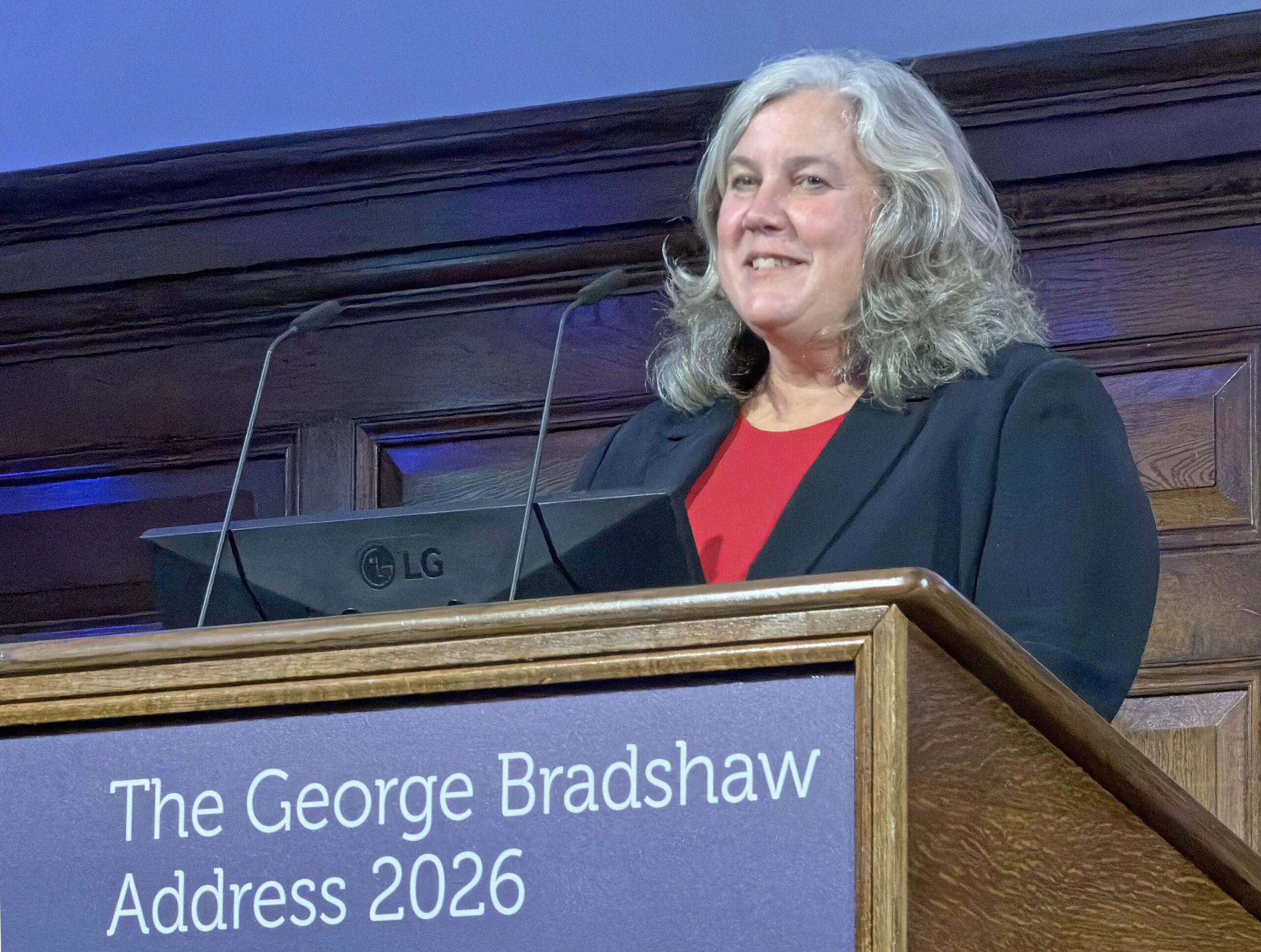
She closed her speech with a call for partnership with the industry as the reforms needed to create GBR will be done “with the sector, not to it.” She was sure that GBR will become a world‑class public body to provide a railway that the public can finally be proud of.
Panel discussion
The address was followed by a panel discussion chaired by BBC News Transport Correspondent, Katy Austin. As well as Heidi Alexander, the panel consisted of: Rail Freight Group Director General, Maggie Simpson; Chief Executive of DfT Operator, Alex Hynes, and Network Rail’s CEO, Jeremy Westlake.
Maggie Simpson welcomed the strong emphasis on freight including the freight growth commitment. However, she stressed that Freight operators need long‑term certainty about access to path and noted that the first iteration of the ECML timetable had no freight paths. She considered that parts of the Railways Bill are good and other parts are worrying. Hence the Rail Freight Group is working with officials to secure changes
Alex Hynes noted that integrated teams are already operating in the South Eastern, South Western and Anglia regions where, with contractual barriers removed, track and train teams are working better together.
Early results show that performance is improving and cancellations are falling. Southeastern trains customer satisfaction at is the highest on record. Hynes noted that reliability is a key revenue driver. He advised that reducing cancellations from 4% to 2% has been shown to be worth hundreds of millions in revenue and that reliability is biggest factor driving passenger growth.
He considered that the potential for passenger growth is strong as operators are adding services, rather than cutting them. With yield management also improving load factors, increased revenue will lower subsidies.
In a discussion about retail simplification, the absurdity of multiple apps and operator websites was stressed. It was considered GBR’s single retail platform will increase sales by simplifying fares, reducing confusion and supporting the expansion of contactless ticketing.
Network Rail’s Jeremy Westlake experience is that when railway people are put in a room without contractual constraints, they naturally find solutions. He felt there needed to be a culture shift as the railway must focus on serving the public as well as moving away from siloed thinking to see itself as part of a wider transport system
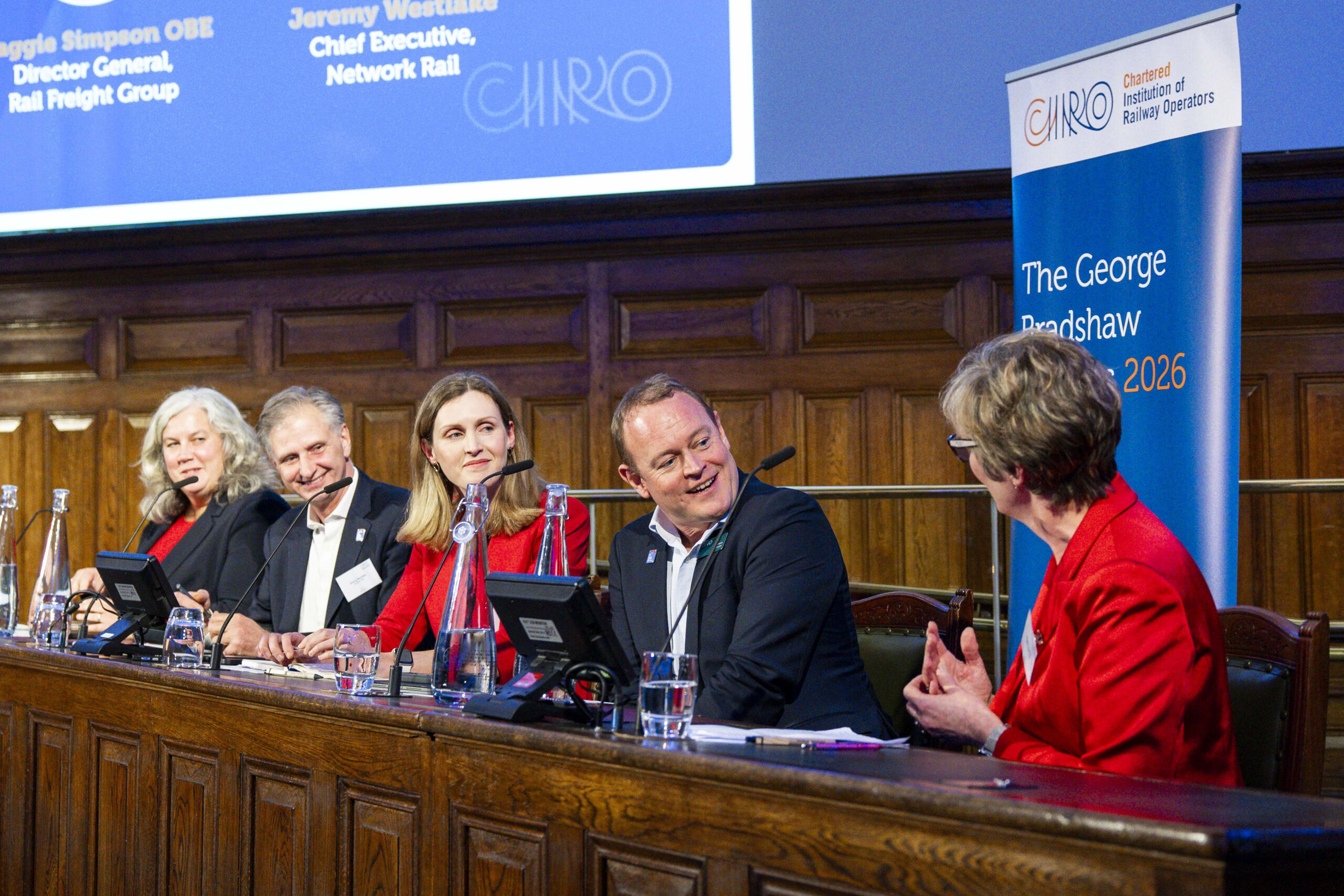
He acknowledges that as the workforce evolves some job losses are inevitable. Yet this is part of normal technological evolution in which data‑driven decision‑making will require new skills. He had no doubt that data sharing across organisations will enable better decisions and that new technology will reduce costs.
In the discussion it was considered that integrated teams are accelerating this shift to shared data. A specific example is fitting infrastructure monitoring equipment to passenger trains which improves safety and can reduce the need for separate monitoring trains.
Westlake envisaged that under GBR, it will be possible to optimise whole‑system cost instead of individual budgets. As an example, the optimum periodicity for type turning must consider track wear.
Alexander considered that rebuilding public trust is essential and that freezing fares, for the first time for 30 years, is part of that strategy. It is a response to the cost‑of‑living crisis and sends a message that the government is listening and wants to rebuild public trust.
She also emphasised that the industry must deliver better value for money as the current £12 billion per annum subsidy is unsustainable. Hence GBR will be expected to drive efficiencies once it is established.
The event was closed by the CIRO’s CEO Phil Sherratt who had noted the key issues raised during the evening and how the CIRO was committed to the professional development of industry professionals who have to make GBR a success.
Image credit: CIRO