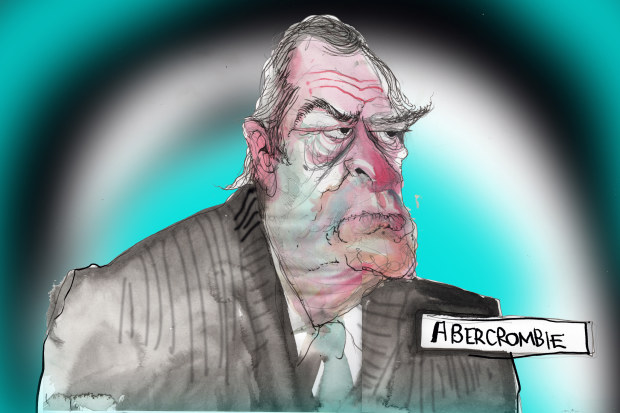
It was almost four months ago when relations between Humm co-founder and then-chairman Andrew Abercrombie and a group of the senior staff started to fray.
Over email, Abercrombie had requested multiple revisions to a September-quarter trading update, raising concerns among some employees about how conflicts of interest were being managed and about whether shareholders were receiving inconsistent information.
ASX-listed financial services group Humm lends to consumers and businesses through loans, leases, credit cards and buy now, pay later services.
Abercrombie is now fighting to retain his Humm board seat in a heated situation that is set to come to a head this week at an extraordinary shareholder meeting.
Much of the internal angst was stirred in October when Humm was preparing to provide the trading update to the market, which was then made late that month. Abercrombie had asked for sweeping revisions to the document, while a $286 million offer by his family office to take the company private was under consideration.
This posed a tricky situation because Abercrombie was also Humm’s largest shareholder. The matter was raised by several staff members internally, but ultimately the update included some of Abercrombie’s changes, albeit with some explanation in the footnotes.
Around this time, two complaints regarding Abercrombie were lodged with the Australian Securities and Investments Commission, one relating to the changes within the quarterly update, which the complaint alleged made it inconsistent with prior investor releases and inflated expected loan losses in the commercial division.
The Australian Financial Review is not suggesting any wrongdoing by Abercrombie, only that the claims were made.
The corporate regulator continues to assess Humm-related complaints, say people with knowledge of the matters, seeking anonymity to speak freely. ASIC declined to comment.
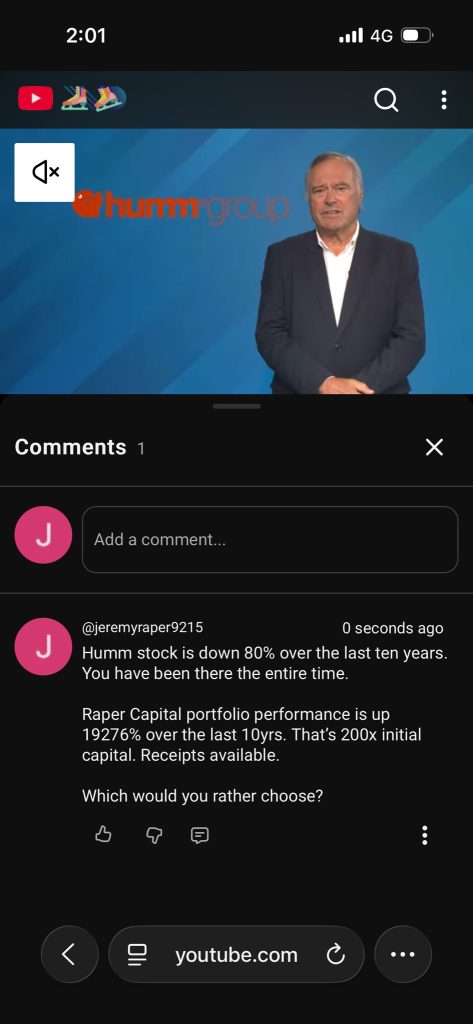
Around the time of the quarterly update, Humm was set upon by activist investors Jeremy Raper and the Collins Street Value Fund, with the pair soon after pushing for Abercrombie and two fellow directors to be ousted from the board.
In an attempt to assuage the concerns of some investors about bias and conflicts, Abercrombie stepped aside as chairman last week, but remains a non-executive director. Humm’s directors also pledged to expand the board’s size, and chief executive Angelo Demasi will join their ranks, too.
How could Abercrombie state the governance in the business was acceptable when there are two open allegations in from the ASIC for investigation?
He also states he rescued the company but research shows the family owned that business (research points to his grandfather) and I ask the question, does anyone else in the family have any rights to the business?
As well as Abercrombie, the activists are seeking to have board directors Andrew Darbyshire and Robert Hines removed. Hines took the reins as chairman last week.
The Humm board has hit back at the activists, arguing current directors are delivering and that the investors pushing for change are trying to advance a “reckless and flawed” proposal.
The situation is further complicated because the bid for Humm by Abercrombie was withdrawn in early November, and it wasn’t long before the board received another offer. A higher $385 million indicative bid by ASX-listed debt purchaser and collection company Credit Corp was lobbed on November 19, but wasn’t disclosed to investors at the time.
What happened in the weeks between the receipt of Credit Corp’s offer and its disclosure on December 17, which coincided with Abercrombie starting to purchase another 3 per cent of Humm, is in fierce dispute.
I wonder what Creditcorp would do woth their deal if they really knew what this man stood for? Are they concerned with the governance issues reported to ASIC?
Are they also concerned with an alleged friend of Abrcrombie’s taking the role of Chairmain on the board?
The company has said it followed all the required protocols, but one Humm investor has taken aim at the company and lodged an application with the Takeovers Panel.
Late last month, funds management stalwart Anton Tagliaferro applied to the panel, urging it to find that the Humm board violated the Corporations Act by undermining the “fair treatment” of investors and market integrity and transparency.
The application alleged Abercrombie had an “informational and positional advantage” because he received an update on a contract win and loan loss rates within an information pack of about 100 pages on the state of Humm’s business and earnings projections around December 12, before he bought further stock.
The Takeovers Panel – an adjudicating body comprising practitioners such as investment bankers and lawyers – is assessing the application’s contents to determine whether it has merit.
A Humm spokeswoman and Abercrombie declined to comment on a list of questions about the events leading up to December 17.
Cameron McCullagh, whose family owned more than 4 per cent of Humm until late last year, has sold his entire holding in the stock.
“I don’t have faith in the board operating in the best interests of the shareholders,” he said. “The share price had gone up, and the risk of staying in an Andrew Abercrombie-controlled company was just too great.”
But proxy advice firm CGI Glass Lewis has urged investors to vote against removing Abercrombie and two other directors from Humm’s board this week, while advising shareholders to knock back Raper’s board nomination.
“The evidence does not point to a clear breakdown of process or a
failure to manage conflicts in a manner that would ordinarily justify immediate board removal,” the CGI report said. “Raper … does not have previous experience as a director of an ASX-listed company or in overseeing a regulated financial services group.”
CGI supported the appointment of former Packer family lieutenant Garry Sladden as a Humm director, saying it would strengthen independent oversight.
Rival proxy firm ISS took a different view, urging investors to support the removal of Abercrombie from the board this week.
“The manner in which the IBC [independent board committee] handled the chair’s indicative take-private proposal and the way the board is dealing with the current Credit Corp proposal raises questions,” ISS said.
“A more transparent, structured and thorough process may have been appropriate, especially in light of the company’s prior experience with the failed Latitude transaction and the conflict between Abercrombie and the rest of the board at that time.
“In this context, Abercrombie appears to exert undue influence over board decisions, and such influence has proven a negative factor for strategic decisions.”
ISS told investors to vote against Raper’s appointment but backed Sladden’s board nomination. The Humm shareholder meeting is scheduled for February 19.
AFR + Vibewire
One thought on “Humm co-founder’s fiery stoush with activist investors comes to a head”