For too long, transport has treated rail freight as an afterthought. This week has been no different. Despite all the political machinations hogging the headlines, the spotlight fell briefly on the railways, but even then, freight was an appendix to passenger politics rather than a vital artery of the economy. The voting public think of timetables, fares, cancellations and platform alterations, but rarely the rolling weight of 600 freight trains that keep industry moving every day. That’s something on the mind of RailFreight.com UK Editor Simon Walton.
Twenty thousand passenger trains share the network. Scarcely a few hundred freight movements punctuate that rhythm, invisible to most commuters plugged into their phones or pacing platforms. Yet without those freight movements, our supermarkets, factories and exports would grind to a halt. Nevertheless, when Transport Minister Heidi Alexander stepped up to the microphone to take part in a national radio “town hall” interview this week, it was constituents, not containers, taking her attention.
The fading everyday presence of goods rail
It used to be woven into the fabric of our daily lives, but on the airwaves, rail freight didn’t get a look in. Sidings were more common than stations in many towns. The goods railway was not a remote abstraction, but part of the lived landscape. Coal yards, timber depots, factory loops and livestock docks all underscored rail’s role in local economies. That everyday presence shaped how communities understood industry and transport.
Today, however, that model feels almost fossilised, relegated to bulk flows bound for trunk routes and container hubs. The classic company siding has become a rarity, with a few notable exceptions. The Highland Spring facility at Blackford demonstrates what localised freight linkages can sustain. The lack of visibility feeds a public and political disconnect. If we never see the freight train, how can we appreciate its contribution?
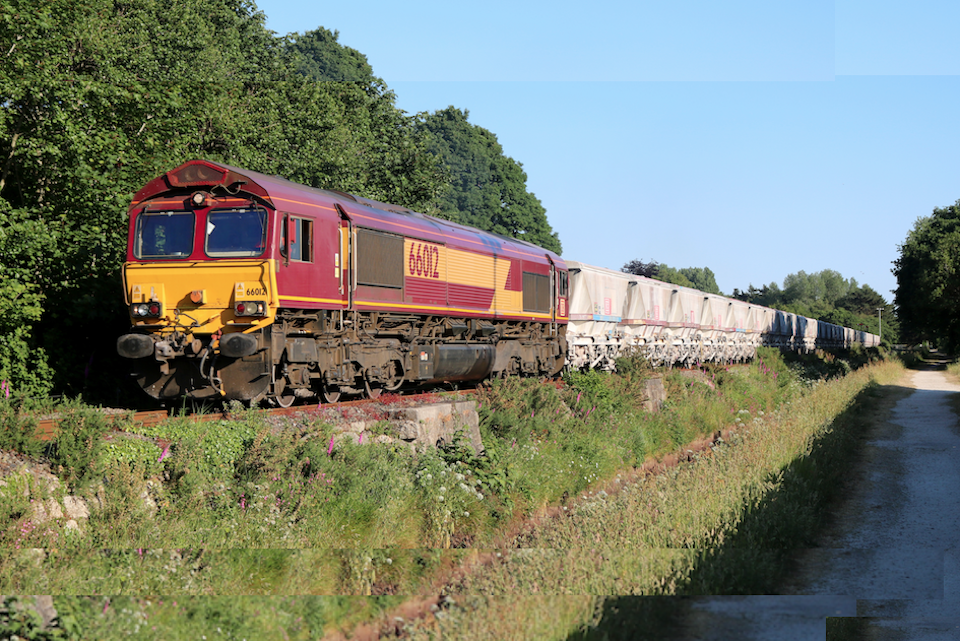
Yet a fresh approach, led not by Whitehall but by a subnational body, is beginning to redress that imbalance. Western Gateway may not be as prominent as more vociferous friends in the North, but this outlying region is doing its best to insert itself into the national conversation, and doing so with a freight train in mind.
The West of England may not be the most obvious hotbed of industry, although marine, mineral, agricultural, and retail voices may be raised in rebuttal. They may be right, but there is much more that could be done, and there are some with the vision to plan for a broader commercial future, in which rail plays a leading role. Western Gateway’s Avonmouth Rail Freight Terminal feasibility study looks beyond track and timetables to place freight within the economic geography of the West of England.
Where industry, geography and rail intersect
As resorts go, Avonmouth would probably be the last. It was never a stop for the prestigious Atlantic Coast Express, and it’s always been about industry, not indulgent pleasure. Avonmouth is a formidable logistics hub on the outskirts of Bristol, with around 1.5 million square metres of warehousing supporting multinational operators and domestic supermarkets. Its ports at Avonmouth and Portbury, strong road links, and growing distribution footprint make it a natural candidate for intermodal rail freight.
The feasibility study, commissioned by Western Gateway and delivered by Polaris Consultancy Group, highlights that Avonmouth is well positioned to support a rail freight terminal of strategic significance. The report’s market demand analysis shows strong potential not just for maritime traffic but also for domestic intermodal services once East West Rail enhances connectivity to the East Midlands “Logistics Golden Triangle”. Newsflash, guys: Southampton is already doing that, so you’re on point there.

Crucially, stakeholders from Network Rail, energy from waste specialists SUEZ, Bristol Port, major freight operating companies, and local authorities have all expressed support for a rail freight terminal at Avonmouth, recognising the potential to drive decarbonisation and strengthen the region’s logistics cluster. At the same time, concerns about rail-access complexity and the need to balance passenger and freight services have been highlighted, underscoring the need for careful planning and partnership. Ah, did someone say capacity issues? Perhaps one for Heidi at her next on-air town hall meeting.
Reconnecting freight with people and place
What Western Gateway’s work does best is situate freight within a regional economic narrative, rather than treat it as isolated infrastructure. Avonmouth’s potential isn’t simply about trains arriving and departing; it’s about linking international port services with domestic distribution, railheads with warehousing clusters and logistics operators with manufacturers and retailers across the South West.

That kind of integration resonates with calls for more resilient transport strategies — for example, the case for an inland route across Dartmoor to reduce reliance on the admittedly less demanding, but frequently storm-damaged, Dawlish coastal line. A stronger rail freight role across the region lends weight to arguments for resilient corridor investment that benefits both passengers and goods, rather than privileging one at the expense of the other.
Seen through this lens, rail freight becomes a strategic asset in economic development — a way of knitting together supply chains, reducing carbon emissions and enabling more balanced regional growth. It challenges the old mindset in which freight is something that “just happens”, typically out of sight and out of mind.
Integration for economic and political sense
A rail freight terminal at Avonmouth that is aligned with industry demand, regional strategies and national policy could produce better economic returns than isolated infrastructure projects. By enabling modal shift from road to rail, it can reduce transport costs, cut emissions and help businesses tap into rail’s inherent efficiencies.
The broader lesson for ministers and policymakers is that rail freight shouldn’t be an afterthought. An integrated approach — one that treats freight as part of a living economic ecosystem rather than a marginal category — will deliver stronger returns on public investment. The real question isn’t purely financial; it’s political: do we have the will to embed freight into our transport vision in a way that reflects its contribution to growth, sustainability and resilience? Not a question that Heidi will likely face from the listeners anytime soon.