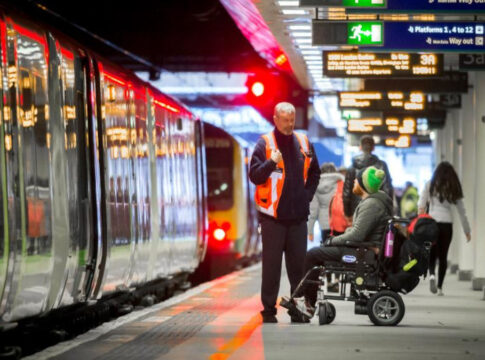
The rail industry has today (17 November) announced the expansion of the eligibility criteria and simplification of the application process for the Disabled Persons Railcard (DPRC), a major step forward in its commitment to make Britain’s rail network more accessible and customer-focused.
The DPRC, which offers a third off rail travel for cardholders and one accompanying adult, will see eligibility expand in two phases so that both visible and non-visible disabilities are better recognised and supported.
The changes follow a review of the DPRC undertaken by Rail Delivery Group RDG, the Department for Transport (DfT) and The Disabled Persons Transport Advisory Committee (DPTAC), which concluded that the Railcard’s eligibility criteria should better reflect modern understanding of disability and the real travel barriers people face.
Research conducted by the Rail Delivery Group indicated strong public support for these changes, with 79% of DPRC holders and 73% of non-holders in favour of including non-visible disabilities in the eligibility criteria.
Implemented in two stages, the changes are designed to bring benefit where evidence requirements are straightforward and to introduce robust assessment for more complex cases later in the year, ensuring the process remains fair and reliable while being more inclusive.
Phase 1 will come into effect from 1 March 2026, expanding eligibility to a broader range of customers who can demonstrate their need through existing documentation, for example Blue Badge holders. From September 2026, a second phase will extend eligibility further to include conditions that require clinical or professional evidence, including some long-term or degenerative medical conditions, and neurodiversity where it has a substantial impact on a person’s ability to travel by train.
Full details of the evidentiary requirements and application guidance will be published ahead of each phase to ensure customers and frontline staff have clear, consistent information.
These reforms form part of a wider commitment to putting customers at the centre of decision-making and to remove barriers that prevent people from travelling with confidence. By aligning DPRC evidence with documents already used by other transport schemes and by developing clearer guidance for more complex assessments, the industry aims to make the application process simpler and more customer-friendly.
Jacqueline Starr, executive chair and CEO of Rail Delivery Group, said: “Rail connects people to jobs, education and community and we are determined to make those connections easier to access for everyone.
“Many people face real and varied barriers to travel and widening eligibility for the Disabled Persons Railcard is a step forward in making rail travel a genuine option for more people, listening to how we can help mitigate the additional cost of living with a disability and ensuring our services are shaped around customers’ needs.”
The DPRC offers 1/3 off rail travel across Great Britain for both the Railcard holder and one accompanying adult and is in place to support people with conditions that significantly impact their ability to travel by train. The Railcard, available to purchase online from railcard.co.uk or by post, costs £20 for one year or £54 for three years and can save the holder £126 on average annually. The Railcard has no time or minimum spend restrictions.
Image credit: ORR