The cyber attack that breached customer data at London North Eastern Railway (LNER) should send a shiver down the spines of everyone in the rail industry. Rail freight, the backbone of the economy, should feel the chill as well. A successful attack on a rail freight operator could have far-reaching consequences for the economy. Five takeaways follow at the end of this consist, says a concerned RailFreight.com UK Editor, Simon Walton.
Bringing a passenger service business to a halt will always be headline-grabbing. However, disrupting the movement of goods may be less newsworthy but far more damaging. The freight sector’s business-to-business dependencies — with customers in energy, construction, retail and manufacturing — mean that even a brief outage could ripple through supply chains with immediate economic impact. Freight’s potential strength lies in its operational focus; less customer-facing, tightly regulated and more robust. At least, that’s what we all hope.
A warning from the passenger side
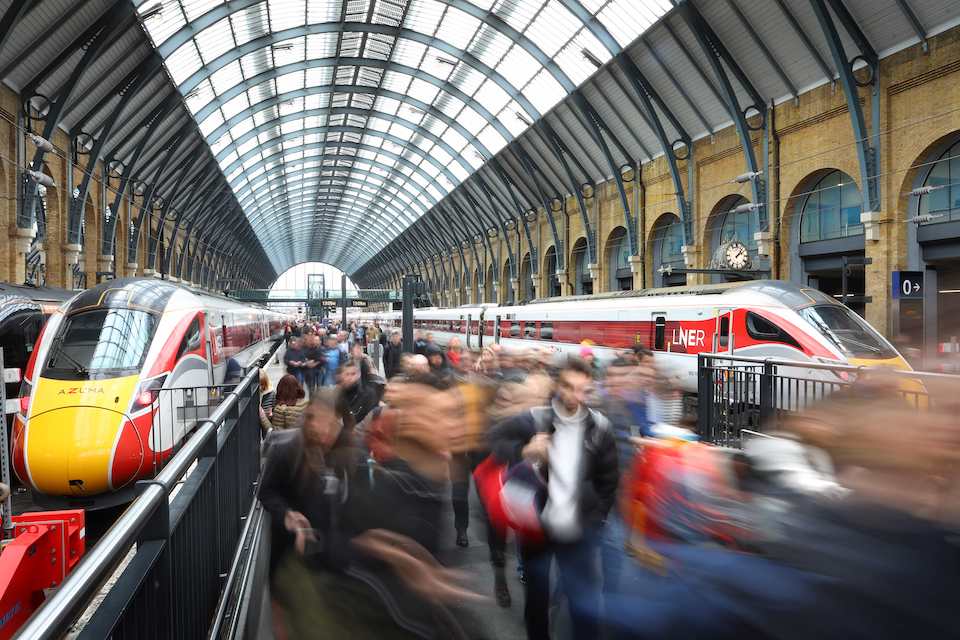
LNER’s disclosure in September was a timely reminder. As reported by RailTech.com, the government-run East Coast Main Line operator has to inform customers that their names and email addresses had been accessed through a supplier’s compromised network. No operator — passenger or freight — is immune to the risks of digital dependency. Experts were quick to highlight the real issue. The weakness wasn’t necessarily in LNER’s own systems, but in those of a third-party supplier.
“Even established organisations can fall victim to supply chain or third-party attacks,” said Jamie Akhtar, CEO and co-founder at CyberSmart. “The attackers were able to gain customers’ details, [who] can potentially expect to receive phishing scams going forward.” That warning rings alarmingly true for freight too. Rail logistics is heavily integrated with third-party systems, from customer portals and port interfaces to real-time fleet tracking and customs data sharing. Each is a potential back door, opening up to economic chaos.
Third-party risk: rail’s shared vulnerability
“The priority should be on people, having proactive customer comms, clear guidance on what [the company] will and won’t ask, and takedowns of spoofed domains,” advises Javvad Malik, Lead CISO Advisor at KnowBe4. As the Chief Information Security Officer, his role focuses on operational technology and supply chain systems. In the rail freight context, that means freight management platforms, scheduling, port interfaces, customs data, and signalling integration.
If that sounds foreign to you, then maybe it’s time to open a recruitment ticket. If we’re speaking your language, then you’ll understand that for the freight sector, this goes beyond customer communication. One spoof email to a logistics manager, purportedly from a partner terminal, asking to “confirm” train manifests or passwords for real-time tracking. Then, with an errant click, the supply chain could grind to a halt.
Could freight be next?
Headlines are made by cyber attacks on passenger operators. Attacks on freight, however, could make history. Rebecca Moody of Comparitech noted that shortly after the LNER breach, the ransomware gang Radiant Group posted a message titled “UK Rail Services”, hinting at a broader targeting campaign. “It didn’t reveal the name of the entity it had targeted but said it would ‘begin our process’ in three days if a ransom wasn’t received,” she said.

The connection to LNER is unproven — but the message is unmistakable. “Radiant is a new ransomware gang,” Moody added. “This demonstrates the lengths the gang will go to. Now imagine that post wasn’t about passenger data but operational control. What if signalling systems, digital waybills, or freight movement data were disrupted? Aggregates instead of asparagus on the supermarket shelves. The country could soon be paralysed.
A freight economy built on trust
UK rail freight thrives on trusted relationships. Many daily operations are conducted between trusted individuals, working together on long-term contracts, integrated logistics, and shared data. That trust, however, is both a strength and a soft underbelly. The digital links between rail freight operators, rolling stock and infrastructure agencies, ports and terminal management, and hauliers – well, you get the picture – it’s a business that’s all about moving parts. These are as crucial as the physical connections of the network itself.
“Organisations not only need to ensure that their own systems are kept up to date and protected against cyber attacks,” said Chris Hauk, Consumer Privacy Advocate at Pixel Privacy. “They also need to check with their providers and partners to ensure that their systems are also fortified against attack.” In other words, cyber resilience is not just an internal matter. It’s the network’s hot-box responsibility.
Five hard lessons for a connected industry
- Audit the supply chain: Continuously vet third-party vendors for cyber resilience, access control, and compliance.
- Mandate strong authentication: Enforce phishing-resistant multi-factor authentication (MFA) across all access points.
- Training for staff — and monitor morale: Educate employees to spot red flags, and address the insider threat from disaffected or departing personnel.
- Proactively manage communications: Issue clear public and internal guidance on what official emails or texts will and will not contain.
- Plan for breach response: Assume compromise is inevitable — prepare incident response teams, reporting protocols, and customer notification strategies.
Don’t wait for the red light
The LNER incident may not have derailed the passenger timetable, but it should make every freight operator stop and examine. Rail freight is the silent workhorse of the British economy. It has increasing dependence on data, connectivity, and remote control. That means that a cyber strike could hit harder than any physical failure.
This isn’t a call for panic, but for preparation. We don’t wait for a red signal before we apply the brakes. Good drivers anticipate them. Cybersecurity in rail freight should be no different. The cost of waiting for the signal could be far greater than any delay ever logged on a timetable.