For decades, Britain’s railways have been planned, funded and debated in silos. Projects are either “for passengers” or “for freight”, and rarely both. Yet history, and more than a few contemporary examples, suggest that the most valuable investments are those that serve the railway as a whole. That’s a holistic approach that’s advocated by RailFreight.com UK Editor, Simon Walton.
The story begins on the Settle and Carlisle line. In the 1970s, the route was marked for closure, dismissed as uneconomic and underused by passengers. A public campaign saved it, but few then imagined how indispensable it would become to the modern network. Half a century later, the line stands not just as a tourist attraction, but as a vital freight artery, a lifeline for quarries, and a diversionary route that will keep the West Coast Main Line moving during next year’s extensive renewal works.
Freight and passenger in harmony
A naming ceremony for locomotive 66791 Settle & Carlisle 150 (the line pictured above) marked more than nostalgia. It symbolised the future of integrated use. When the West Coast Main Line closes for bridge work in early 2026, it will be the Settle and Carlisle that quietly takes the strain. The message is clear. Freight can preserve and justify routes that passenger traffic alone may never sustain. The network, however, needs the capacity. It also demonstrates how a railway designed in the Victorian era can still serve twenty-first-century connected logistics.

The new East West Rail project embodies the same spirit. Planners originally conceived it as a passenger link between Oxford and Cambridge. Common sense eventually prevailed. It was decided to adapt the line to carry freight even before it was completed. In June this year, Maritime Transport operated the first commercial service between Oxford and Bletchley, connecting it to its new Northampton Gateway terminal. The high-speed turnouts and loop access design allow the modern and huge logistics hub to live alongside a busy passenger railway, rather than compromising it.
Freight projects benefit passengers
East West Rail confirmed that a line built for passenger reconnection could also unlock the flow of goods across southern England. The design of the junction into the terminal, allowing freight to join the main line at speeds up to forty miles per hour, is a small engineering detail with a large strategic consequence. It avoids conflicts with passenger traffic and proves that smart design can make shared use efficient rather than antagonistic.
Shared use, however, still depends on infrastructure that respects both parties. The Werrington Tunnel near Peterborough is a prime example. It opened to fanfares beneath the East Coast Main Line in 2021. The headlines spoke of faster passenger journeys and fewer delays. The real triumph, though, was in the quiet separation of freight paths from the high-speed passenger corridor. By allowing relatively slower trains to dive under the main line, rather than cross it, the tunnel gave back valuable capacity to both. With the East Coast Main Line catching up to its West Coast counterpart, it can use all the capacity it can get.
When it doesn’t work out
Where investment has ignored the need for balance, the consequences are immediate. On the Bidston Line between Wrexham and the Wirral, Transport for Wales and GB Railfreight found themselves fighting for the same paths—passenger growth on one side, industrial output on the other.
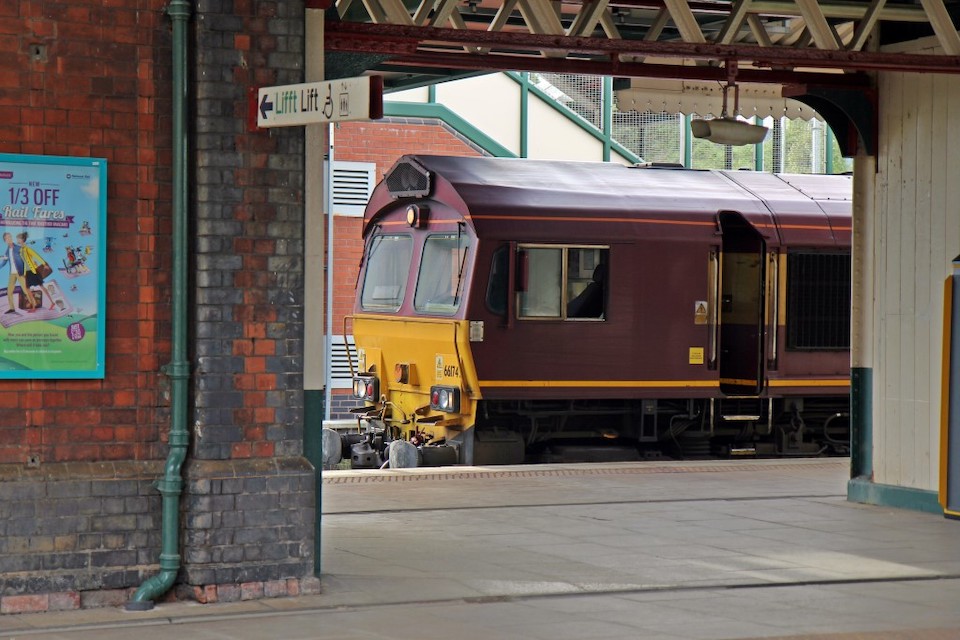
The dispute reached the Office of Rail and Road in 2022, when the regulator was forced to adjudicate. It was not a good look for rail as a transport corridor. The eventual compromise worked, but it illustrated that rail capacity is finite, and unless new schemes are designed from the outset to carry both people and goods, conflict is inevitable.
The future’s bright, the future’s freight
There are also lessons in the lines yet to be revived. In the North of England, far removed from the hype of Northern Powerhouse Rail and HS2, more locally grounded campaigners for the reopening of the 12-mile (19km) Skipton to Colne link make an economic case that is as strong for freight as for passengers. The short missing stretch would restore a trans-Pennine corridor for goods between Lancashire and Yorkshire, reducing circuitous detours and unlocking fresh opportunities for intermodal services.

Similar potential lies hidden under the brooding stonework of the Cadishead Viaduct in Salford. The Victorians built it wide enough to take additional freight lines that never materialised. Well, not yet. The viaduct once carried the Cheshire Lines route that could, in theory, connect the long-awaited Port Salford sea, road and rail intermodal hub (see reporting in WorldCargo News) with Trafford Park or its successor in a single continuous corridor. Peel Ports’ long-term Atlantic Gateway vision hints at that possibility. The structure itself still stands, solid and unused, waiting for a new purpose in an era that badly needs rail capacity.
In West London, a more modest but equally telling example lies in the Dudding Hill Line. At present, it is a freight-only link threading quietly through Brent and Ealing, connecting the Midland, West Coast and Great Western main lines. For decades, it has carried heavy trains through back gardens and industrial estates while passengers scarcely knew it existed. Now, proposals for the West London Orbital plan (promoted by Transport for London) to reopen it to passenger services as part of the Overground. If realised, it would become another demonstration that investment in one mode benefits the other. The very act of expansion invites wider use.
Building for both is building for better
When Britain builds or upgrades its railways with freight as an afterthought, it risks missing half the value. When it plans holistically, the results multiply. Sometimes, the law of unintended consequences works in everyone’s favour. Freight sustains routes between passenger peaks; passenger traffic makes the business case for keeping lines open that freight alone could not justify. The two are not rivals but interdependent parts of the same economic engine.
From Settle to Brent, from Peterborough to Salford, it is the railway’s versatility that is its strength. Freight is not a separate network. It is the bloodstream of the same system that carries commuters, tourists and shoppers. If Britain wants a resilient, low-carbon, future-proof railway, it must stop drawing lines between them. Build the line, open the route, strengthen the bridge. If you expand it, they will come.