What happened once Dr. Beeching closed a Branch Line?
This blog examines the Seaton Branch Line in East Devon. It will consider the closure decision, the process of deciding on the future use of the line and how Seaton Tramway contributes to the area today.
Seaton is a holiday town in East Devon. The Seaton Branch Line opened in 1868 and ran through the Axe and Coly Valleys from Seaton Junction on the Exeter – Waterloo main line, with stations at Colyton, Colyford and Seaton.

This image of Colyford Station, probably from the 1920s typifies the image of a bucolic branch. Discovered during my research at the National Railway Museum, it is the only image that I have found of the original station building at Colyford.

The Seaton Branch was typical of local, rural lines in the area. The existence of the line was one of the main reasons that Seaton was chosen for one of the early Warner’s holiday camps in 1935. Local services were supplemented by direct trains from Waterloo bringing passengers to Seaton. Demand was so great that in 1936 a new Art Deco station was built at Seaton with platforms that could hold longer trains.
In common with many branch lines to seaside resorts Seaton Branch line passenger traffic experienced a summer peak, with 3500 tickets issued and 12000 collected in August 1959, and 1200 still using the station on summer Saturdays in 1964. Outside the holiday season, the line carried less than 5,000 passengers a week, and of the stations on the line only Seaton collected more than £5000 a week in revenue.
The financial logic in deciding the future of branch lines in the Reshaping Britain’s Railways Report and associated plans was simple. Most of the lines did not carry enough goods and passengers to be viable and were demonstrating a continued decline as more people used cars and freight transferred to the road. Goods services were withdrawn in 1964 after the railway’s road haulage fleet was rationalised and road hauliers took over locally.
Despite objections from Seaton Urban District Council, businesses, visitors and residents the line closed in 1966 as part of the British Rail modernisation programme. The last train from Seaton on 5 March 1966 carried less than eleven people.
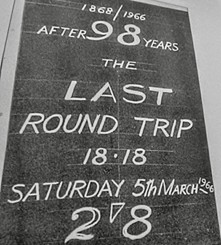
Replacement bus services were slower, but served intermediate villages that previously had a limited service and stopped in the centre of Colyford, rather than at a station 1.2 miles away. There was still increased demand on summer Saturdays from large numbers of passengers with luggage who could not fit on the bus, so from 1967 extra coaches were laid on to get visitors to the town. In the longer term, passengers were discouraged from using train services by the poor reliability of bus connections. The assumption made by Beeching that passengers would drive to the mainline railhead was also proved wrong, once in the car they increasingly drove all the way to their destination.
What Happened Next?
Whilst the closure of the branch lines progressed, in Eastbourne Modern Electric Tramways was seeking new premises for their narrow-gauge tramway. They reviewed various lines that were due to close and chose to come to Seaton. Despite support from the Ministry of Transport the process of consultation to approve the order for the move went on for three years and the delays put the tramway within weeks of going under.
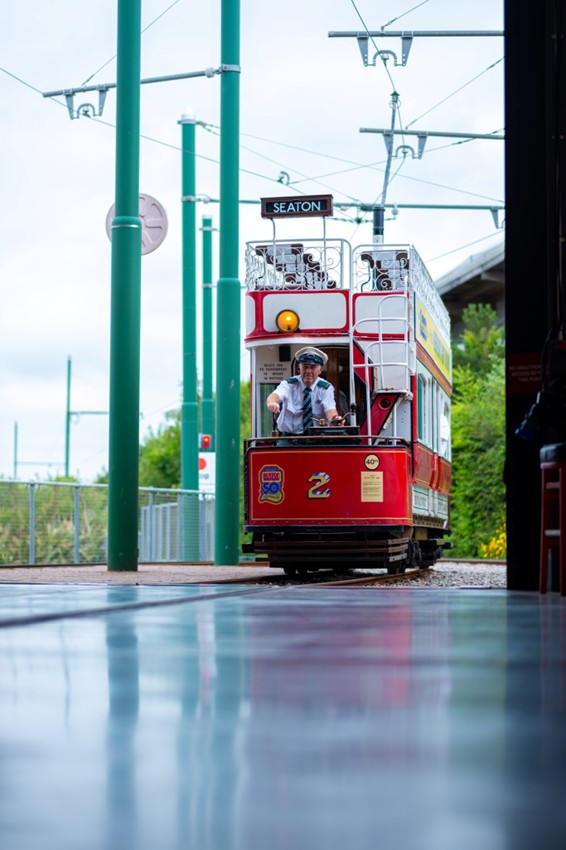
After constant lobbying by Claude Lane, the founder of the Tramway, opening was approved at a public enquiry. In 1970 Modern Electric Tramways arrived in Seaton bringing equipment including 9 cars, track, 160 trolley poles and generating equipment. With help from volunteers the track was relaid to the new 2-foot 9-inch gauge, reusing the existing ballast and the ex-BR sleepers cut into half lengths. A battery powered service with 2 regauged trams was set up in time for the school holidays. Seaton British Rail Station had been replaced with a factory, so the service operated from the Tramway’s new Depot at the end of the former station platforms. Volunteers continued to support the development of the line, and whilst some changes were required to accommodate the trams, much of the surviving infrastructure, including bridges and embankments, is still in daily use. By 1971 trams ran as far as Colyford Station, new track was laid to bring the tramway to Seaton town centre in 1975 and the service finally reached Colyton in 1980. Colyton station now provides visitor facilities, including a café and shop.
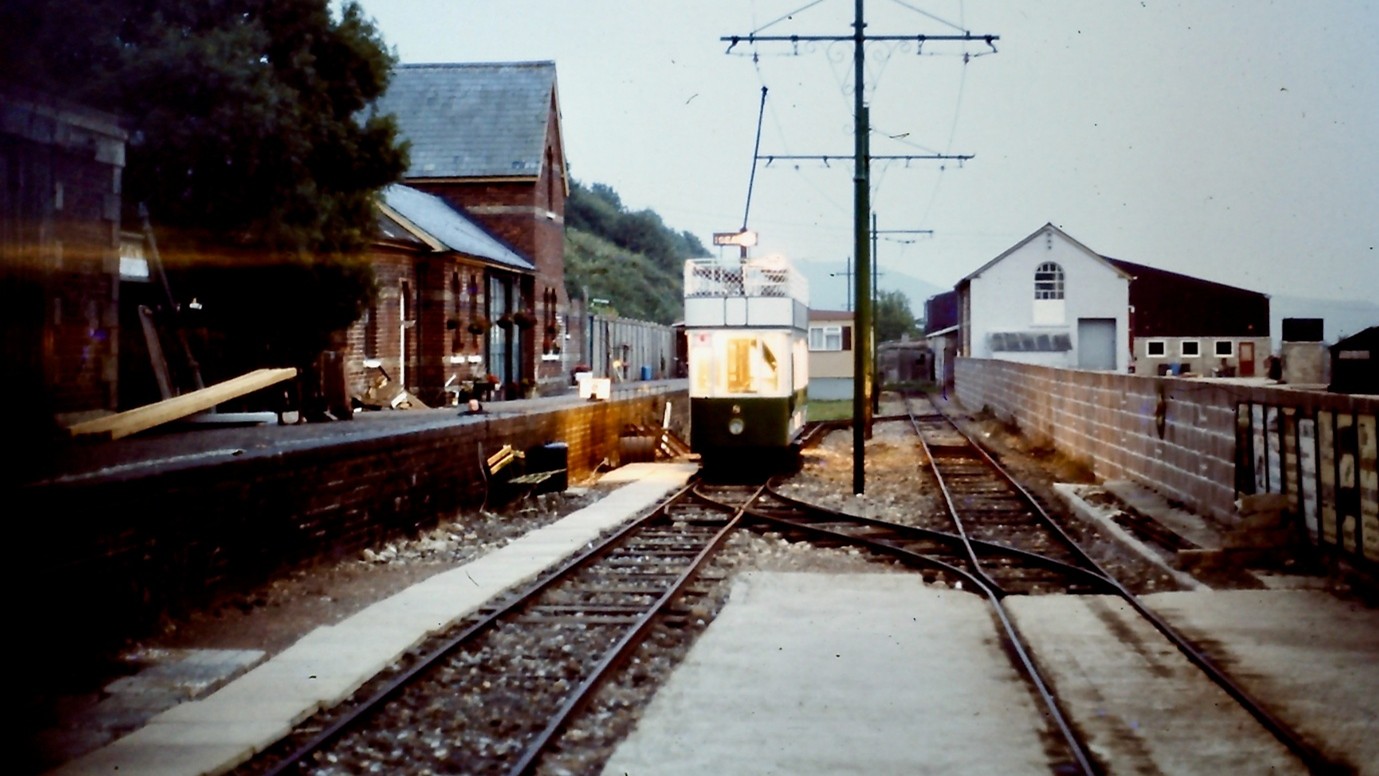
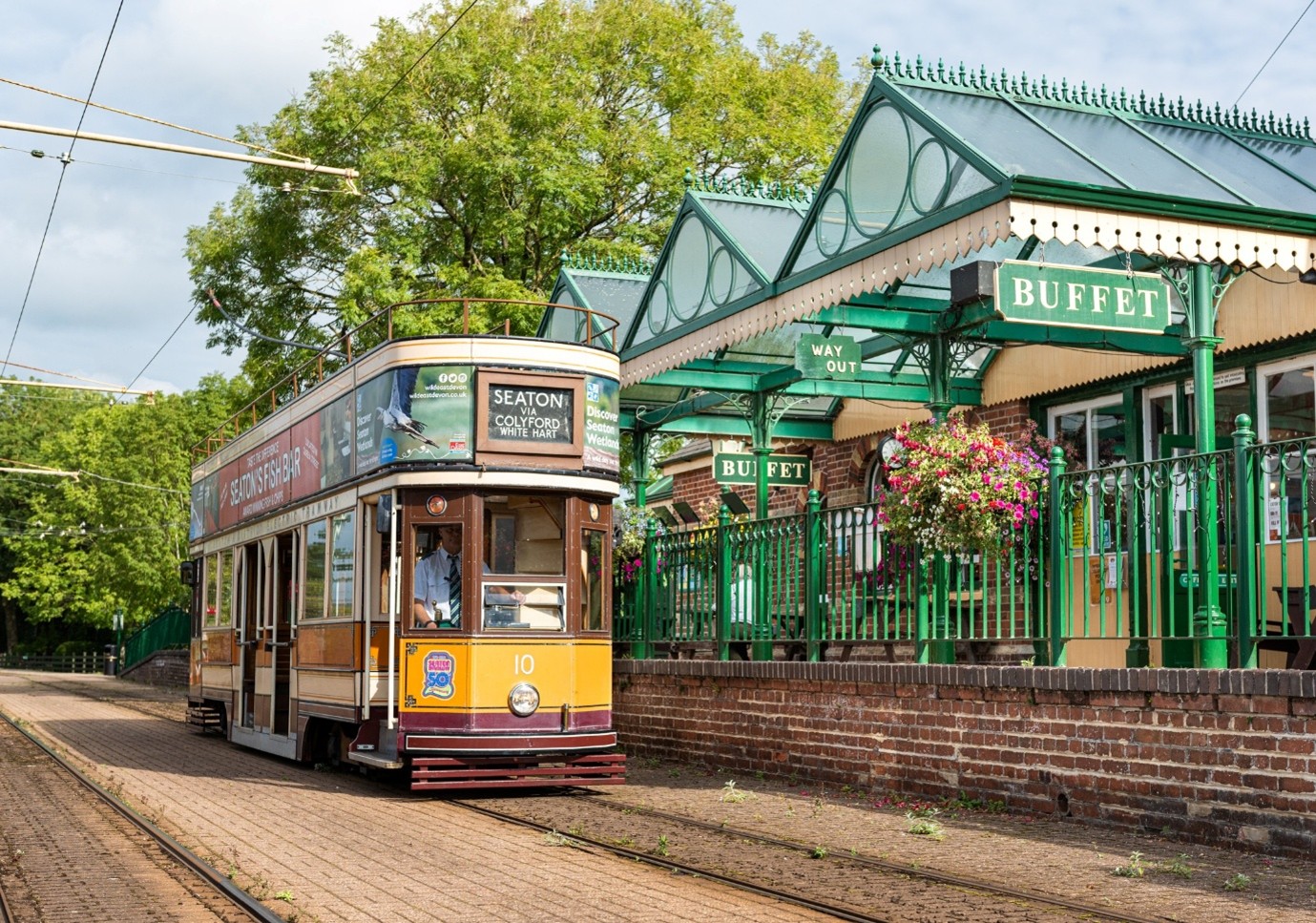
For the last few years, a volunteer has been digitising records, photos and films of the history of Seaton Tramway which are being used to produce popular videos and interpretation. The development of the line is explored in more detail on the Seaton Tramway website and a video of Seaton Tramway in the 1970s.
The fleet that arrived in Seaton consisted of trams built by the tramway and trams adapted to run on the narrow gauge, but Seaton Tramway has continually expanded its offering to visitors. In the 1990s the Tramway added 3 new accessible trams to its fleet allowing more visitors to experience a trip through the Axe Valley. The evolution continues and the new Seaton Tramway station built in 2018 is also used as a community space for events and exhibitions. Two new accessible stops provide a viewing platform on the estuary and access to Seaton Wetlands. Seaton Tramway runs the annual Natural Seaton festival that celebrates all that the area has to offer. Most recently the charity reopened the Jurassic Discovery centre, creating a soft play area and dinosaur exhibition. Educational programmes are run with local schools and organisations.


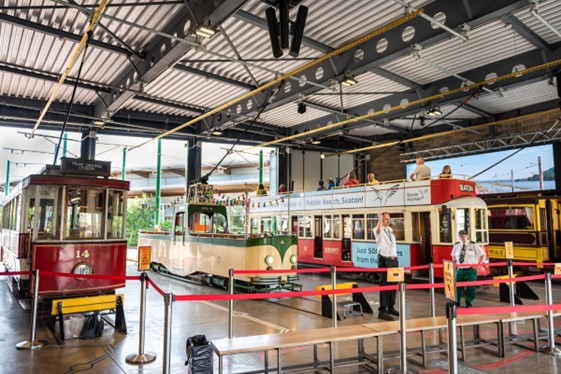
Seaton Tramway is unique amongst the lines closed by Beeching in its reinvention as a heritage tramway. Operated as a charity for a decade, Seaton Tramway celebrates its 55th birthday this year during the Railway 200 celebrations. The tram service and special events across the year bring 90,000 visitors to the area annually, boosting the local economy, providing employment, training and volunteering opportunities whilst preserving heritage transport infrastructure in the middle of beautiful scenery.
Reinvention and repurposing of closed lines to provide heritage services, often undertaken by charities and volunteers, are now a long-standing element of our railway tradition. They are part of the railway history of four post-Beeching generations of my family and bring enjoyment to visitors. They preserve buildings and infrastructure, provide homes for rolling stock and artefacts for future generations—their ongoing evolution is part of our railway history.
The post Railway 200—Stories of Reinvention and Renewal: Seaton Tramway appeared first on National Railway Museum blog.