Saturday 27 September marked a landmark moment in British history – 200 years since the world’s first passenger railway journey between Stockton and Darlington.
Since the early days of Locomotion No. 1, the railway has became the backbone of Britain, moving people and goods, connecting communities, and evolving through steam, diesel and now electrification.
For many, the railway is more than a job, it’s a calling, and, for the Chandler family it’s been a way of life for over two centuries.
Tony Chandler, Shift Signaller Manager at the Wimbledon area signalling area, has dedicated 37 years to the railway, following in the footsteps of his father and grandfather, who each served 50 years. His brother worked on the railway for 38 years, his uncle for 30, and now his son Joseph continues the family’s railway legacy, working as an isolation planner on the Wessex route.
“I joined in 1989,” Tony recalls. “It was probably inevitable. I asked my dad to get me on for six months as I needed something to do and I never left.”
Tony started as a booking boy at Woking signal box, later moving to Waterloo which he describes as an “incredible and amazing experience” to see and learn from the signallers who worked there.
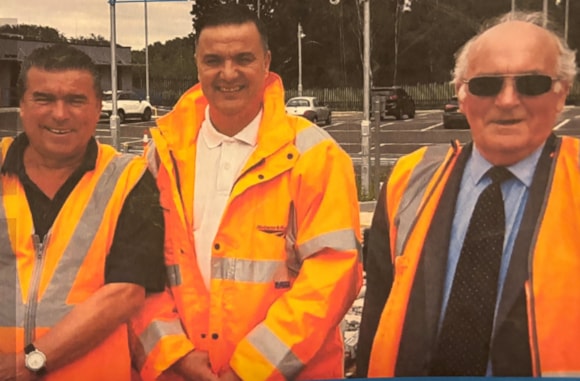
Technology has transformed and streamlined the railways, but, prior to this automation, Tony and his colleagues would have to rely on a sharp set of eyes in the event of failures.
“When I was a box boy at Waterloo, we had a train describer system that would describe the trains as they’d come on to the panel,” he said. “When this failed, we weren’t sure what trains were coming. We used to open the window at the end of the box and they would send me out with a pair of binoculars and tell the signallers the train headcodes. I thought they were joking and I couldn’t believe it at first. The memories of doing that always stuck with me.”
Tony left Waterloo to look after Wokingham signal box and, in 1994, he moved to Wimbledon Signalling Centre, which now controls Waterloo. Over the years, he’s seen the railway evolve dramatically.
“I love the pressure and the fact no day is ever the same. With the resignalling project and moving onto axle counters and computer-based systems, the railway is always progressing. I played a part in the Feltham to Wokingham resignalling, carrying out the axle counter training for new staff and loved seeing the progression. It’s surprised me how quickly things have changed. When Wimbledon came in 1990 that took out 15-20 smaller boxes. The Basingstoke Rail Operating Centre has replaced many smaller signal boxes. It’s frightening how quickly the railway progresses how quickly 37 years have gone. It’s a good thing. I love my job and I love working on the railway.”
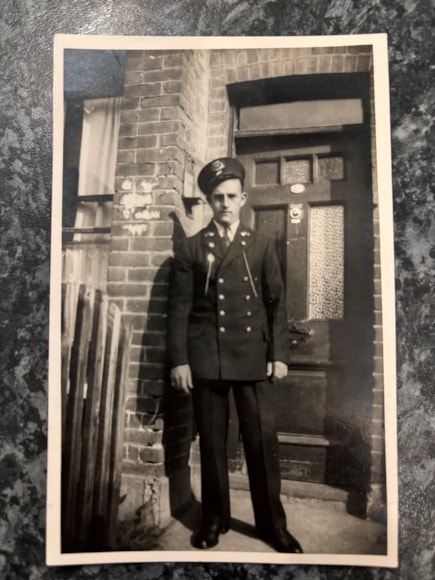
Tony’s upbringing, naturally, had plenty of talk about the railway and, even today, family gatherings often result in ‘talking shop’. His grandfather led the way, joining the railway in 1937, partly because of his experience with horses as swathes of the railway were still horse driven at that time.
“My grandad was handed a job as a goods guard – everything was delivered by steam train and he did that for many years. In the 1970s he then became a senior railwayman at Strawberry Hill station. He finished at Feltham – his two sons were senior railmen at Feltham. Because he was on the railway pre-war, he didn’t get called up as the railway was playing a vital part of keeping the company going delivering coal, milk, cattle. Everything that used to go by rail, he used to transport. He helped keep the country going by being on the railway. He would cook his breakfast on the footplate as he delivered the goods.”
Tony’s father began as an engine cleaner, aged just 15, in 1956, working his way up to become a driving instructor in 1966, training the next generation of drivers.
“It was long hours and dirty work,” Tony says. “But that was the progression into the driving grade. He was a fireman for three years at Feltham Marshalling Yard. He was given a railway house where we were all born. He was either going to go onto the footplate but with the phasing out of steam, my dad decided he wanted to go down that route, going to Strawberry Hill in 1965/66. He was a driving instructor and trained many drivers throughout his career.”
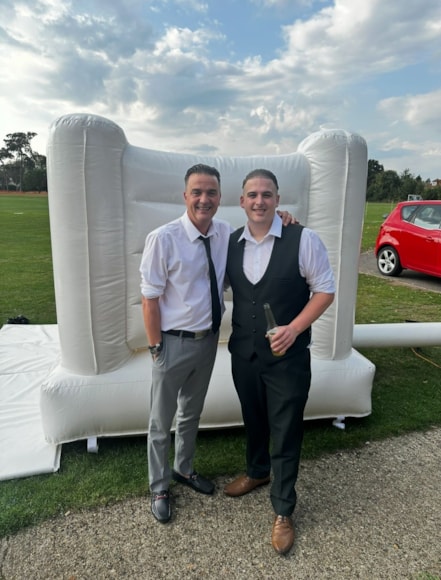
Tony’s son Joseph made it four generations of Chandlers to work on the railway.
“There is a call of the railway,” Tony says. “It was never my intention for my son to join. It was his choice. He saw the life and the enjoyment it gave me. We do long hours but it’s the reward you get from it. It’s an amazing job. Every day is different. You can go in and nothing will happen and the next day everything will happen. It was a calling for him and long may that continue.”
Tony is passionate about the opportunities the railway offers.
He says: “I think the wonderful thing about the railway is there are so many facets. There’s driving, signalling, P-Way (track maintenance). You can progress in any direction and Network Rail encourages that. That’s a massive selling point and a credit to the industry. My son is now moving to the isolation side and could go on to become an ECRO (Electrical Control Room Operator). It’s the opportunities that it gives you and long may that continue.”
Image credit: Network Rail