How can the sacking of an ambassador in Washington, DC, affect rail freight in Washington, CD (County Durham)? Quite radically is the possible answer. Politics threatens to derail ambitions for modal shift, freight growth, and stability in the industry. The UK government is hugely distracted, and small matters like growing the economy and modal shift to net zero are being shunted into the passing loop.
The chaos around Westminster last week was not all down to the union strike on the London Underground. Top appointments in the government were lost amid scandal and failure, and the judgment of the Prime Minister is being examined in excruciating detail. Hardly surprising then that the issues around rail freight have been laughably insignificant and blown away like the autumn leaves from College Green in front of Westminster.
Political distractions pile up
To list all the current matters of state that take precedence over the fate of rail freight would take until Friday. That, incidentally, is the day that Donald Trump’s state visit comes to an end. Not much sleep for Prime Minister Keir Starmer this week. Then again, Downing Street as restful as the first sleeper carriage over the points at Camden. Those seeking to take over his position are pacing the pavement. If not exactly ready to murder him in his bed, they are at least plotting to have him wake up to the sound of removal vans outside Number Ten.
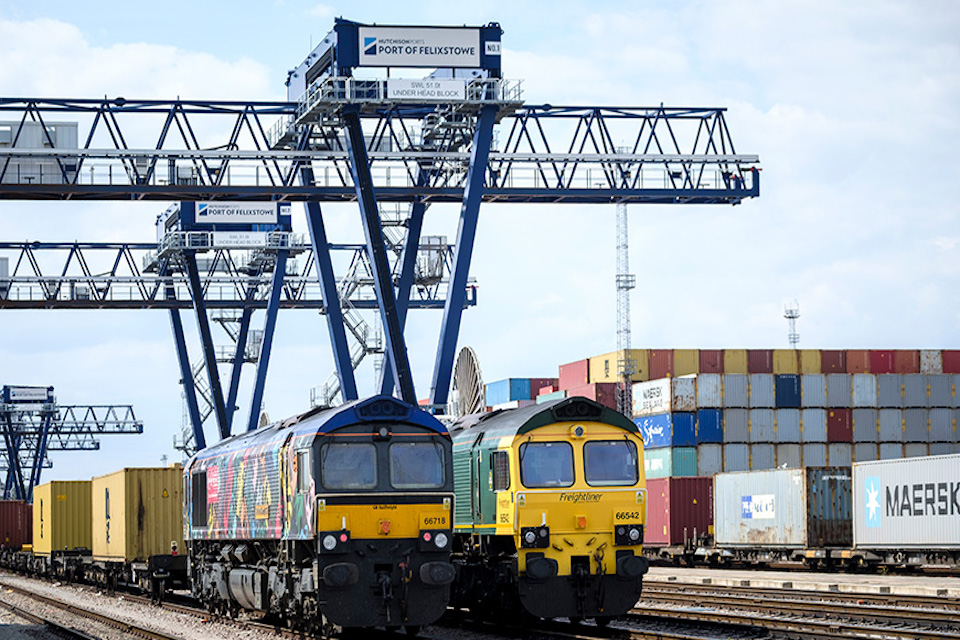
All this may seem fanciful when considering the fate of rail freight – but it isn’t. Politics has a habit of getting in the way of running the country, and in the way of running the railway. Debate is going on in the Houses of Parliament right now that has direct implications for the railway industry. The biggest and most wide-ranging piece of legislation in the whole Labour Party manifesto is the nationalisation of the railway network. That bill is currently being enacted.
Rail freight cannot be ignored
To say that rail freight is not affected by the “Rail Reform Bill” is untrue. Rail freight will, under the terms of the bill, remain in the private sector. However, Britain’s 600 or so daily freight trains will run on nationalised lines alongside nationalised passenger trains (which vastly outnumber goods movements). Cynical commentators often remind optimists that freight trucks don’t vote – people do. If there is any doubt over which takes priority in the debating chamber, politicians will vote for the thing that votes for them.
Right now, the voters are not happy. The UK economy is flatlining. Most metrics show almost zero growth, and recent momentum is stalling. July’s data shows flat monthly growth, and quarterly growth has been slowing to a fraction of a percentage point. Business does not like instability. The anaemic economic figures translate into that fear. No growth means no new business, and that means no new freight trains.
Echoes of Harold Wilson’s famous quote
If speculation is correct that the Prime Minister is on the wrong track, it’s only a matter of time before he runs into an oncoming train. Could it be that the Trump presidency (often mistaken for a runaway freight train) is that unwelcome light at the end of the tunnel? The Donald and his entourage are in the country this week, and the opportunities for a political signal passed at danger are frighteningly real for Keir Starmer.

What, though, of the push towards modal shift and a net-zero economy? Neither is on the agenda for Donald Trump – but both are critical for Keir Starmer. Right now, the UK government is not concentrating on the issue.
The Deputy Prime Minister, Angela Rayner, was forced out of office last week, and Peter Mandelson, ambassador to the USA, was sacked. In other words, the top political appointment and the top diplomatic appointment were both lost in the space of three days. That might be called a distraction – but only by those who are gifted with an acute sense of understatement. A week is a long time in politics. This could be a long week, too, for rail freight prospects. Let’s see where we are by Friday.