Everyone in London knows that King’s Cross and St Pancras are next door to each other. They lie on either side of Pancras Road. They’re so close that they share an Underground station, which hasn’t been open this week thanks to chaotic strikes that closed the entire London tube network. Nevertheless, the sub-surface corridor that connects the stations saves travellers time and hassle navigating the busy Pancras Street above. UK Editor Simon Walton says the history goes deeper than that, and argues that freight inspired the underground passage.
Great for moving passengers efficiently and quickly between the places they need to be. Yet those places were not always for the benefit of passengers. In both King’s Cross and St Pancras, people are delivered into caverns that, not so long ago, held the goods and perishables that fed and clothed London.
Once upon a time, it wasn’t just the express passenger trains that pulled into those most recognisable of cavernous London terminals. Just north of the platforms was an even greater expanse of goods yards, which at one time represented the largest urban goods yards in the world.
The forgotten art of urban goods…
The infrastructure around these two great stations was a phenomenon, but far from unique. Every British city of note, complete with its ostentatious passenger terminal, had a fan of goods sidings equally as big and bustling around the clock. It was entirely normal for the perishable and the fast-moving consumer goods of the day to be delivered right into the heart of each metropolis on the backs of railway wagons, with literally the last mile undertaken by road, horse, or even on the barrow of a porter.
Today, the art of the urban goods yard is almost forgotten. Intermodal freight has put paid to that. The containerisation of everything (including flat-packed containers packed inside containers) has killed off the manually loaded goods van, and those forty-foot steel behemoths are far too large to find their way into a city centre goods yard. Only in a distinct few locations (Wembley and Birmingham spring to mind) does the metallic clang of containerised traffic still emulate city-centre goods handling by rail.
A future? Well, possibly…
Metropolitan freight is a thing of the past. No more do the wagons (tiny by modern standards) clang into sidings in the night hours, delivering everything from milk to mink coats. Any return to those days seems fanciful at best. Refrigeration and fashion trends have taken care of the yesteryear understanding of “just in time” delivery, and trendy (expensive) bars and restaurants fill the vaults and arches under stations from Cannon Street to Waterloo.
Purpose-built goods stations – from Manchester’s Great Northern Warehouse to Leith Goods Depot in Edinburgh are long gone, or have found new life (you can watch Runaway Train in the Great Northern’s cinema complex). It seems that the age of goods trains in the city has little chance of a comeback.
Well, hold on to your vacuum-braked pallet vans…
In 2021, the UK infrastructure agency, Network Rail, compiled a review of the twenty major stations for which it has direct responsibility. The aim was to identify capacity that could be used for urban logistics within the passenger station environment. In other words, handling goods on the platform, out of hours and when all that urban infrastructure is relatively unused.
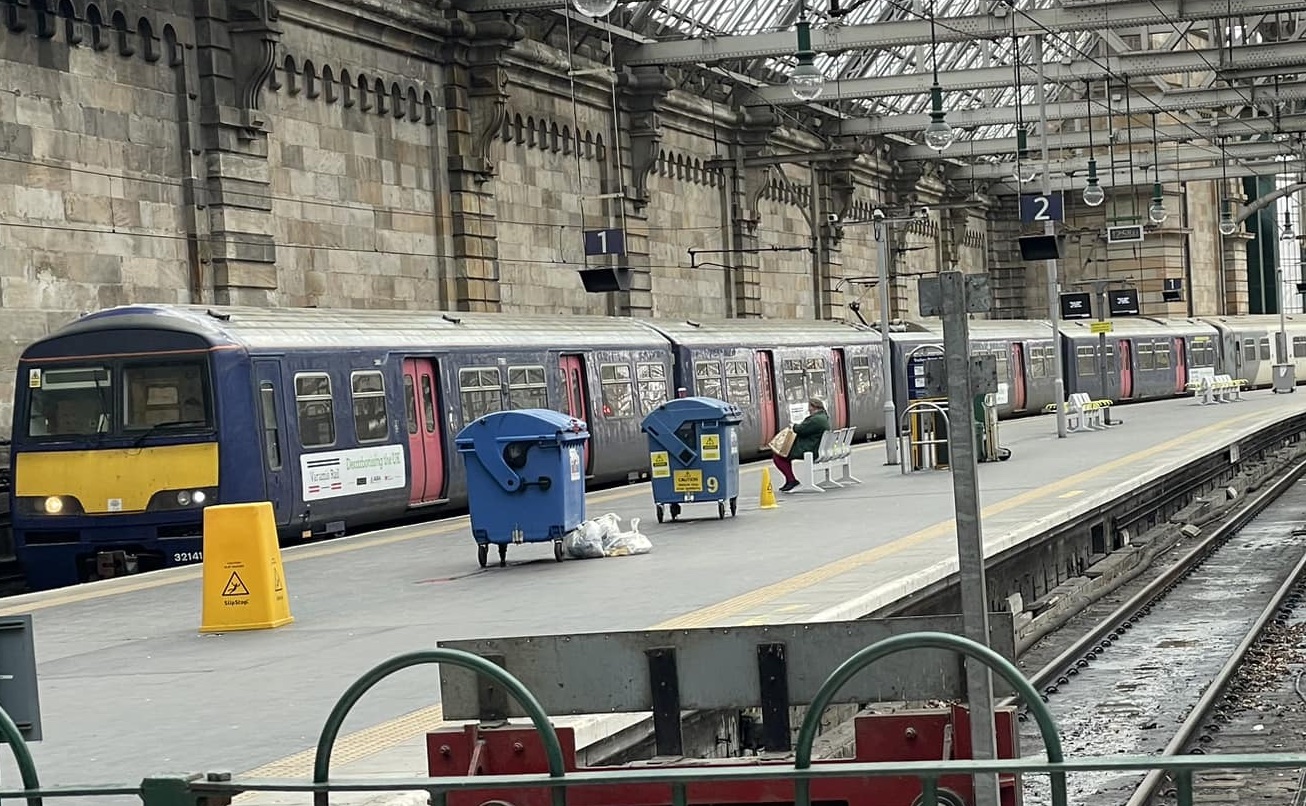
From Cardiff Central to Glasgow Central, and from Liverpool Street, London, to Lime Street Liverpool, Network Rail quantified what everyone suspected to be the case. There’s plenty of (mainly) overnight capacity for moving goods, right in the centre of every one of Britain’s biggest cities. It’s like the best-kept not secret was revealed to a less-than-stunned world.
So, in these times of Low Emission Zones, Congestion Charging and Net-Zero Economic Policy, there seems only one thing to do with this ground-breaking research: implement it without delay.
Except, here we are, four years later…
It may not surprise UK readers to find that, bar one pioneering operator, the platforms of Britain’s great railway cathedrals remain as quiet as the crypt overnight. No brutish sounds of British Rail Universal Trolley Equipment being manhandled onto General Utility Vehicles. Even that operator – the much to be commended Varamis Rail has yet to make a commercial fist of running into major stations – despite trials and tests at Glasgow and London. Their commendation must be for their perseverance.
London’s stations once served as the goods hubs of the hungry city. Those subterranean vaults were the larder of the metropolis. Now, these vaults are part of the concourses of St Pancras and King’s Cross. Elsewhere, at bustling Waterloo, London Bridge and even little Cannon Street, they’re retail and leisure locations, feeding a different sort of hunger.
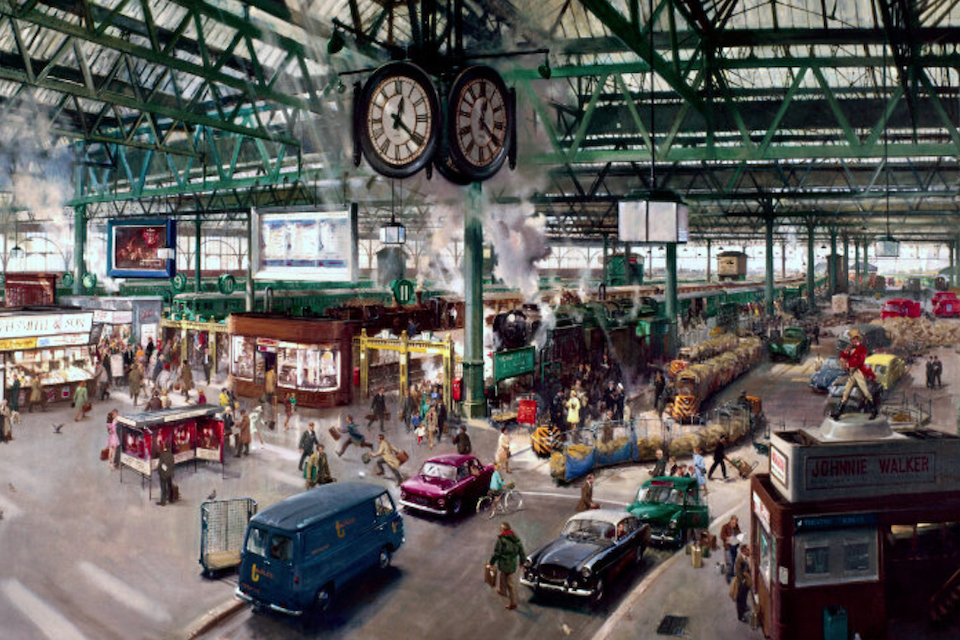
The goods stations at St Pancras and King’s Cross have long since been swept away. The offices of online giants and local government departments now fill the space alongside the leisure and retail outlets of prosaically titled Coal Drop Yards. There will be no return to the sprawling, ceaseless activity of the urban goods yards. Maybe, though, with the perseverance of Varamis and others like them, a semblance of metropolitan freight might find its way even closer to the markets it serves.
No longer will urban goods be hidden in the railway hinterland, nor beneath Pancras Street. Tomorrow’s metropolitan freight will be right there, on the platform at St Pancras and King’s Cross – as long as you rise early enough to look.