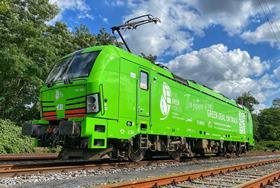
Amazon in the U.S. does leverage rail (intermodal transport) as part of its logistics network to move goods between locations, particularly for long-haul, middle-mile transportation.
How Amazon Uses Rail: The Intermodal Advantage
1. Amazon Freight Offers Intermodal Services
Amazon Freight, the company’s logistics arm launched in 2019, explicitly lists Intermodal Freight Transport—which combines truck and rail—as one of its core services in the U.S. alongside Full Truckload (FTL) and Less-than-Truckload (LTL) (Wikipedia, Amazon Freight Services).
2. Amazon Owns a Large Fleet of Containers
The company maintains a sizable fleet—over 24,000 intermodal containers—which it uses along with partnerships with major U.S. railroads (like BNSF, Union Pacific, Norfolk Southern, CSX) to move freight efficiently across its network (Wikipedia, Trains).
3. Strategic Proximity to Rail Terminals
Analyses show many Amazon fulfillment centers are within ~25 miles of major U.S. intermodal rail terminals. This strategic placement underscores how deeply Amazon integrates rail into its logistics infrastructure (Trains).
4. Opening Capacity to External Shippers
Beyond internal use, Amazon has begun offering its intermodal capacity (the containers and rail services) to external shippers as well, positioning itself as a competitor in the intermodal freight industry (RAILMARKET.com, RailFreight.com, Trains).
5. Cost and Sustainability Benefits
Intermodal rail is not only cost-effective for long-distance freight, but also aligns with Amazon’s sustainability goals—being a lower-carbon means of transport compared to over-the-road trucking alone (RAILMARKET.com, RailFreight.com).
TL;DR
- Does Amazon US use rail? Yes, Amazon uses intermodal rail, integrated with trucking, especially for middle-mile freight.
- Through Amazon Freight, it offers intermodal services using its own containers and rail partnerships.
- Rail transport plays a strategic role in connecting Amazon’s fulfillment centers and supporting cost-savings and sustainability efforts.
Let me know if you’d like details on specific rail routes, partners, or how Amazon’s intermodal service compares with trucking in terms of speed or environmental impact!