Plans for a rail terminal at the West Fraser timber mill near Inverness have been approved by Highland Council, the local administration for the Scottish area. The two siding development will link the Morayhill facility directly to the Aberdeen–Inverness railway line.
The move marks a significant step forward in reviving timber traffic on rail in Scotland. The long-anticipated development reflects broader ambitions to decarbonise freight and shift long-distance transport off the road network, particularly over rural routes.
Green light for West Fraser Morayhill sidings
Highland Council has granted planning approval for the construction of two rail sidings and associated infrastructure at the West Fraser OSB (oriented strand board) factory at Morayhill, between Inverness and Nairn. The new terminal will connect directly to the nearby Aberdeen to Inverness line, facilitating the movement of timber products by rail.
In its decision notice, Highland Council stated the project “offers a more sustainable alternative to road haulage and will reduce the number of HGV movements to and from the site.” The Council added that the development is “considered to support the principles of sustainable economic growth and the Scottish Government’s objectives in relation to climate change and modal shift.”
Timber traffic back on track
West Fraser, one of the largest wood panel producers in the UK, currently relies on road haulage to deliver its products across Britain and Europe. The approval of the sidings will allow the facility to load and dispatch timber products. Raw timber will arrive, likely in open-topped intermodal containers. To maximise the use of handling equipment (most likely one or more reach stackers), finished product dispatch could be directly onto compatible intermodal freight trains, for domestic or export markets.
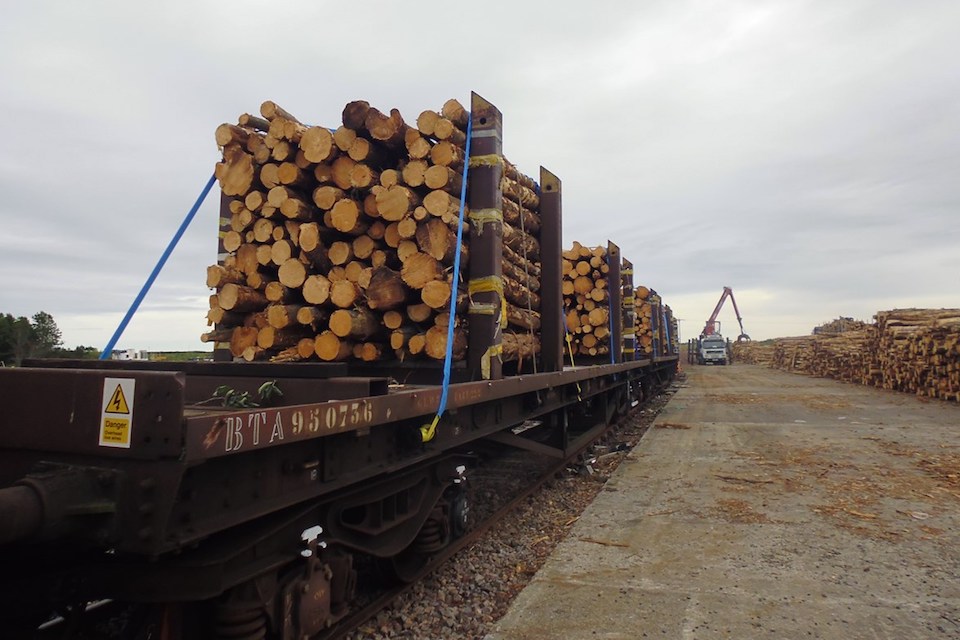
“The purpose of the proposed sidings is to provide an alternative method of transporting materials to and from the site, removing reliance on road-based HGV [heavy goods vehicle] transport,” said West Fraser. As reported previously by RailFreight.com, the revival of timber-by-rail in Scotland has been on the agenda for some time. In May 2024, we reported on the wider ambitions of Scottish forestry operators to expand rail access, citing a growing concern over carbon emissions and HGV road congestion in rural areas.
Strategic asset for Scotland
The Morayhill facility lies just a few kilometres from Inverness Airport railway station at Dalcross, which opened in February 2023. The terminal will sit close to the upgraded line, and the location offers opportunities for both freight and employment access. The proximity to a newly accessible passenger station could also support workforce mobility.

An official transport statement lodged with the planning application notes that the rail terminal would “enhance the site’s logistical capabilities” and allow West Fraser to “streamline operations and reduce the environmental impact of its logistics chain.” The submission also highlighted that the scheme aligns with the Scottish Government’s “Rail Freight Strategy” and its wider climate goals.
Wood for Waverley Route redevelopment
While the West Fraser development is a Highland success story, its potential echoes further afield. In the Scottish Borders, timber extraction from Kielder Forest—a 25-year harvesting programme—is anticipated to create substantial movement needs. However, that region remains poorly connected to the national freight network.
The current railhead at Tweedbank, the terminus of the Borders Railway, has no freight capability and a sixty-six mile gap (106km) exists between there and Carlisle on the West Coast Main Line. Reinstating the full length of the former Waverley Route is the subject of a long campaign to reconnect the Borders with the national freight and passenger network. While such a move remains politically contentious, the prospect of high-volume timber traffic from Kielder adds weight to the business case for a freight-capable line.
Decarbonisation in motion
The Highland Council’s support for the West Fraser development mirrors the Scottish Government’s policy direction. The Council noted that “the development is considered to comply with national and local planning policy which seeks to promote rail freight and reduce carbon emissions associated with transportation.” The news comes some time after trials were successfully completed in 2021.
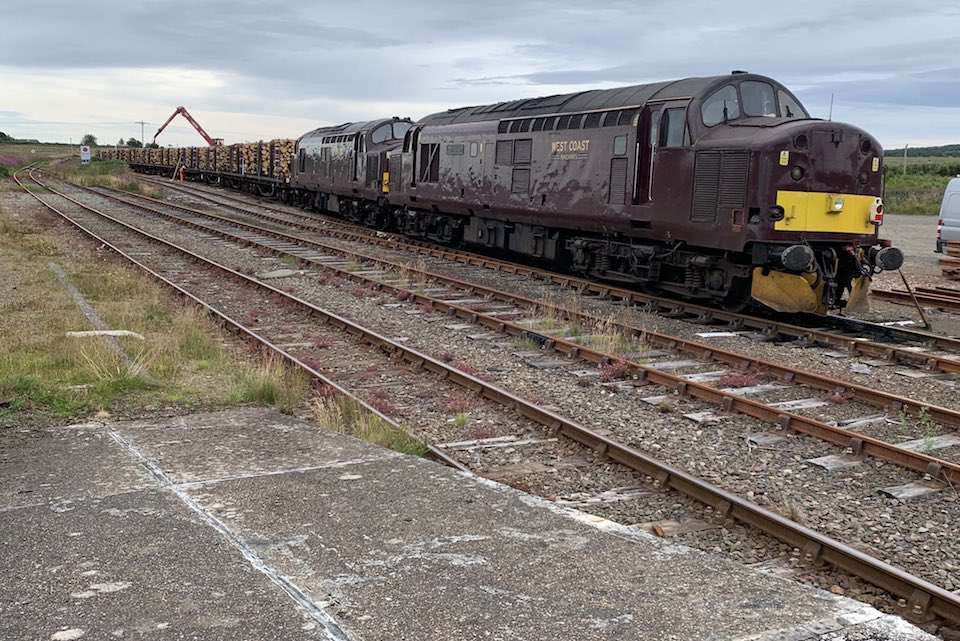
The Scottish Government’s Rail Freight Strategy: Delivering for Scotland, published in 2023, emphasises the need for more freight terminals in rural and industrial areas. The West Fraser terminal provides a concrete example of that policy in action. However, the government in Edinburgh has faced criticism for providing backing but no funding.
Groundwork and growth
The full build-out of the terminal is expected to proceed in phases. Although a construction timeline has not been published, documents suggest that ground preparation could begin by early 2026. West Fraser, which operates similar rail-connected plants in Canada and the USA, has not yet announced operational partners or routes, but the intermodal nature of the proposal suggests compatibility with existing freight networks. Nearby Inverness already handles daily intermodal traffic.
As Scotland’s timber and forestry sectors look to modernise, the West Fraser terminal at Morayhill could serve as a catalyst. There is relatively modest infrastructure required to support modern rail freight operations. West Fraser is in an ideal position to benefit from rail connection. Finding similar industrial locations around Scotland should not be difficult.