Pakistan is planning to send the first container train to Russia on 22 June. It is not quite the first such announcement. Earlier, the two countries planned to launch rail freight trails in March and April. Will it work this time?
If the project works out, and that is a big if, Pakistan would get a functioning connection not only to Russia, but also to various Central Asian countries. “We are not just building a railway, but an economic corridor”, commented Pakistan’s rail minister.
The train will travel from Pakistan into Iran, Turkmenistan and Kazakhstan, a route that is also known as the eastern branch of the International North – South Transport Corridor (INSTC). From Kazakhstan, it will make its way to Russia. The total length of the route is around 8,000 kilometres and takes 20 to 25 days to cross in its entirety.
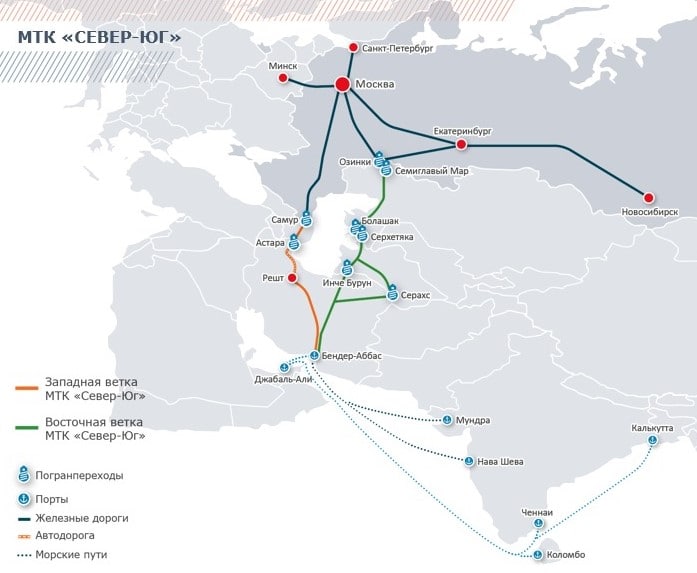
This image shows the eastern branch of the INSTC in green. Image: Telegram. © Russian Railways
Third attempt
The project has been postponed numerous times already. First, Pakistan planned to send the container train on its way in March, then in April, and now in late June. However, a tangible plan seems to be on the table for a June departure: 15 to 16 TEU of Pakistani exports, amounting to 500,000 tonnes, according to Chinese publication Xinhua.
The freight would depart Lahore for a 2,000-kilometre journey to the Iranian border. At Zahedan, an Iranian border town, the freight would be transferred from the Pakistani gauge to the Iranian one. In other words, the load would remain in Iran for a considerable amount of time.
That also makes it seem doubtful that the Pakistani exports will really depart for Russia this time around. Iran is currently the target of Israeli bombardments. Even though the east of Iran, the transit area, has been largely spared until now, it remains to be seen if Pakistan considers this a good time to move ahead with the trial.
Pakistan primarily exports leather products, electric medical appliances and textiles to Russia. As for imports, those consist of wheat, fertilisers, dried vegetables and petroleum products.