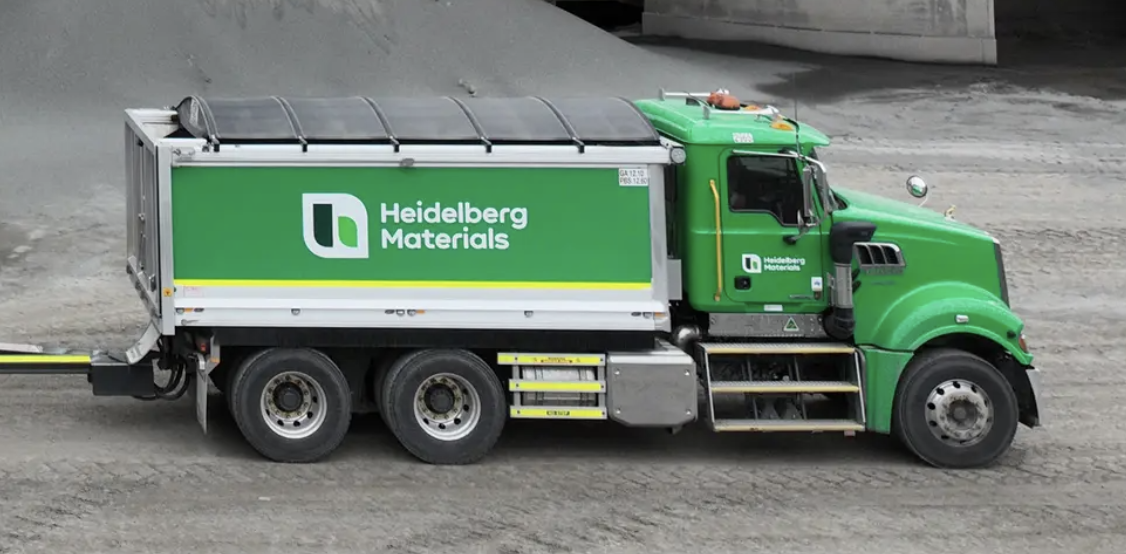
Heidelberg Materials Australia has proposed a 75-year granite quarry on a 280-hectare greenfield site at Bunyip North, about 70 kilometres south-east of Melbourne in West Gippsland. The project would extract an estimated 130 million tonnes of granite, with an ultimate pit footprint of around 70 hectares and a maximum depth of roughly 140 metres. What makes the project remarkable isn’t the volume, but how the company intends to move it: entirely by road.
According to the project’s own planning documents, access would run via Bunyip-Tonimbuk Road from the Princes Freeway, a route the company itself acknowledges may need upgrading to cope. Community group Mount Cannibal and District Preservation Group has cited figures of up to 550 truck movements a day on local roads and the Princes Highway at full production, extracted by a workforce of just 7 to 10 people on site. Over a 75-year operating life, that adds up to a staggering number of heavy vehicle movements on a highway corridor already carrying growing commuter and freight traffic between Gippsland and Melbourne, with no rail alternative proposed anywhere in the project scope.
Freight Victoria has been established to coordinate the development of an efficient freight and logistics system through the delivery of the Victorian Freight Plan: Victoria Delivers, Freight on Track: Victorian Rail Freight Plan, Navigating our Port Futures: The Victorian Commercial Ports Strategy, Moving More With Less: High Productivity Freight Vehicle Plan, and the Sustainable Local Ports Framework.
This is precisely the outcome Freight Victoria exists to prevent. Freight Victoria is the specialist division within DTP established in 2018 specifically to shift bulk freight from road to rail wherever practical, reduce heavy vehicle impacts on communities, and improve safety on the state’s freight corridors. A 130-million-tonne extraction project, planned from the outset with no rail spur, no intermodal link and no freight task modelling beyond truck movements, represents a rail-shift failure baked in before the quarry has even opened. Bulk aggregate is exactly the kind of freight rail handles well: heavy, low-value-per-tonne, non-time-critical cargo that a train can move far more efficiently and safely than a truck fleet running daily for seven decades.
The consequences compound over that timeframe. More trucks on the Princes Freeway and connecting roads mean more heavy-vehicle interactions with commuter and tourist traffic through West Gippsland, more wear on pavement never designed for that scale of sustained heavy loading, and a corridor upgrade bill likely to fall on taxpayers rather than the company generating the freight task. If Freight Victoria’s mandate means anything at the project-approval stage, a quarry of this scale and duration should have been required to demonstrate why rail wasn’t feasible, not simply defaulted to trucks because a road already exists nearby.
The EES process, first ordered in 2015 and still not complete after a decade of delays, gives regulators a genuine opportunity to correct this before approval, not after 75 years of truck movements are already locked in.
Bunyip North is not an isolated case, either. At Wallan, north of Melbourne, the state government approved a new quarry inside a growth corridor already earmarked for thousands of new homes, over the objections of residents and the local council, who argued the approval process ignored community consultation. The quarry, which will operate for roughly 30 years before closing in 2052, adds another multi-decade road freight task directly inside a rapidly urbanising area, with the same road-only transport model as Bunyip North.
At Tynong North, just a short distance from Bunyip North itself, Fulton Hogan operates a granite quarry that has needed a formal work variation simply to reduce peak-hour truck movements on local roads, rather than address the underlying reliance on road haulage at all. And the pattern isn’t confined to Victoria: at Martins Creek Quarry in NSW, community submissions have pointed out that a rail line already runs past the site and questioned why the operator continues to haul by road when rail access already exists, citing more than 400 trucks a day sharing roads with school buses in a community never built for that volume.
Together, these cases point to a structural pattern rather than a one-off oversight: bulk aggregate and quarry projects are consistently approved on a road-only transport basis, even in growth corridors, near existing communities, and in some cases alongside rail infrastructure that already exists. Freight Victoria’s founding purpose was to stop exactly this kind of freight-mode default. Bunyip North, still awaiting its long-delayed EES more than a decade after being ordered, is a live test of whether that purpose is being applied at the point of approval, or simply exists on paper.