Maureen Doyle heard the drill before she saw the truck. It was just past six, the light still grey over the rooftops of Yarraville, when the low mechanical growl worked its way into her kitchen. She found her husband already at the window, coffee untouched, staring at the thing being unloaded onto the nature strip.
It was a pole — though “pole” felt like the wrong word for something that size. Concrete, grey, ringed with bolts, lying on its side on the back of a flatbed like a felled tree. Fifteen metres, she’d read in the letterbox drop that had arrived only four days earlier. Sixty-six thousand volts. She thought of the old wooden pole it was meant to replace — eight metres of silvered timber that had stood at the end of her street since before she was born, carrying current so modest you could practically wave at it.
By eight, half the street was outside. Not shouting — not yet — just standing in dressing gowns and work clothes, arms folded, watching two men in hi-vis measure out a hole where Maureen’s fig tree used to throw its shade over the footpath in summer.
“They didn’t ask us,” said her neighbour, Frank, from the fence line. “Four days’ notice. Four days, for a job that changes the whole street.”
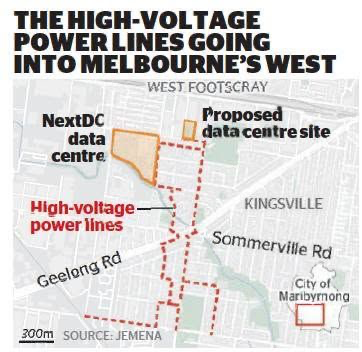
Maureen didn’t disagree, but it wasn’t the process alone that gnawed at her. It was what the pole was for. The overhaul, the local paper had explained, wasn’t about keeping the lights on for the people who lived here. It was about the twenty-odd data centres being waved through in Footscray, Brooklyn, and Yarraville itself — glass-and-steel buildings full of servers that never slept, that needed more power than the whole suburb had ever drawn before. The wooden poles, sized for washing machines and kettles, simply couldn’t carry it.
By the following week, the resistance had a shape. Someone had parked three cars nose-to-tail across the access lane behind Anderson Street, blocking the trucks before they’d even unloaded. Somebody else — no one would say who, though Maureen had her suspicions about the retired concreter two doors down — had gone out after midnight and packed one of the freshly dug foundation pits solid with grass clippings, mulch, and whatever else had been sitting in green bins along the street, so that when the crew arrived in the morning there was nothing to pour into.
At a packed community meeting in the scout hall, a local independent candidate stood at the front, papers trembling slightly in her hand, and said what a lot of people in the room had been trying to put into words for a fortnight.
“People woke up to these things outside their homes with almost no warning,” she said. “And let’s be honest about what they’re for. This isn’t about your fridge or your hot water system. It’s about data centres being fast-tracked through the west, and residential streets being asked to carry the cost of it.”
There was applause, sharp and immediate, the kind that comes from people who have been waiting for permission to be angry.
A man near the back — heavyset, a builder by trade, the kind of voice that carried without a microphone — stood and added his own warning to the room. “This is coming your way whether you like it or not,” he said, “unless people actually stand up and stop it.”
The council, for its part, offered little comfort. When residents cornered the acting chief executive after the meeting, he spread his hands in the particular way officials do when they want you to know the frustration is shared but the power is not. The council, he explained, had no authority to block or regulate the installations. That decision sat elsewhere — with the network operator, and ultimately with the state energy regulator. A letter to the Minister’s office produced much the same answer, relayed through a staffer: matters of network upgrade and maintenance were for the regulator to determine, not the government directly.
It was a strange kind of powerlessness — everyone in the room agreeing something was wrong, and nobody in the room able to stop it.
Still, the blockades held for eleven days. Long enough that the operator, faced with a growing list of obstructed sites and a council receiving daily complaints, announced it would pause the works pending further community consultation. It wasn’t a victory, not really — the poles that had already gone in stayed in, concrete curing in the ground outside houses that had never asked for them — but it was a pause, and a pause was something.
Maureen stood at her window that evening and looked down the street at the two towers now standing where wooden poles once had, incongruous against the weatherboard houses and jacaranda trees. Somewhere across the river, she thought, a data centre’s server racks were humming along just fine, cooled and powered and utterly indifferent to the argument that had consumed her street for the better part of a month.
She didn’t know if the pause would hold. But for the first time since the trucks arrived, the street had gone quiet in a way that felt like theirs again — if only for a little while.

This a great piece of satire covering the installation of new overhead power lines to
Support the data centre boom for Melbourne. Melbourne is a creative and engineering related city and should be leading the charge in developing these data centres creating sovereign facilities that keep our data on shore creating jobs and providing a career path for our young.
Bring on the developments.
Fabulous satire to a problem affecting residents in the inner west.
Power systems need upgrading.