Britain’s rail freight market contracted again over the last financial year, according to the most recent government statistics. The overall picture suggests continued fragility across several important sectors of the British economy. Total freight moved on the rail network fell to 16,055 million net tonne kilometres between April 2025 and March 2026, a decline of 3% on the previous year.
Despite visible pockets of development in some urban centres, the underlying freight figures point towards weaker activity in several sectors of the wider economy. The latest analysis from the Office of Rail and Road (ORR) show construction traffic suffered the largest reduction in absolute terms. Oil and petroleum movements collapsed to their lowest level since records began in 1998. Although intermodal traffic posted gains, the overall picture suggests continued fragility across major parts of the British economy.
Construction slowdown hits freight
Construction traffic accounted for nearly one-third of all rail freight moved in Britain during the latest year. However, the sector also recorded the largest decline, falling by 7% and reducing overall freight volumes by 398 million net tonne kilometres.
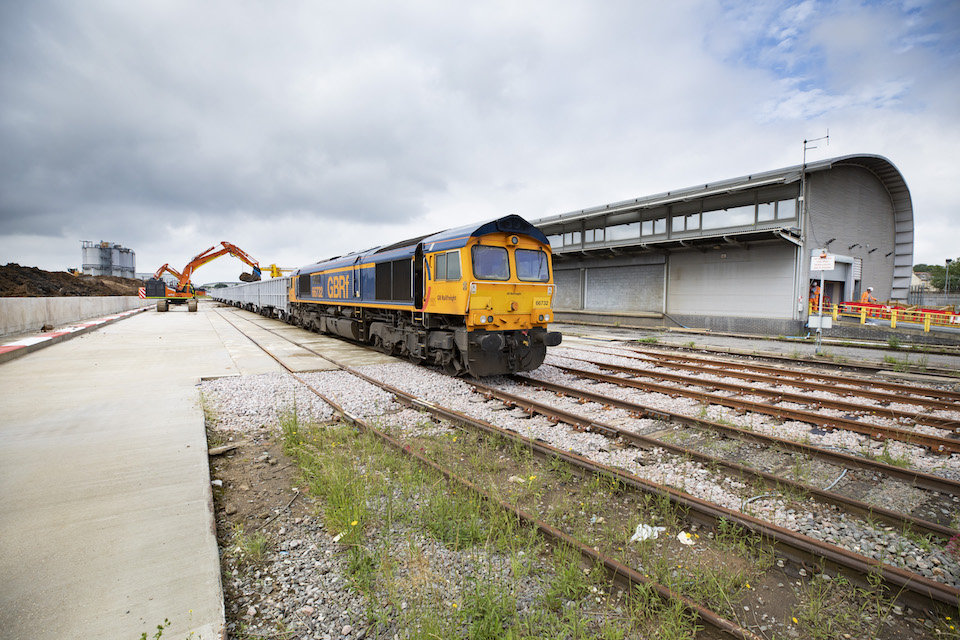
The ORR said urban high-rise development had been subdued partly because of delays in processing planning applications under new tall buildings regulations. At the same time, the reset of the HS2 high-speed rail programme resulted in a temporary pause in the movement of materials to construction sites. Both factors reduced demand for rail-borne aggregates and concrete.
Sharp falls for oil and international markets
Oil and petroleum traffic experienced the steepest percentage decline among the major commodities. Freight moved in the sector fell by one third to 535 million net tonne kilometres, the lowest annual total recorded since the time series began almost three decades ago. The decline reflects significant structural changes within Britain’s refining sector. The closure of Scotland’s Grangemouth refinery in April 2025, followed by the cessation of operations at the Lindsey refinery in Lincolnshire in June, substantially reduced fuel oil traffic.
International freight also declined by 19% to its lowest recorded level, suggesting weaker cross-border freight activity. The reasons behind the decline in international traffic are less clear. Continuing disruption to global shipping routes and the rerouting of container services around the Cape of Good Hope may have influenced volumes, although the ORR did not attribute the reduction to any single factor. As supply chains continue to adjust, international rail volumes may remain volatile over the coming months.
Intermodal growth provides a rare bright spot
Not all sectors moved in the same direction. The Office of Rail and Road did paint some pastel shades. Intermodal non-maritime traffic increased by 10% to reach its highest annual level since 2013. The ORR attributed much of the increase to additional retailer services, including a new Direct Rail Services operation between Daventry and Coatbridge.

Maritime intermodal traffic also edged upwards, reaching its highest level since 2018. Trends in the wider economy have seen retailers increasingly using warehousing capacity to guard against supply chain disruption. There is a pronounced move away from just-in-time logistics towards larger inventory holdings. This points to retailers making greater use of existing warehouse capacity and holding larger inventories than before the pandemic. However, these gains were insufficient to offset declines elsewhere in the freight market.
Long-term decline
The figures present a mixed picture for the rail freight industry but also offer a wider indication of economic conditions. Construction materials, petroleum products and international freight are all closely linked to industrial activity and business investment. Their simultaneous decline may therefore be read as evidence of a sluggish economy, characterised by weaker development activity, lower energy demand and subdued international trade.
More broadly, the annual figures continue a long-term trend of declining freight volumes on Britain’s railway. There were 186,131 freight trains operated on Britain’s mainline railway during the year, 7% fewer than in the previous period and the lowest annual total recorded by the ORR. The latest figures suggest that rail freight remains heavily exposed to the health of the wider economy and to major infrastructure programmes such as HS2, even as intermodal operators continue to benefit from changes in retail supply chains.