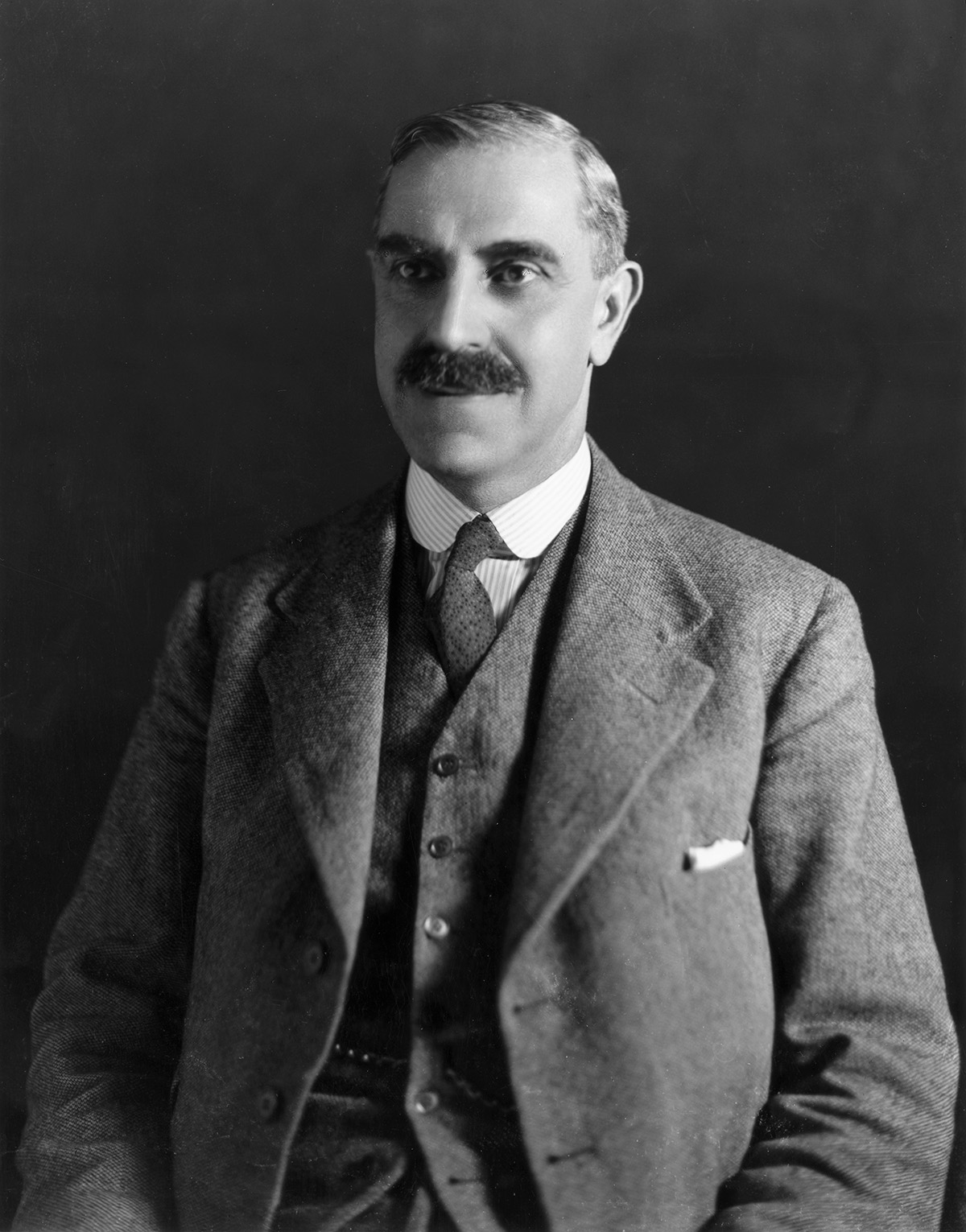
Stanier was the son of William H. Stanier, an employee of the Great Western Railway (GWR) who eventually became Chief Clerk to William Dean, the company’s Locomotive Superintendent responsible for the locomotive fleet. Stanier (senior) was also responsible for establishing evening classes for Swindon Works apprentices at the Swindon Mechanics Institute.¹ Schooled in Swindon and at Wycliffe College, Gloucestershire, he left school at 15 to commence his railway career with the GWR at Swindon.
He initially worked as an Office Boy—a role that included managing office supplies, organising filing and other office errands—until he was old enough to apply for an apprenticeship in 1892.² Through his apprenticeship, he moved between various departments at Swindon Works over the course of five years, developing a wide range of theoretical and practical skills.³ Stanier then moved to the Drawing Office before being appointed Inspector of Materials in 1900. Noticing Stanier’s talent for mechanical engineering, Dean appointed him to the post of Technical Inspector to the Divisional Locomotive, Carriage and Wagon Superintendent at Swindon in 1902, which gave him practical experience of locomotive operation, and he later moved to London as Assistant Divisional Locomotive Superintendent.⁴
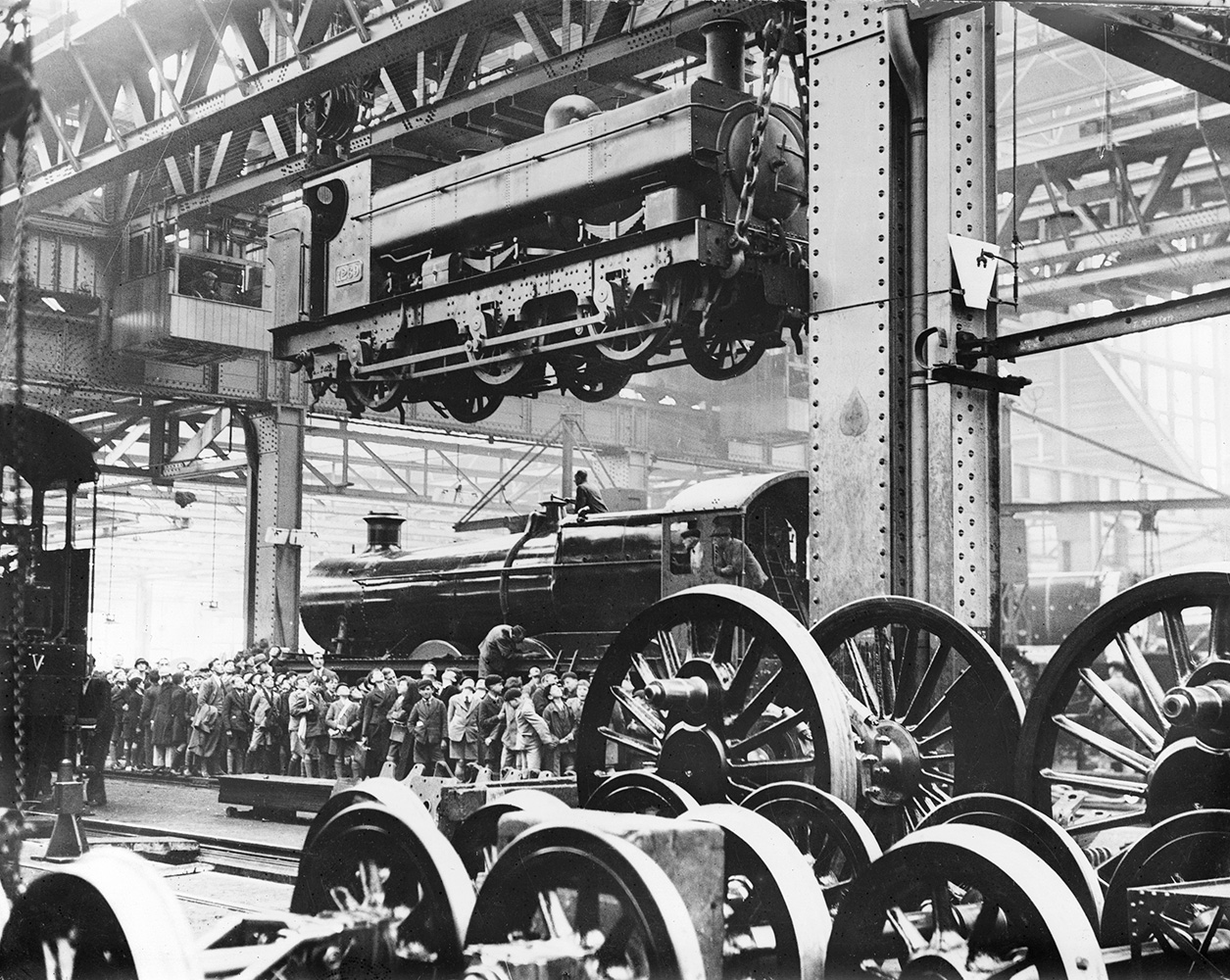
By this time George Churchward had succeeded Dean as Locomotive Superintendent at Swindon. A raft of new standard locomotive designs emerged, ranging from small tank engines to express passenger locomotives, and Stanier was involved with testing them in service.⁵ Returning to Swindon in 1906, he was promoted to Assistant Works Manager in 1913, Works Manager in 1920, then finally Principal Assistant to Churchward’s replacement, Charles Collett, in 1923.⁶ Under Collett, Stanier was involved with the design and construction of the 4073 ‘Castle’ and 60xx ‘King’ class 4-6-0 express passenger locomotives. He would also accompany 6000 King George V on its visit to the United States in 1927. His experience on the GWR would therefore shape his future output as Chief Mechanical Engineer of the LMS.
Stanier’s transfer to the LMS in 1932 emerged from two important circumstances. Firstly, there was little prospect for further promotion on the GWR. Collett had no intention to retire, and although Stanier may have succeeded him eventually, his own age meant his time in office would have been short.⁷ As such, he needed to look elsewhere for further promotion. This leads to the second set of circumstances—the state of the LMS’ locomotive fleet at the beginning of the 1930s. Its approach to locomotive design and operation was mired by internal politics as the LMS struggled to bind itself together in the years that followed its creation in 1923. Old traditions died hard, and the companies that had merged to form the LMS vied for control. In locomotive matters, employees of the former Midland Railway held sway. A visible aspect of this was the continuation of outmoded and inefficient practices like the double heading of underpowered locomotives on key express trains.
By 1931 George Hughes and Sir Henry Fowler had come and gone as Chief Mechanical Engineers, while Ernest Lemon began his brief term in the role before promotion beckoned. Both Fowler and Lemon recommended that Stanier be appointed Chief LMS Mechanical Engineer to Sir Harold Hartley, a Vice President and Director of Research of the company. The suggestion of Stanier also received the approval of Sir Josiah Stamp, President of the LMS. Stanier was considered an outside candidate with the neutrality required to shake things up. Decades of GWR experience in long-lap long-travel valves, jumper-top blastpipes and tapered boilers meant he already had a wealth of experience, making him an attractive choice for implementing organisational change and locomotive standardisation quickly and successfully.⁸
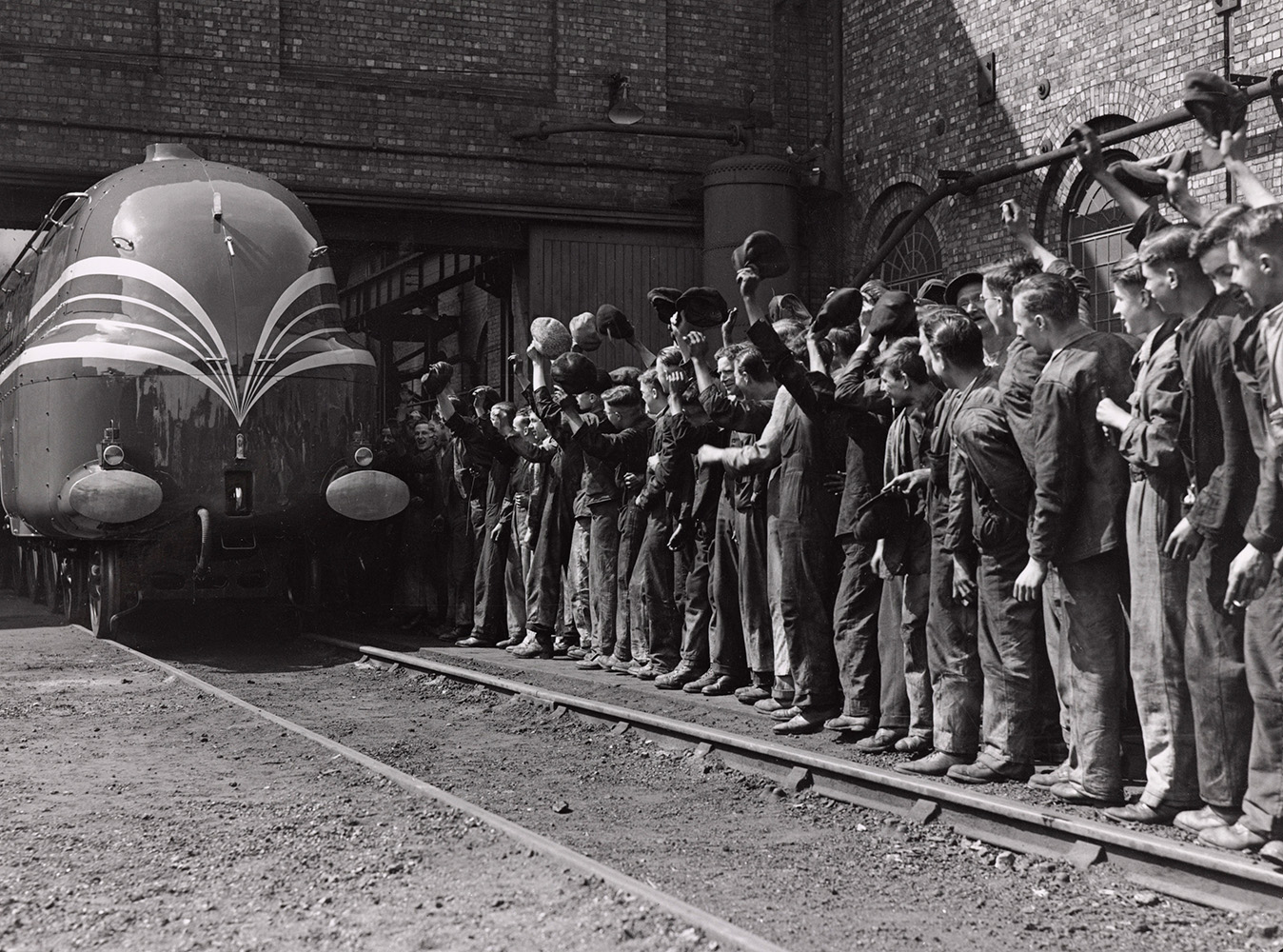
The result was a series of standard locomotive classes that addressed the requirements of the largest railway company in the United Kingdom. He oversaw the introduction of many famous of locomotive types ranging from express passenger designs like the ‘Princess Royal’, ‘Princess Coronation’ and ‘Jubilee’ classes to heavy freight in the guise of the Class 8F. The express passenger locomotives plied their trade over the difficult West Coast Main Line between London and Glasgow, and the Midland Main Line from St Pancras, with one example—the museum’s 6229 Duchess of Hamilton masquerading as 6220 Coronation—even attending the 1939 World’s Fair in New York.
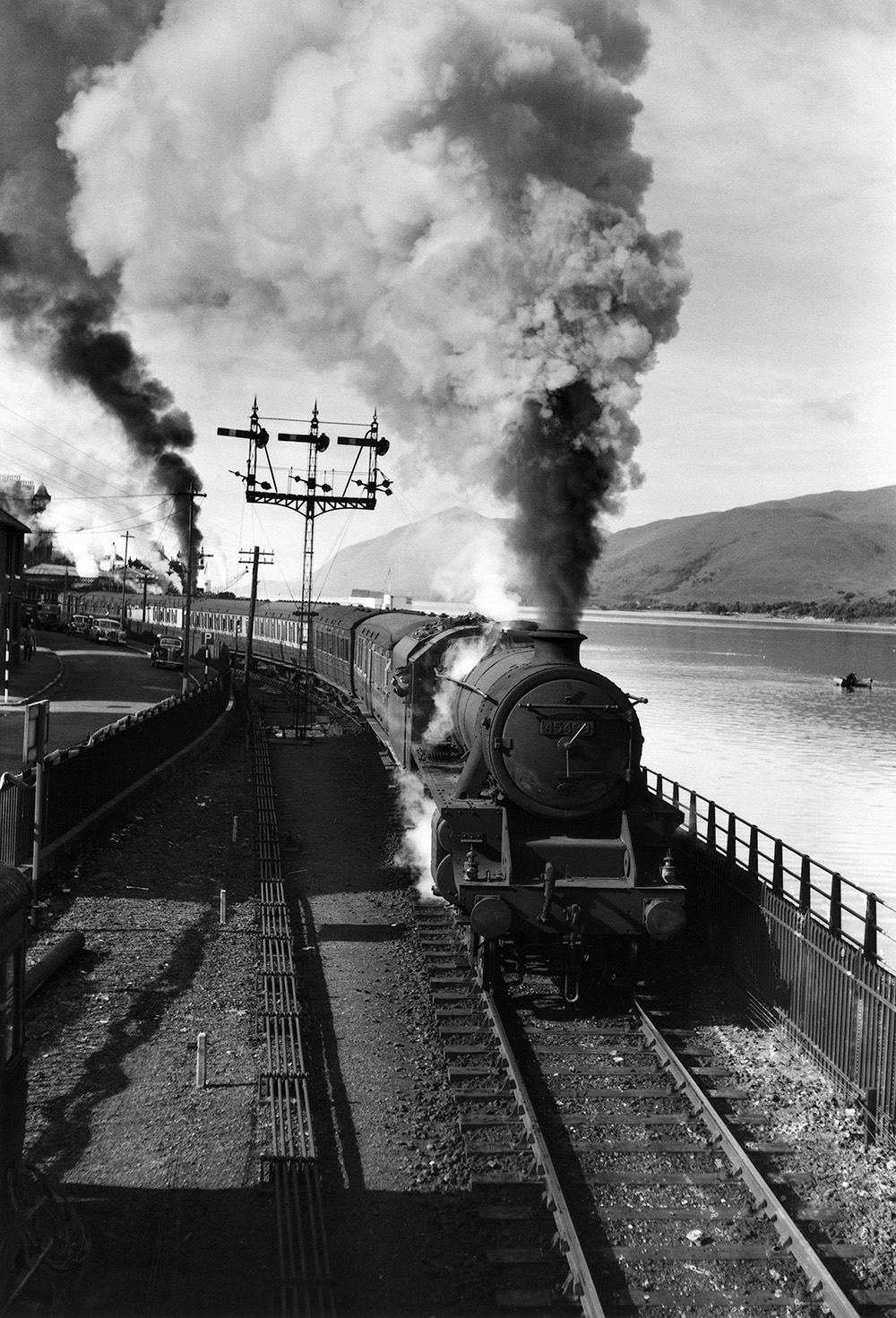
However, it is perhaps the 842 mixed-traffic ‘Black Five’ locomotives— introduced in 1934 and subsequently built across several batches—that cemented Stanier’s reputation. Able to cope with a variety of tasks and circumstances, they were eventually found just about anywhere between Bournemouth in Dorset and Wick in Scotland. Aside from locomotives, Stanier was also responsible for carriage and wagon designs. Seconded for wartime service at the Ministry of Production, Stanier was knighted in 1943 and retired from the LMS in 1944. He was also one of the few locomotive engineers to be elected Fellow of the Royal Society. He retained his interest in engineering and was always ready to give advice until his passing on 27 September 1965. In Stanier, the LMS had someone who was able to take the best of existing locomotive engineering practice and apply it with outstanding results.
Footnotes:
- H. Hartley, “William Arthur Stanier, 1876-1965”, Biographical Memoirs of Fellows of the Royal Society, 12 (1966), 488.
- J. E. Chacksfield, Sir William Stanier: A New Biography (Usk: Oakwood Press, 2001), 11.
- Hartley, “William Arthur Stanier”, 489.
- Hartley, “William Arthur Stanier”, 489; F. J. Bellwood and D. Jenkinson, Gresley and Stanier: A Centenary Tribute (2nd Edition) (London: HMSO, 1986), 4.
- Hartley, “William Arthur Stanier”, 491.
- Bellwood and Jenkinson, Gresley and Stanier, 19.
- Hartley, “William Arthur Stanier”, 492.
- Bellwood and Jenkinson, Gresley and Stanier, 19.
The post Sir William Stanier’s 150th Birthday appeared first on National Railway Museum blog.