Endangered great crested newts are being better protected if found on the railway during upgrade work thanks to a newly launched scheme to help them thrive.
Network Rail has teamed up with the Newt Conservation Partnership to quickly relocate railway residing newts so work to maintain tracks and run trains safely and reliably doesn’t grind to a halt.
The slippery amphibians love to make their homes around the railway, living in drainage ditches and nearby vegetation, and even hibernating under sleepers.
Previously when found on the infrastructure, teams have had to down tools and call in specialist ecologists to fully survey the area and apply for special licences to continue before work could resume to ensure the rare newts didn’t come to any harm.
While the right thing to do, in some cases it could delay projects by weeks or even months, resulting in higher costs for the taxpayer and passengers and freight customers having to wait longer for the benefits those upgrades bring to journeys.
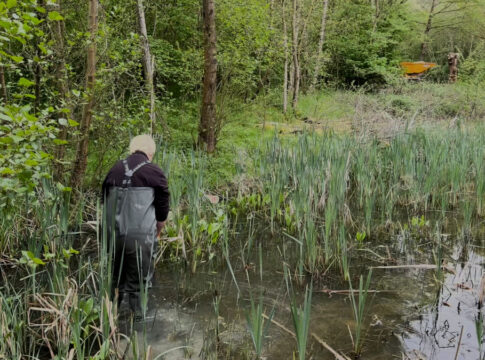
Now, thanks to an expanded licensing approach, newt habitats are extensively mapped before work starts, with suitable homes nearby either restored or recreated with clean water ponds.
Then if newts are found on the railway, that habitat is there ready and waiting for the new residents so they can be quickly transferred to their new home in just a few days – while allowing upgrade work to resume.
Railway staff are also being given special training to spot the different types of newt so they’re handled with the utmost care when found on the network.
Jude Ward, Network Rail environment manager, said: “We take our responsibility to balance the needs of wildlife on the railway with our commitment to run trains safely and reliably seriously, and this new approach for newts is a perfect win win for both us and them.
“Previously we’ve had to wait for special licenses, carry out months of surveys and put up special newt fencing – causing delays and costing money. Now this streamlined process developed with the Newt Conservation Partnership means we can keep work progressing while creating alternative habitats nearby to relocate the newts as soon as they’re found, providing much better outcomes all round.”
At the same time, Network Rail is working closely with the Newt Conservation Partnership and environmental firm Nature Space to create new habitats for newts each time one of their homes is disrupted.
Already more than 97 hectares of great crested newt habitat and 35 ponds have been created across all four Network Rail regions in England, benefiting newts alongside many other freshwater plants and animals.
Image credit: Network Rail