Britain’s railways are recruiting again, and in serious numbers. In its 200th anniversary year, the industry has pledged to take on 2,000 apprentices, a signal that rail is investing in its own future as much as the nation’s transport needs. It’s a sector often accused of being old-fashioned. This, however, is a modern statement of intent, as argued by thoroughly modern RailFreight.com UK Editor Simon Walton.
A familiar dilemma faces school leavers and career changers alike. University or apprenticeship? Lecture hall or locomotive cab? The railway offers both routes in abundance, from graduate schemes to hands-on technical training. The question is not whether rail freight provides an opportunity. It is which pathway best suits the industry and the individual. That, and whether or not the industry offers the best opportunity when lined up against its competitors for career-hungry students.
Competing for talent in a crowded market
Rail freight no longer has the field to itself. It competes for talent with road logistics, aviation, ports, tech firms and the civil service. Blue jeans to blue collar, white collar to white lab coat. Whatever the economic commentators may lead us to believe, there are opportunities out there, even in commercially stalled Britain. Organisations such as the Rail Delivery Group have championed apprenticeships across the network, while operators like GB Railfreight highlight structured career paths from trainee driver to operations manager. They, though, are not the only voices in the marketplace.
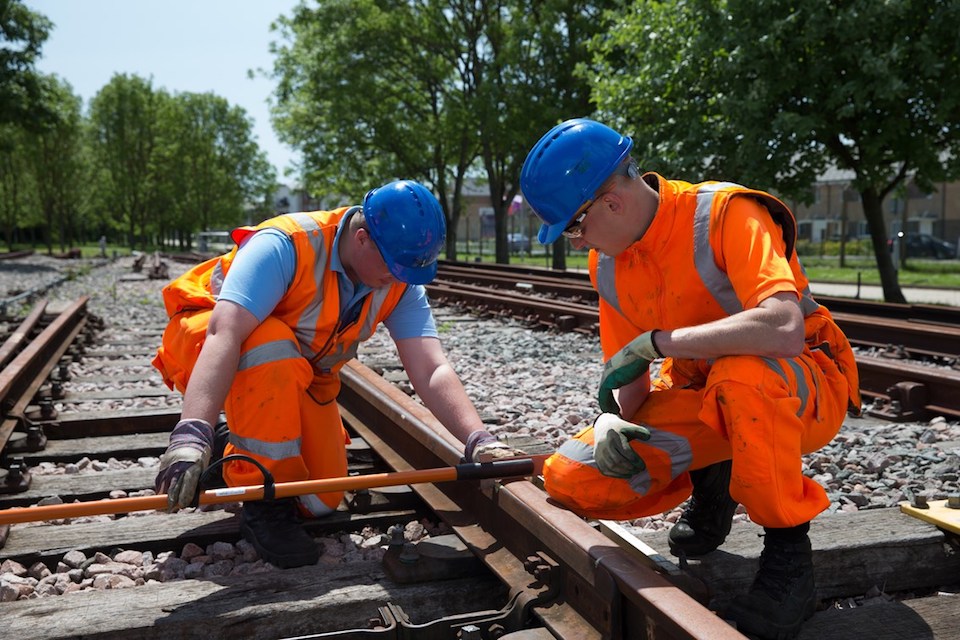
The wider supply chain is equally vocal. Logistics UK has argued that technical training must be valued alongside academic study, pointing to acute skills shortages across the economy. Ports are recruiting remote crane operators. Distribution centres seek data analysts and automation engineers. A school leaver weighing options may see a cleaner warehouse control room or a port operations suite as more appealing than a windswept rail yard. Then again, the latter may be just the rugged life that suits more than an air-conditioned indoor environment.
There are also misconceptions aplenty to overcome. For some, railway work still conjures images of oily overalls and clanking wagons. Freight, in particular, lacks the public visibility of passenger services. Few children grow up aspiring to marshal intermodal trains at midnight. That is not a criticism of the work. It is a communications challenge for an industry that underplays its own sophistication.
The campus and the control desk
The rail sector today presents a far broader prospectus than many assume. The national infrastructure agency, Network Rail offers apprenticeships, graduate schemes and leadership programmes spanning engineering, project management and finance. Freight operators require planners, IT specialists, environmental managers and commercial analysts. The control desk can be as important as the cab. In Scotland, for example, there have been previous drives to recruit new entrants into the sector, going some way towards retaining the region’s engineering skills – a factor that the railway rarely gets credit for achieving.

Still, the question lingers. How many individuals in the driver’s seat hold a degree? How many want one? For how many would it add little to the safe and efficient movement of heavy haulage and speedy intermodal? These are not trivial points. Rail freight is capital-intensive and highly regulated. It needs strategic thinkers as well as practical problem solvers.
Apprenticeships offer a direct route into that environment. They provide earnings from day one, hands-on experience and nationally recognised qualifications. University offers breadth, networks and often a wider lens on economics, sustainability and leadership. The industry’s challenge is not choosing between them. It explains clearly how each route connects to meaningful, long-term careers.
Regulation, restrictions, and the freedom balance
No discussion of rail freight careers can ignore the industry’s structure. It is highly regulated and, in many areas, highly unionised. For some recruits, that signals stability, strong representation and clear frameworks for pay and progression. For others, it may appear restrictive or adversarial. The truth, as ever, lies somewhere between caricature and cognisance.
Regulation exists because the railway moves heavy assets through shared infrastructure at speed. Safety is paramount. That environment can seem daunting to outsiders. Yet it also offers a level of job security rare in other sectors. In a gig economy, a regulated industry with defined competencies and negotiated conditions may prove attractive rather than off-putting. Rail has very low staff turnover. The gig economy? Well, the clue’s in the name.
There are practical considerations too. The locomotive cab is not a co-working space. Amenities are functional rather than luxurious. Shift work is common. Weather is unavoidable. A remote crane operator in a modern port control room may enjoy climate control and a predictable roster. A graduate in supply chain analytics may never leave the office. Rail freight must be honest about these comparisons.
Changing perceptions and widening access
Another barrier lies earlier in the pipeline. Secondary education in the UK has often prioritised academic routes over industrial awareness. By the time students choose A-levels or vocational courses, many have already turned away from traditional sectors. Few schools offer sustained exposure to freight terminals, control centres or engineering depots. Industry can seem distant, even invisible. Note to rail freight outreach: there’s an opportunity to engage right there.

There is also the persistent narrative of a male-dominated workforce. While the picture is changing, perceptions lag reality. Rail freight employers have made strides in promoting diversity and flexible working. Yet the stereotype of the solitary male driver endures, even though my contact book has almost as many female drivers as male. Challenging that image is essential if the sector is to access the widest possible talent pool.
The financial case for apprenticeships adds another dimension. Higher-level apprentices can, within five years, out-earn the average graduate. That should prompt reflection among policymakers and parents alike. University remains invaluable for many disciplines. But technical mastery and professional competence deserve equal status.
Ultimately, rail freight is part of a wider logistics ecosystem that keeps the country trading. It offers roles that are strategic, technical, operational and commercial. The dilemma of university or apprenticeship is real, but it need not be divisive. The industry’s task is to present both tracks as credible, respected and rewarding.
The real competition is not between degrees and diesel. It is between rail and every other sector seeking bright, motivated people. If freight can articulate its purpose, modernity and opportunity with confidence, it will find that the next generation is more open-minded than we may otherwise assume.