Fires, floods and termites were recognised as major threats to historic trestle bridges along the High Country Rail Trail in Victoria’s north-east.
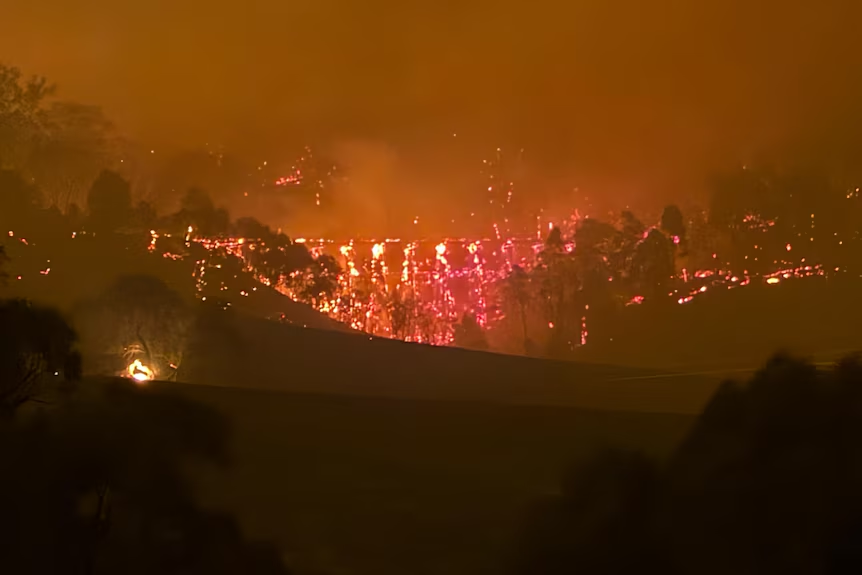
So volunteers were worried when strong winds pushed the 122,000-hectare Walwa-Mt Lawson State Park bushfire towards the bridges near Shelley, Koetong and the Tallangatta Valley.
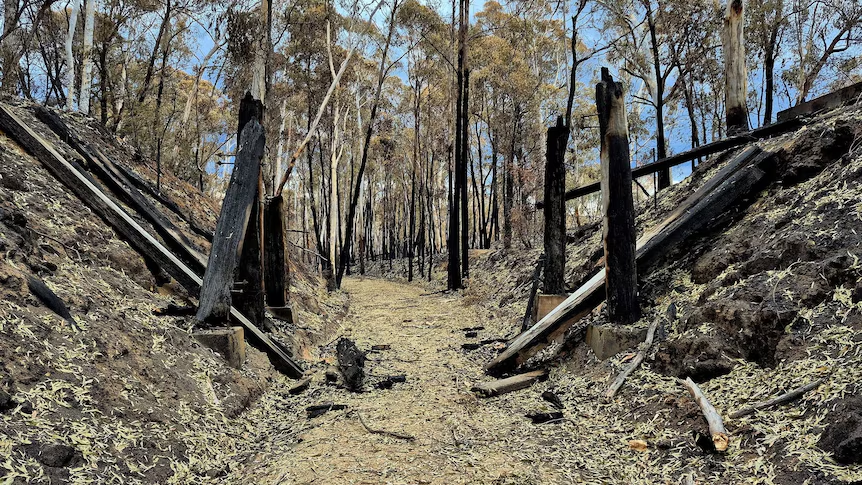
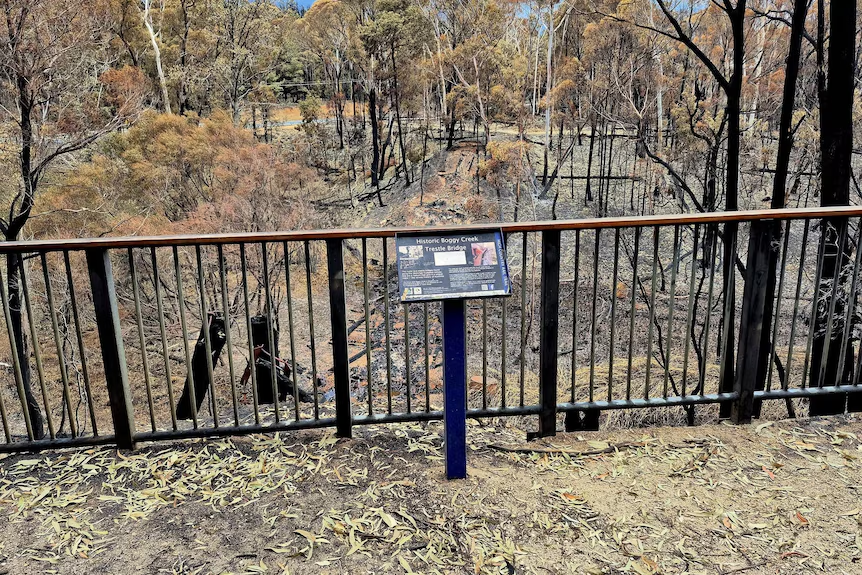
Within 24 hours, 12 of the 13 bridges had burnt to the ground, taking more than 100 years of history, craftsmanship and volunteer restoration efforts with them.
Rail trail decimated
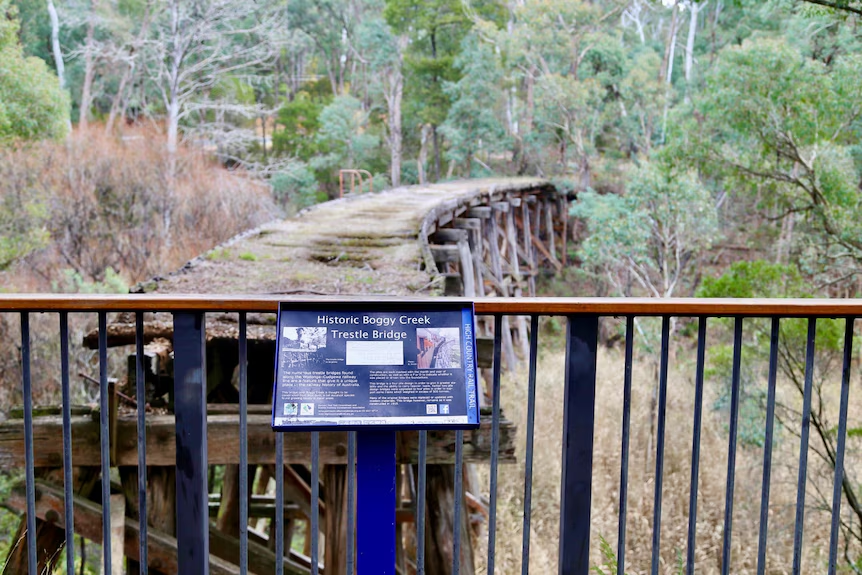
Riders and walkers along the High Country Rail Trail only crossed two of the bridges.
The others were deemed too rickety or unstable for use, so they became part of the scenery.
“They were beautiful to look at, and an amazing feature of an incredible trail,” Rail Trails Australia vice-president Steven Kaye said.
According to 2022 data from Tourism North East, the region attracts more than 160,000 cycling visitors each year, raking in an estimated $131 million.
The downhill stretch from Shelley to Old Tallangatta is one of the most popular routes, attracting more than 5,000 riders in the 2024-25 financial year.
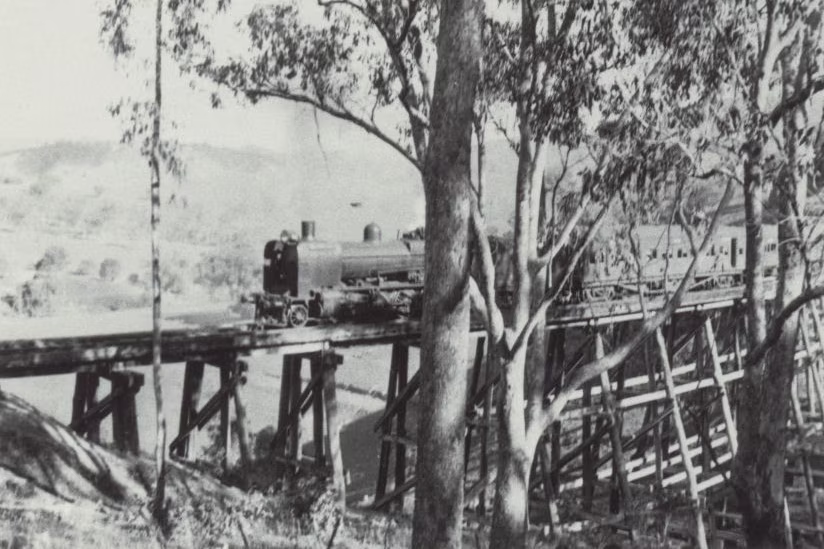
The bridges were built from 1914 onwards as part of the Wodonga-Cudgewa rail line.
They were upgraded as trains became heavier, and played a key role in transporting material to the Snowy Hydro Scheme in the 1950s.
When the railway was decommissioned, a dedicated group of volunteers took on the task of making it fit for cyclists, horse riders and walkers.
“It’s been a 25-year labour of love to get the trail connected, and that’s basically gone up in smoke,”
Mr Kaye said.
Parklands Albury Wodonga executive officer Ant Packer said the bridges were more than just structures.
“They tell the story about our nation-building,” Ms Packer said.
They took decades to build with hand tools, horses, carts and locally milled wood.
“Some of them were three storeys high, 21 metres tall and 96 metres long,” she said.
Ms Packer said volunteers knew they could lose the bridges after three nearby were destroyed in the Black Summer fires.
“It came through so fast … that it just wasn’t possible to do any preparation,” she said.
Rebuilding dilemma
Volunteers said rebuilding could be costly.
When 12 historic trestle bridges were destroyed at Myra Canyon, British Columbia, in 2003, the rebuild project set the provincial and federal governments back $CAD18.5 million ($20 million).
Dave Richmond was the recreation section head for British Columbia (BC) Parks in 2003 and oversaw the project, which he described as expensive and difficult.
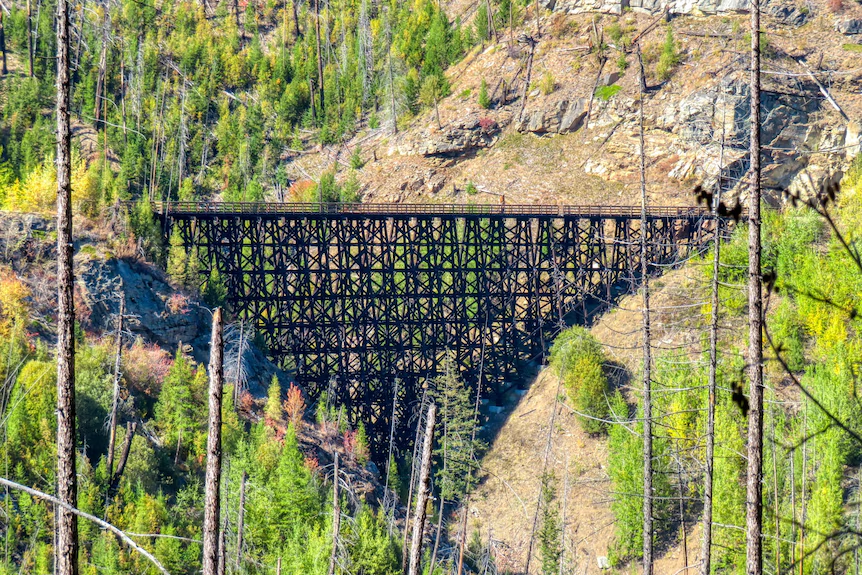
“There was only access from each end of the damaged area. We had to build our way towards the centre from each side of the canyon,” he said.
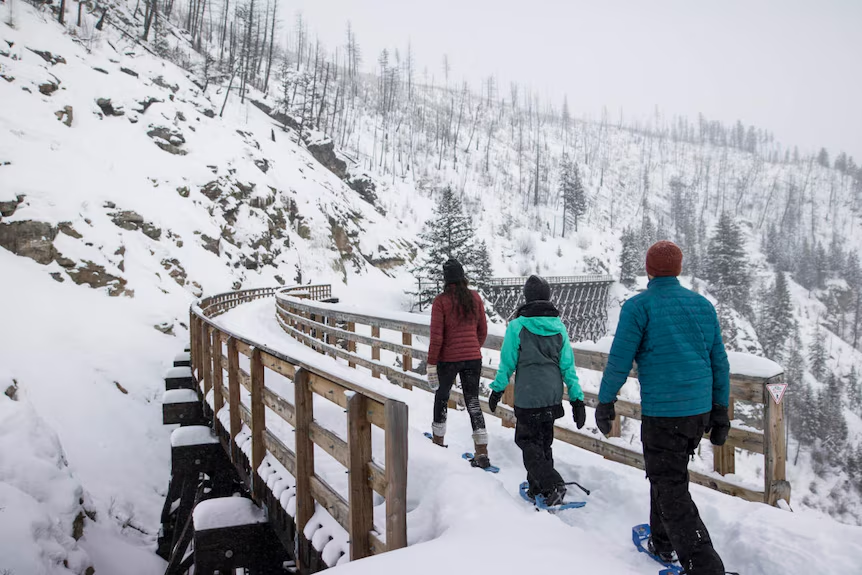
The decision to rebuild the trestles near Kelowna, about 400 kilometres north-east of Vancouver, depended heavily on the future fire risk.
“We had to ask, ‘Is there a chance of this re-occurring?'” he said.
The risk was deemed low so the rebuild went ahead, and the trestles have since attracted tens of thousands of visitors a year.
Clean-up underway
The immediate focus in the Upper Murray is making the trail safe.
“We’ve got about 35 kilometres of fences to replace, a lot of them go through the middle of properties,” Ms Packer said.
Parklands Albury Wodonga said it was expecting to have the trail reopened by the middle of the year.
The cost of any rebuild is yet to be calculated, and finding people with the skills to construct the trestle bridges could be a challenge.
Looking through the community’s photos, videos and memories of the bridges, Ms Packer said she was devastated, but was trying to shift her perspective.
“How amazing that they’ve been there for 110 years … [it’s] something I think we really need to celebrate,” she said.
Mr Richmond said it was important for all stakeholders — including volunteers — to be involved in conversations around next steps.
“[Volunteers] had invested all the blood, sweat and tears for the people who want to go there and experience the trails,” he said.
“Have those challenging discussions early on, about what you’re trying to achieve.”
Ms Packer said it was a chance to share memories and hear how the community would like to proceed.
“I think it’s an opportunity … you could see what the bridges were like in a light show, perhaps,” she said.
But she said there was no rush.
“Sometimes we need to slow down and reflect on the past,” she said.
“Things take time to build, like these trestle bridges.”
Heritage Victoria has been contacted for comment.