This week’s sale of Freightliner’s intermodal business to CMA CGM, alongside MEDLOG’s recent acquisition of Maritime Transport, has sparked debate in the logistics sector. At first glance, such consolidation might provoke unease among smaller operators. Yet, viewed through the lens of efficiency, investment, and growth, these developments are overwhelmingly positive for the UK rail freight industry and the wider economy, says RailFreight.com UK Editor, Simon Walton.
Both transactions signal a welcome vote of confidence in the UK’s rail freight capability. Not to mention the economy overall. CMA CGM’s purchase of Freightliner’s intermodal operations brings deep financial resources and global experience to a market often constrained by capital availability. Meanwhile, MEDLOG’s acquisition of Maritime Transport integrates the UK company into MSC’s vast global logistics network. In both cases, customers are expecting even more reliable service, better-managed intermodal flows. It’s a continuity of investment that benefits infrastructure and employment alike. Indeed, so seamless has been the Maritime move that customers may well be defied to say: “Med who?”
The power of vertical integration
The UK logistics industry thrives on vertical integration. Oh, how the railway industry cries out for a single path, top to bottom – with apologies to Varamis and InterCity RailFreight, both of whom are endeavouring to make that model work. From first mile to last, control over the entire supply chain allows operators to optimise costs, reduce transit times, and provide predictable service.

This is especially true in intermodal rail freight. The connection of port, rail, and road operations can make or break the customer experience. Companies like Tarmac, Malcolm RailRoad, and PD Stirling are prime examples. Albeit the latter’s ambitious Mossend Integrated Railfreight Park does appear somewhat stalled at present. Nevertheless, by synchronising rail and road operations, they deliver goods efficiently while minimising environmental and congestion impacts. Tarmac’s recent South Wales to Bredbury (south Manchester) rail flow, for instance, eliminates around 60 HGV movements per delivery, a clear social, economic, and environmental win.
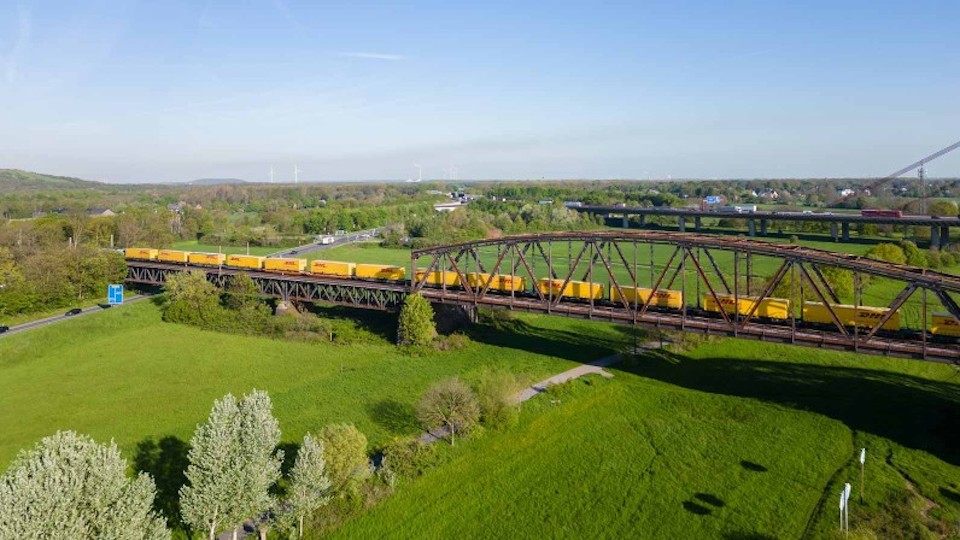
Vertical integration is not just a matter of efficiency. It drives economic growth. Forward-thinking logistics companies embrace rail not as an isolated service, but as a core part of a multimodal network that includes road haulage. This approach mirrors trends abroad. Global players like DHL, Hapag-Lloyd, and the afore-mentioned MEDLOG have built operations that blend shipping, rail, and road transport under one strategic vision. By contrast, fragmented networks can struggle with bottlenecks, unpredictable costs, and underutilised assets. Usually, it’s the rail assets getting underutilised, and that’s the most expensive part of the chain. Little wonder that rail freight is the most marginal of all the logistics industries.
Learning from history and the case for consolidation
The UK has tried centralised logistics before. The British Transport Commission (BTC) once controlled almost every aspect of the nation’s transport infrastructure. Ambitious in scope, the BTC ultimately failed due to conflicting political pressures and a lack of commercial agility. Its demise offers a lesson – apart from the obvious one of keeping the politicians at bay. Consolidation under a single, politically driven umbrella rarely succeeds without market discipline. Perhaps this historical context explains why freight operations are excluded from the nationalisation of the railways under the Great British Railways banner. A nimble, commercially oriented private sector is better positioned to drive growth and investment.
Consolidation works in the UK. It creates scale, strengthens balance sheets, and unlocks investment for innovation. Freightliner and Maritime Transport, under CMA CGM and MEDLOG, respectively, will benefit from capital that allows fleet upgrades, terminal expansions, and technology-led efficiencies. Critically, this benefits the rail network: more frequent, reliable, and higher-capacity intermodal services attract new customers, freeing road space and reducing carbon emissions.
In short, a robust private sector with international partners strengthens domestic logistics while complementing national policy goals. How often have we seen respectable, well-run rail freight firms struggle to make ends meet because of those tight margins and a lack of financial headroom. We’ve mentioned at least one already, and here’s another: Helrom. That’s the game-changing German horizontal loading non-craneable trailers onto rails company. Helrom has been in insolvency most of this year for just that reason. Good luck to them, but they need an investor to step out of the shadows. Any disappointed suitors for Freightliner still on the hunt?

There are also doors opened through consolidation for creative business models. Rail operators could, for instance, acquire or merge with road haulage companies to provide end-to-end service. Malcolm RailRoad’s “railhead to railhead” strategy, where long-distance freight travels by train and local delivery by road, is a model that maximises both asset utilisation and customer satisfaction. Similarly, PD Stirling and Tarmac’s multimodal operations show how strategic integration reduces environmental impact, increases efficiency, and grows market share.
Rail’s future role in the UK economy
Logistics is the UK’s largest industry. Yet rail moves only around seven per cent of freight (maybe ten per cent by some generous metrics). Increasing this share is critical for national economic growth and environmental targets. Consolidated, vertically integrated operators are best placed to expand rail’s role. With capital funds, technology, and operational control in hand, companies can scale intermodal operations, open new terminals, and better coordinate road-to-rail flows. Every freight train that replaces 60 HGV journeys, as Tarmac demonstrates, is a win for local communities, the environment, and the economy.
The lesson for UK rail freight is clear. Embrace multimodal consolidation, invest in integration, and think globally while acting locally. The CMA CGM and MEDLOG transactions are more than corporate deals. They are a blueprint for growth, innovation, and resilience. They remind us that a strident private sector, lightly regulated and commercially disciplined, is the most effective engine for the UK’s freight future. There are bound to be other investors out there, not restricted to six-letter capitals and acronyms either.
By thinking of rail not as a standalone service but as part of a fully integrated logistics network, the industry can secure a greater share of national freight, strengthen economic performance, and contribute meaningfully to environmental goals. The sooner operators, policymakers, and investors adopt this mindset, the faster rail freight will deliver for the UK.