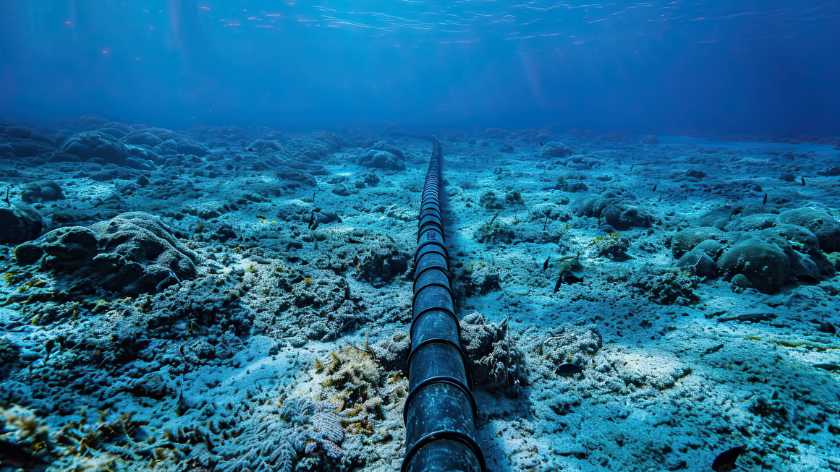
According to NetBlocks, an organisation that monitors online access, “a series of subsea cable outages in the Red Sea has degraded internet connectivity in multiple countries,” including India and Pakistan.
As a result, it attributed the issues to “failures affecting the South East Asia, Middle East, Western Europe 4 (SMW4) and India, Middle East, Western Europe (IMEWE) cable systems near Jeddah, Saudi Arabia.”
The SMW4 cable is operated by Tata Communications, part of India’s Tata Group. IMEWE is managed by a consortium led by Alcatel Submarine Networks.
NetBlocks later confirmed in another update that the UAE experienced “slow speeds and intermittent access as engineers work to resolve the issue impacting multiple countries”, impacting companies such as Du and Etisalat, who reported slower speeds.
Meanwhile, Microsoft also announced that users of its Azure cloud platform could face higher latency after the cables were cut.
“Undersea fibre cuts can take time to repair, as such we will continuously monitor, rebalance, and optimise routing to reduce customer impact in the meantime,” Microsoft said on Saturday.
However, by the evening the technology giant reported it was no longer seeing Azure-related problems.
Although the exact cause has not been verified, concerns have been raised about the possibility of Houthi rebels in Yemen deliberately targeting Red Sea cables, according to Sky News.
The group has been carrying out actions against Israel to pressure an end to its conflict with Hamas in Gaza.
Earlier in 2024, Yemen’s government-in-exile accused the Houthis of plotting attacks on Red Sea cables. Several were cut, though the Houthis denied involvement.
Commenting on the cuts, Exa Infrastructure SVP of network investment, Steve Roberts, said: “There have been many stories of high-profile cable cuts this year, highlighting the need for greater network redundancy.
“We are so reliant on these vital pathways to transport data, that more investment into alternative paths is needed to ensure that when a cable is down, whatever the reason, traffic isn’t impacted. We are seeing governments and regulators starting to take the security of subsea cables more seriously, and this, coupled with continued investment into new projects, will mean that the impact of outages can be lessened in future.”