Great Western Railway (GWR) has received official confirmation that its battery-electric train achieved a world record distance of 200.5 miles on a single charge.
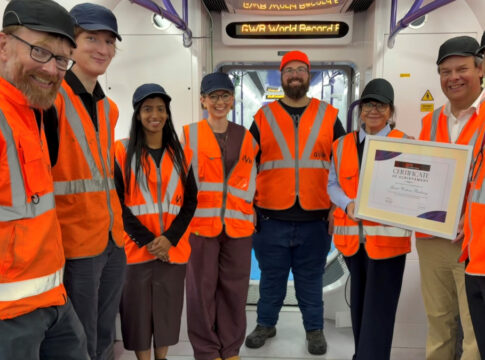
Officials from the Rail Performance Society (RPS), an organisation dedicated to recording and studying the performance of railways and railway traction in the UK, today presented a Certificate of Achievement to endorse the record-breaking journey.
RPS officials were on board GWR’s Class 230 train, 230001, on August 19 and 20 to witness the record attempt, and issued the certificate after verifying its own measurements.
Rail Performance Society Vice Chair, Nigel Smedley, said: “In the year the industry celebrates 200 years since the birth of the modern railway, this really was some feat by the Great Western Railway Class 230 train to travel 200.5 miles without charging its batteries from any external energy source.”

The distance was achieved on a return journey from Reading Train Care Depot which took in London Paddington (twice) and Oxford, obliterating the previous record of 139 miles set by Stadler Deutschland in Berlin in 2021.
The Class 230 train is the one used for GWR’s successful trial of fast-charge technology on the Greenford branch line over the past year.
A White Paper published by GWR in July outlined the findings of the trial, which proved battery trains could provide a viable and cost-effective alternative to diesel trains.
It comes as the operator prepares plans to renew its ageing regional fleet trains, which are expected to go out of serviceable use in the next 7-10 years.
GWR Engineering Director Dr Simon Green, commented: “We were delighted to set the world record last month and it’s great to now have this official confirmation from the Rail Performance Society.
“The record attempt received worldwide coverage and its success was a real tribute to colleagues at GWR and Network Rail who have worked so hard on developing fast-charge technology.
“This activity has allowed us to demonstrate that investment in battery technology is essential as we look to replace our ageing diesel fleet.
“Overhead lines will remain the first choice to power electric trains, but where that isn’t possible or desirable, battery technology like this offers a reliable and efficient alternative to bridge the gap.”
Image credit: Great Western Railway