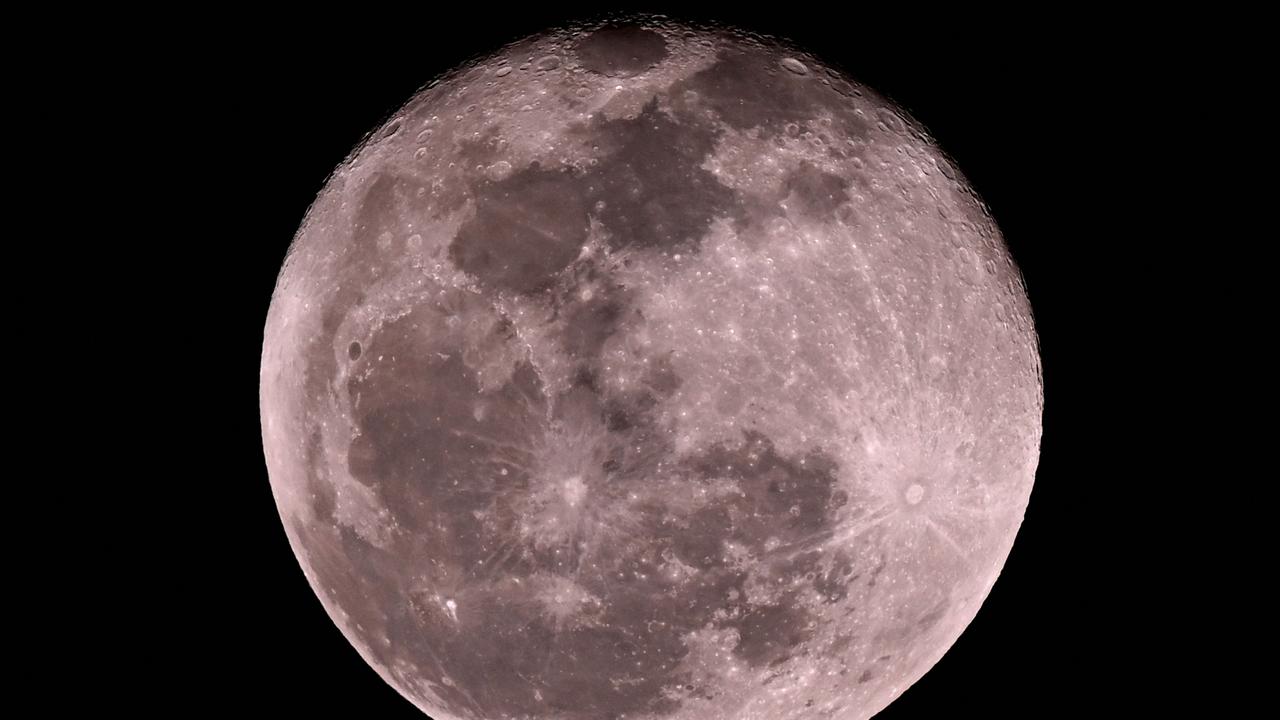
Long gone are the Cold War days of nations competing to be the first to get their man on the Moon, now there’s a different, much more permanent goal.
“It has definitely changed,” Art Cotterell, a Research Associate at the ANU School of Regulation and Global Governance, told news.com.au.
“Now what we’re seeing is both the US and China looking to land on the lunar south pole and establish a more permanent human presence there.”
The US recently kicked things up a gear, accelerating its plans to put a nuclear reactor on the Moon to power a future human base in just a matter of years.
In a directive – first reported by Politico earlier this month – NASA’s interim administrator Sean Duffy ordered the agency to have a 100-kilowatt nuclear reactor ready to launch to the Moon by 2030.
“Since March 2024, China and Russia have announced on at least three occasions a joint effort to place a reactor on the Moon by the mid-2030s,” Mr Duffy wrote in the directive, which is dated July 31.
“The first country to do so could potentially declare a keep-out zone which would significantly inhibit the United States from establishing a planned Artemis presence if not there first,” he added, referencing NASA’s Artemis program, which plans to send the first humans to the Moon’s South Pole.
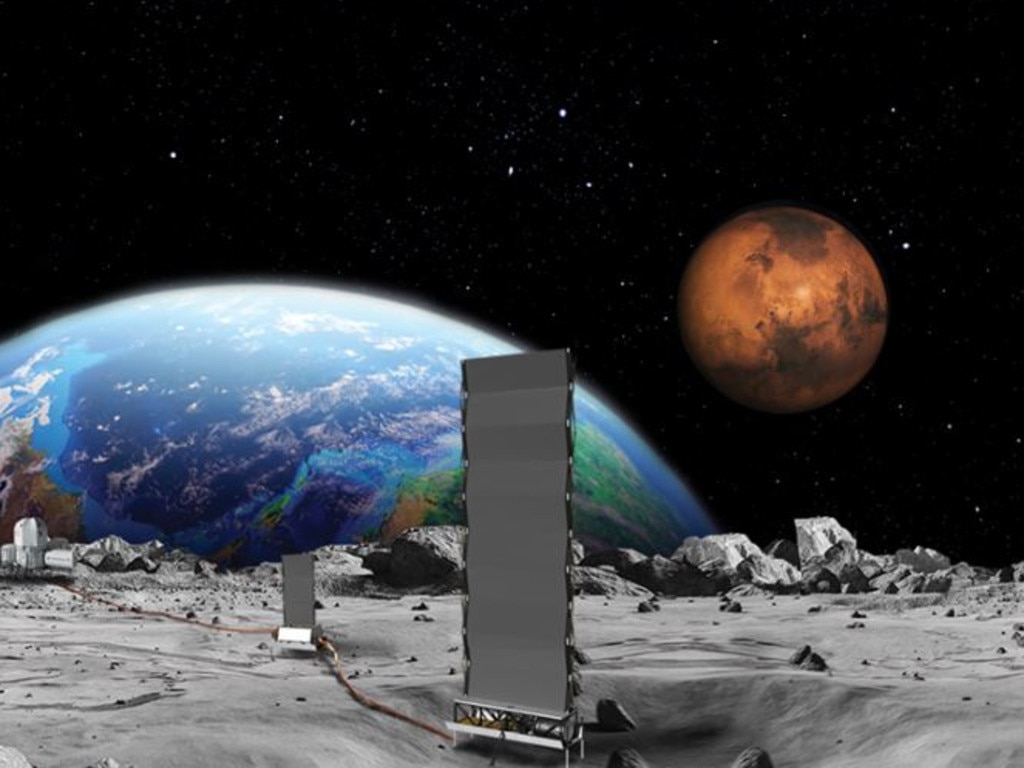
A concept image of NASA’s Fission Surface Power Project. Picture: NASA
When later asked about the planned reactor at a press conference this month, Mr Duffy, who also serves as President Donald Trump’s Secretary of Transportation, stressed the US has clear competition.
“We’re in a race to the Moon, in a race with China to the Moon,” he told reporters.
“And to have a base on the Moon, we need energy. And some of the key locations on the Moon, we’re going to get solar power, but this fission technology is critically important.”
He said the 100 kilowatts of output of the reactor would be the “same amount of energy a 2,000-square-foot home uses every three and a half days”
“So we’re not talking about massive technology.”
In a separate post on X, he declared the US is “going to bring nuclear fission to the lunar surface to power our base”, adding, “if you lead in space, you lead on Earth”.
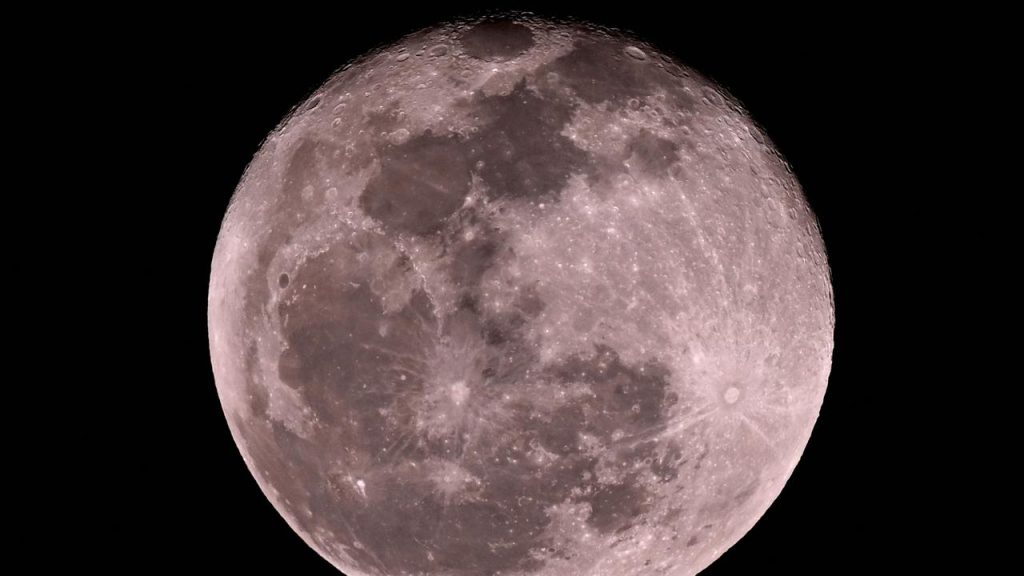
The US is accelerating its plans to build a 100-kilowatt nuclear reactor on the Moon. Picture: William West / AFP
The announcement comes after a senior Chinese space official presented the concept of building a nuclear power plant on the Moon to power its research station with Russia, at an event attended by International Lunar Research Station partners in April, according to Reuters.
However, the plan has not been officially announced by China.
Mr Cotterell said the South Pole of the Moon is seen as an “ideal location” for the US and China to build a more permanent base because of its access to finite resources needed to sustain human life.
“In terms of that particular location, there’s water ice which could be used to help sustain any sort of infrastructure in human life, but also for potential fuel for onward journeys. And that’s very finite.
“There’s also the limited and finite availability of sunlight.”
The Moon experiences 14 days of straight sunlight followed by 14 days of darkness. But on the South Pole, some high mountain ridges experience near perpetual sunlight.