Felixstowe, the rail freight terminal with a port attached, may soon have new owners. The UK’s busiest intermodal rail freight hub – with a convenient waterside facility bolted on – is the subject of intense financial interest. Global negotiations swirl around the sale of Hutchison Ports’ international empire, the future of Felixstowe’s unparalleled rail freight operations is being decided not in Ipswich, but in Beijing, Geneva and New York.
While the headlines have been dominated by high-level wrangling over strategic port assets, it’s the container trains – not the container ships – that keep Britain’s largest box hub truly moving. As CK Hutchison inches closer to selling its global ports portfolio, the prospect of new ownership for Felixstowe has the rail freight sector watching closely, if not quietly.
Marshalled into new ownership
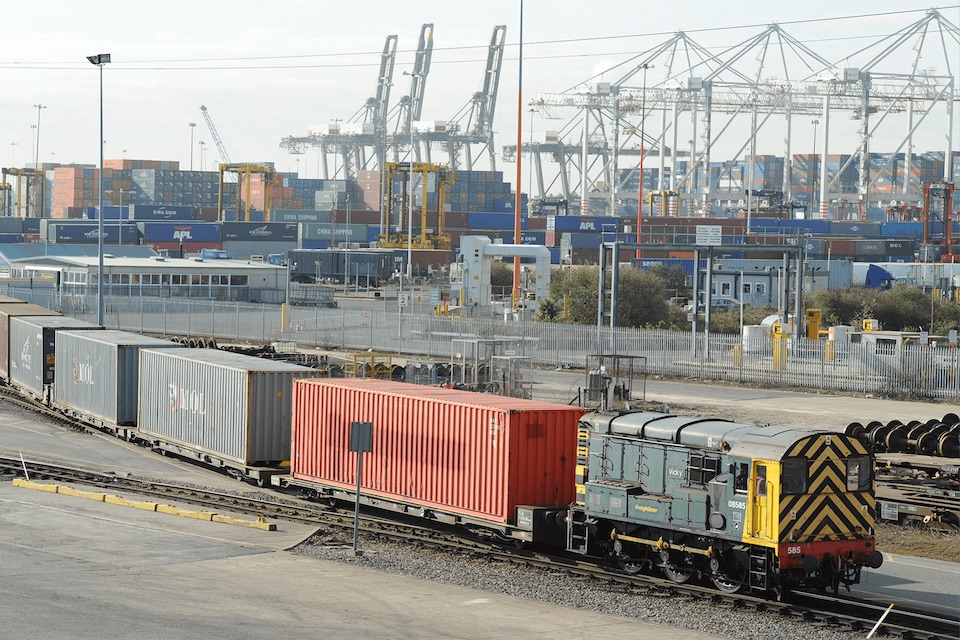
Felixstowe is the busiest intermodal rail terminal in the UK, with around 30 freight trains a day connecting the east coast port to inland terminals across the country. The rail estate includes three dedicated terminals – North, South and Central – handling tens of thousands of boxes a week, many of them skipping the busy A14 highway entirely in favour of low-carbon steel wheels. The road, incidentally, is a key part of the UK Government’s infrastructure upgrade programme. The lack of any clear direction on similar improvements to rail access to Felixstowe remains a source of ire among business and political stakeholders.

Now, the distant drumming of Class 66s and the clatter of reach stackers may soon come under new management. CK Hutchison is looking to offload its entire global ports division. That includes Felixstowe, in a deal reportedly valued at up to US$23 billion (GB£17bn, €20bn). With suitors including BlackRock and MSC’s Terminal Investment Ltd (TiL), and Beijing pressing hard for a role for COSCO. It’s not just the containers that are being shuffled (see reporting at WorldCargoNews.com).
A rail hub with a convenient port
Felixstowe’s rail freight volumes have, for many years, outstripped every other UK port. With regular flows to Trafford Park, Daventry, Wakefield, Hams Hall, and as far afield as Mossend in Scotland, the operation is as much a rail terminal as it is a maritime gateway. Network Rail has long treated the Felixstowe Branch Line as critical national infrastructure, and for good reason.
The port’s own marketing may mention ocean-going giants and TEU volumes, but ask anyone in rail freight and they’ll tell you that the real action is on the rails. Over a third of all containers handled at Felixstowe leave by train. That’s a figure that puts many European intermodal hubs to shame.
Geopolitics meets shunter politics
The potential inclusion of China’s COSCO as a stakeholder has raised eyebrows, not just in Westminster but among those who operate UK logistics infrastructure. State-owned COSCO already owns or operates several terminals in Europe. A foothold in Britain’s most significant inland-connected port could stir political concerns, especially given the strategic value of Felixstowe’s rail capacity.
The UK government has so far kept quiet, but observers point out that any acquisition involving Chinese state-owned enterprises would almost certainly trigger scrutiny under the National Security and Investment Act. Given Felixstowe’s critical role in food, fuel and retail logistics, questions may soon arise about who controls the keys to Britain’s intermodal kingdom.
Signal clear, but caution advised
For now, operations at Felixstowe continue uninterrupted. GB Railfreight, Freightliner, DB Cargo and others still haul up and down the port branch line, meeting the insatiable appetite for rail-hauled boxes. With ownership potentially shifting to new – and possibly more globally dispersed – hands, stakeholders in the UK’s rail freight industry are watching the signals closely.
Whether the future brings fresh investment or friction over strategic control, Felixstowe’s position as the UK’s foremost rail freight terminal is unlikely to change. Eyes on the deep water berth, but also on the deep value of the rail terminals too.