It’s the big question this week. Will rail freight get the investment to match its ambition in two days’ time. The Chancellor, Rachel Reeves, is preparing to unveil the UK Government’s Comprehensive Spending Review on Wednesday (11 June). The rail freight sector is watching closely for signals of long-term commitment. With a legally binding net-zero target by 2050 and a government pledge to increase rail freight by 75% over the same period, the stakes are high for infrastructure, electrification, and modal shift.
The Spending Review will set departmental budgets for the next four years. Defence, health, education and social security are all at the head of the queue. Already seventh in line for national spending, the trajectory of transport investment could be shaped for a generation in the next few days. For rail freight, the question is whether the rhetoric of growth and decarbonisation will be matched by the funding and policy support needed to deliver it.
Freight growth target demands infrastructure investment
The UK Government’s Department for Transport commitment to a 75% increase in rail freight by 2050 is ambitious. It’s aiming to shift significant volumes from road to rail. Achieving this requires substantial investment in infrastructure, including capacity enhancements and network upgrades. Albeit, road already carries by far the biggest burden of freight tonne-miles, and rail capacity could be expensive to realise.
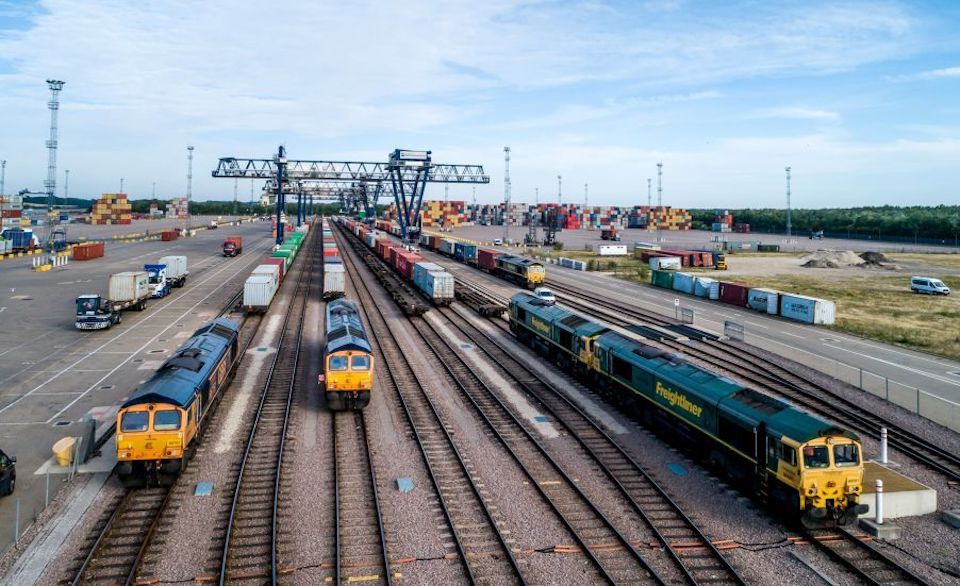
Cost is always a factor. Key projects like the Ely Area Capacity Enhancement programme are critical. This scheme aims to alleviate bottlenecks and increase capacity for both freight and passenger services, particularly benefiting routes from the Port of Felixstowe to the Midlands and the North. Similarly, ongoing upgrades to the East Coast and West Coast Main Lines are essential for accommodating increased freight traffic and ensuring network resilience.
Electrification is essential for decarbonisation
Electrification of the rail network is a cornerstone of the UK’s strategy to achieve net-zero emissions by 2050. Electrified lines offer a cleaner, more efficient mode of transport, reducing reliance on diesel and lowering greenhouse gas emissions. Nevertheless, energy prices in the UK are among the highest in the world. That has proved a barrier to rail freight development and economic development at large.
However, cost-cutting seems more likely than investment in this week’s Review. Progress on electrification has been slow. Industry bodies, such as the Institution of Mechanical Engineers, have highlighted the need for a rolling programme of electrification to provide certainty for the supply chain and deliver cost efficiencies. The Spending Review presents an opportunity for the government to commit to such a programme, aligning infrastructure investment with environmental goals.
Funding decisions and net-zero commitments
Environmental groups have warned that the Spending Review must align with the UK’s net-zero commitments or face legal challenges. Friends of the Earth (reported by the UK newspaper The Guardian) have emphasised the legal obligation to present a credible climate action plan, cautioning against cuts to green initiatives.
For the rail freight sector, this underscores the importance of securing funding for projects that contribute to decarbonisation. Investments in electrification, capacity enhancements, and modal shift initiatives are not just economic decisions but also environmental imperatives.
Regional connectivity and economic growth
The government has signalled a focus on regional connectivity and economic growth, with plans to invest in transport infrastructure across various city regions. Projects like the proposed Liverpool-Manchester rail link (reported by our sister service RailTech.com) are part of a broader £113 billion capital investment plan aimed at stimulating regional economies.

While these investments are welcomed by the rail industry at large, it is crucial that freight considerations are integrated into regional transport planning. Ensuring that freight routes are included in infrastructure upgrades will support economic growth and help achieve the government’s freight and environmental targets.
Industry calls for clarity and commitment
The rail freight industry is calling for clear commitments and sustained investment to support growth and decarbonisation. The Chartered Institute for Logistics and Transport is among the stakeholders who emphasise the need for a coherent strategy that includes infrastructure development, electrification, and policy support. CILT UK believes that the Government should focus on the improvement of key rail routes connecting major ports and quarries to centres of demand, promoting the transfer of long-distance freight from trucks to trains.
As the Spending Review approaches, the sector awaits confirmation that the government will back its ambitious targets with the necessary resources. The decisions made now will shape the future of rail freight and its role in a sustainable, net-zero economy. Economic observers are in no doubt. The next few days could set the tone for the next generation. That holds true for the rail freight sector as well.