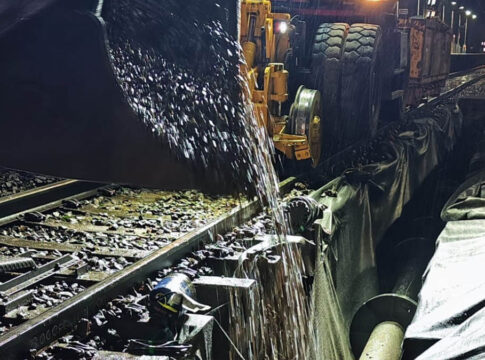
A nine-day closure is planned later this month on Europe’s busiest mixed-traffic corridor, the WCML. Agencies and operators say it is vital for both high-speed passenger and heavy freight services. Freight operators have rallied around the project. The sector is stepping up as the Trent Valley section prepares for a major engineering possession this month.
The upcoming works will see the route closed between Rugby and Stafford from Saturday 24 May to Sunday 1 June. Freight operators are working closely with infrastructure teams to keep goods moving via diversionary routes. The line possession, led by Network Rail, will deliver essential upgrades to improve the resilience and reliability of this key north-south spine connecting London, the Midlands and Scotland. Though the temporary shutdown will disrupt freight services from their usual alignment, the sector has rallied to ensure continuity.
Freight reroutes in step with major upgrades
Freight operators are coordinating closely with Network Rail in the Trent Valley. They have planned alternative paths and timetables to maximise capacity on alternative routes. While passengers will contend with replacement buses and longer journey times, goods trains are being carefully rerouted. It’s the usual logistical challenge that the industry is tackling head-on. The freight sector’s response underscores the importance of the WCML as a backbone of UK logistics.

The works include renewing track and ballast near the community of Atherstone. There’s also waterproofing of a bridge near Tamworth, stabilising an embankment by Cannock Chase, and repairing a footbridge at Rugeley Trent Valley station. All sites lie on the strategically important Trent Valley stretch, bypassing Birmingham on the direct axis between London and the North West of England. It’s a route that plays a growing role in the UK’s logistics “Golden Triangle.”
Network Rail and the freight sector aligned on future resilience
“These upgrades are vital to secure the future of reliable rail services for both passengers and freight,” said Gary Walsh, director for Network Rail’s West Coast South route. “We understand how critical the West Coast Main Line is to the UK economy and to international trade routes.”

Europe’s busiest shared-use railway handles everything from containerised consumer goods to bulk materials. With freight flows linking southern ports to distribution centres across the Midlands and North, the sector has little margin for delay. Nevertheless, far from resisting the disruption, operators have engaged constructively to support the long-term benefits of a more resilient network.
Holyhead services hit – but not by storms – for once
One immediate consequence for passenger services is the temporary suspension of direct Avanti West Coast trains between London and Holyhead, which will instead run only as far as Crewe. The North Wales corridor remains under pressure, with the Port of Holyhead still recovering from storm damage sustained during Storm Darragh in late 2024.

Although rail freight is not nearly as vital as historically, Holyhead retains huge growth potential, particularly in the light logistics and intermodal sectors. As reported by our sister service, WorldCargo News, ferry and intermodal operations at Holyhead have already been affected by weather-related infrastructure failure, adding further urgency to efforts to reinforce multimodal resilience across the UK. The WCML upgrades highlight how interconnected these systems have become.
Weekend works to lay the foundations
Preparatory engineering will also take place the weekend before the main closure. From 17–18 May, there will be additional changes between Nuneaton and Stafford. Amended timetables, diversions and replacement buses will affect passenger operators. Both London Northwestern Railway and Avanti West Coast have alerted their customers.
Despite frequent planned disruptions, WCML popularity is growing. Passenger demand on the West Coast Main Line shows no sign of slowing. The route is also at the spearhead of government-stated intentions to increase rail freight by at least 75% by 2025. Industry leaders agree that this kind of proactive investment is essential to avoid larger problems in future. “We know this will be disruptive,” said Jonny Wiseman, customer experience director for passenger operator London Northwestern Railway, “The long-term benefits of a more robust rail line are worth the short-term inconvenience.” That’s a sentiment with which none of the freight operators are arguing.