UK rail freight operations are set for overdrive at Immingham. Landings of raw materials were made over last weekend. The operators say more coal and iron ore is on the way. The supplies are urgently needed for the blast furnaces at the Scunthorpe steel works, 20 miles (32km) from the port. The works were taken into public hands by the UK Government in April, after the Chinese owners threatened closure.
Tens of thousands of tons of raw materials for steel making have been landed over the weekend at Immingham Bulk Terminal in Lincolnshire, England. There’s more to come. The UK Government has confirmed the arrivals. They say the feedstocks will bolster the UK’s national security by protecting the vital capability of domestic steel production. Now it’s down to the rail freight community to haul assets.
Bulk carriers at sea and bulk transfers on land
British Steel said a shipment of over 55,000 tonnes of blast furnace coke from Australian company Bluescope Steel has arrived at Immingham Bulk Terminal. The cargo was delivered by the MV Navios Alegria. The ship is an 85,000 dwt (deadweight tonnage) bulk carrier on the fleet of Navios Maritime Holdings, headquartered out of Piraeus. The coke is now being transferred by rail to the Scunthorpe site.
“The coke is crucial to helping ensure both of our blast furnaces can keep running for the coming months,” say British Steel. “[It’s] a vital part of efforts to provide a steady pipeline of materials for continued steelmaking.” Scunthorpe stood to lose over 2,000 jobs if the plant had closed, and many more in the supply chain.
Rails for the UK network
Another shipment of more than 66,000 tonnes of iron ore pellets and 27,000 tonnes of iron ore fines is due to arrive from Sweden next week. The purchases have been funded by the UK Government, and it’s understood by RailFreight.com that the Department for Business and Trade is also funding the rail transfers.
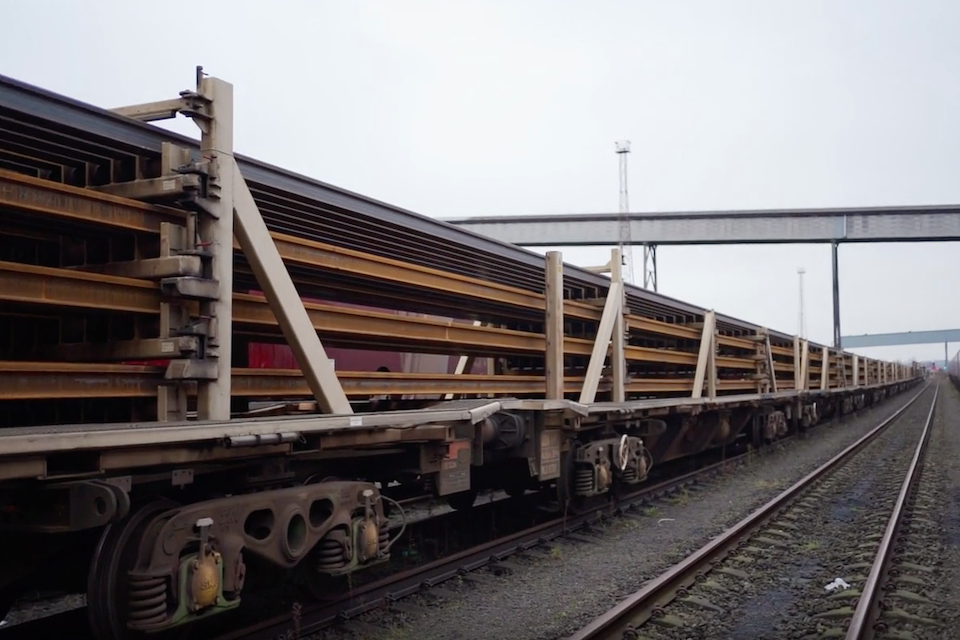
Business Secretary Jonathan Reynolds said that the UK government has taken action to secure primary steelmaking at Scunthorpe after the former Chinese owners of the plant had threatened closure. That would have left the UK unable to manufacture virgin steel – a grade of product necessary for many applications. Earlier, the works had rolled out its first consignment of long products – rails for the UK railway network, one of those products for which blast furnace production is necessary.
High volumes at high speed by rail
Although the UK Government is reluctant to state it, their communications suggest that the plant at Scunthorpe was on the brink of running out of supplies. That would have forced the shutdown of the two blast furnaces – a process that can be damaging and very difficult to reverse. The blast furnaces at Scunthorpe are the last pair in the UK. The ability of rail to deliver high volumes quickly has been a critical advantage.
The latest delivery of vital raw materials reinforces the UK’s primary steelmaking capacity by ensuring both blast furnaces at Scunthorpe can remain operational and gives certainty to the workforce of around 3,000 employed at the steelworks. Moreover, the multiple deliveries of raw materials via Immingham are providing work for dockers and rail freight operations. The shipments already announced will require several dozen train movements.
Rail freight operators are likely to be discussed
British Steel says that the necessary supplies of raw materials for the blast furnaces have been confirmed. That means the UK Government is able to focus on securing the long-term future of British Steel with private sector investment. They say that they are already working closely with a range of third parties on potential options. Rai freight operators could be included in those discussions over the movement of finished products to domestic and export customers.
Allan Bell, recently appointed as the interim CEO of British Steel, said that successfully securing raw materials meant that production of steel could continue. That further implies that the furnaces were close to going cold. “We would not be here today without the hard work and dedication of our specialist procurement, technical and operational teams who have worked tirelessly on short timescales to secure the required raw materials,” he said. “Over the coming months, our focus will be on stabilising our operations for the long term, cementing British Steel as one of the world’s leading manufacturers of steel.”