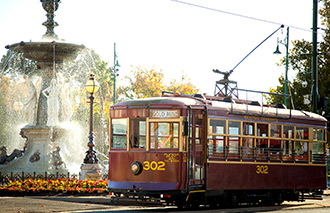
As regional Victorian cities expand at a rapid pace, local planners are increasingly looking back at history to solve modern transport challenges. Bendigo is no exception. While the city’s relationship with trams is globally celebrated through its heritage operations and the recently upgraded Bendigo Tramways depot, conversations occasionally spark around a bigger idea: what if Bendigo returned a portion of its historic network to active commuter service?
To understand the potential, you have to look at what was lost. Bendigo once boasted a comprehensive urban tram grid that moved everyday workers, shoppers, and students across town before it was decommissioned in 1972. Reintroducing a functional, modern light-rail transit system along key historical corridors could unlock major socio-economic, environmental, and structural benefits for the municipality.
First and foremost, a fixed-rail transit grid would directly alleviate inner-city congestion. Bendigo features charming, narrow nineteenth-century streetscapes that struggle under the weight of contemporary car traffic, particularly during peak hours around View Street and Pall Mall. Carving out dedicated light-rail corridors provides a high-capacity alternative to driving. By taking private vehicles off the road, the city can ease bottlenecks and reduce the relentless demand for valuable inner-city real estate consumed by car parking.
Beyond traffic relief, light rail serves as a powerful catalyst for sustainable urban growth. Unlike bus routes, which can be easily altered or chopped, physical tram tracks signal permanence to property developers, businesses, and residents. Running modern light rail along high-density corridors—such as linking residential growth zones directly to La Trobe University, the hospital precinct, and the central business district—encourages smart, transit-oriented development. It ensures that new housing and jobs are naturally tied to high-frequency public transport.
The environmental argument is equally compelling. As Victoria continues to green its energy grid, electric trams offer a completely zero-emission transit option at the street level. Replacing short, inner-city car trips with smooth, quiet light rail helps cut local air and noise pollution, aligning seamlessly with broader regional carbon-reduction targets.
Crucially, Bendigo holds a massive competitive advantage that no other regional city possesses: it is already home to Bendigo Tramways. As Australia’s premier centre for heritage tram restoration, the city retains the specialised infrastructure, master craftspeople, and engineering expertise required to maintain rail rolling stock. Reviving a local transit network would create a powerful local ecosystem, feeding regional jobs and keeping technical skills anchored in Central Victoria.
Finally, a commuter network fosters greater social equity. Regional growth often leaves behind those who cannot or choose not to drive, including senior citizens, students, and youth. Modern, low-floor accessible trams offer an ease of boarding and a comfortable ride quality that standard buses often struggle to match, drastically improving daily mobility and community connectedness.
While bringing back a full commuter grid would require a generational investment, looking at Bendigo’s past reveals a ready-made blueprint. Re-integrating light rail could transform Bendigo from a car-dependent regional hub into a connected, sustainable, and forward-thinking modern city.