

June 16, 2024
June 6, 2026
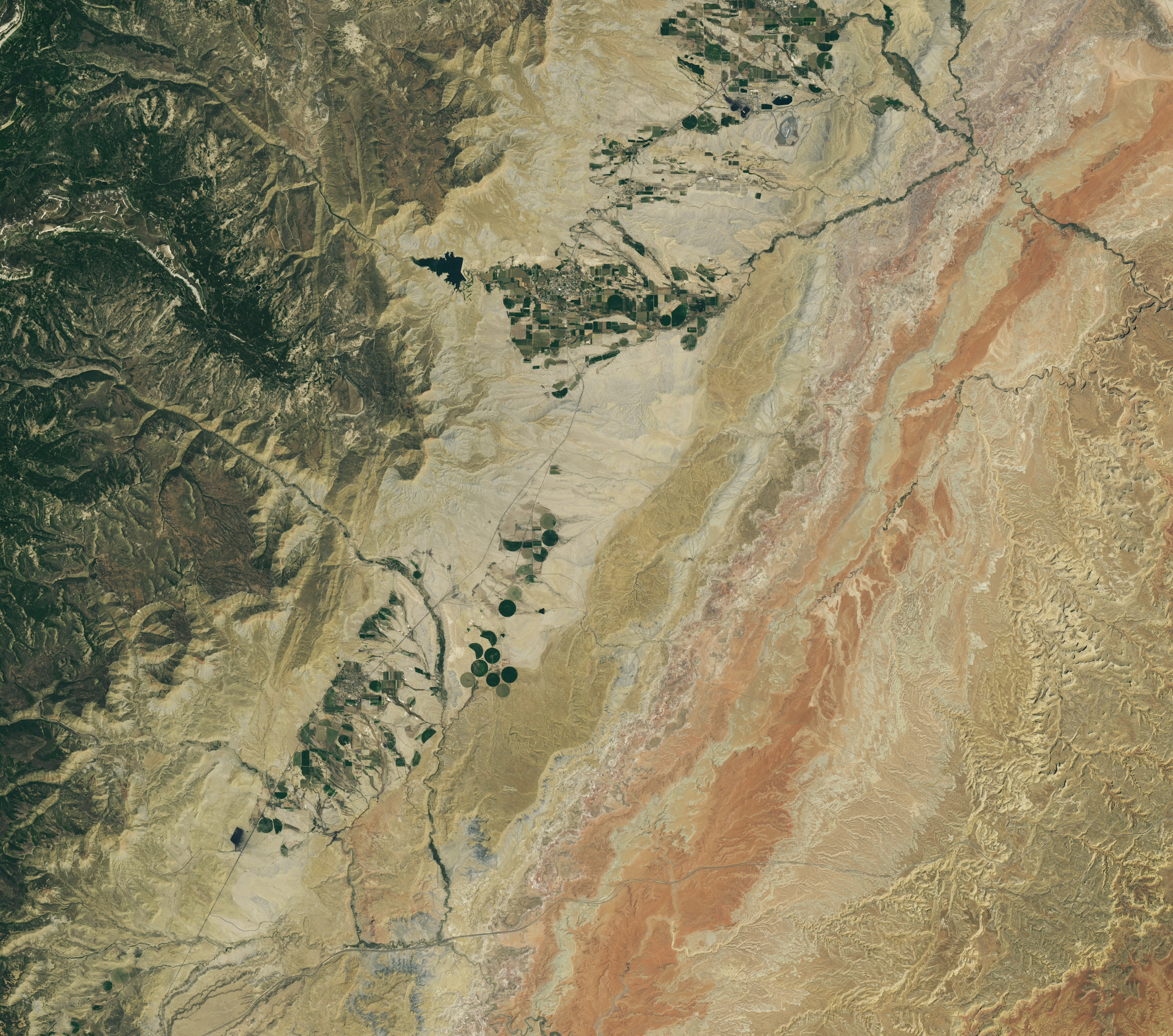
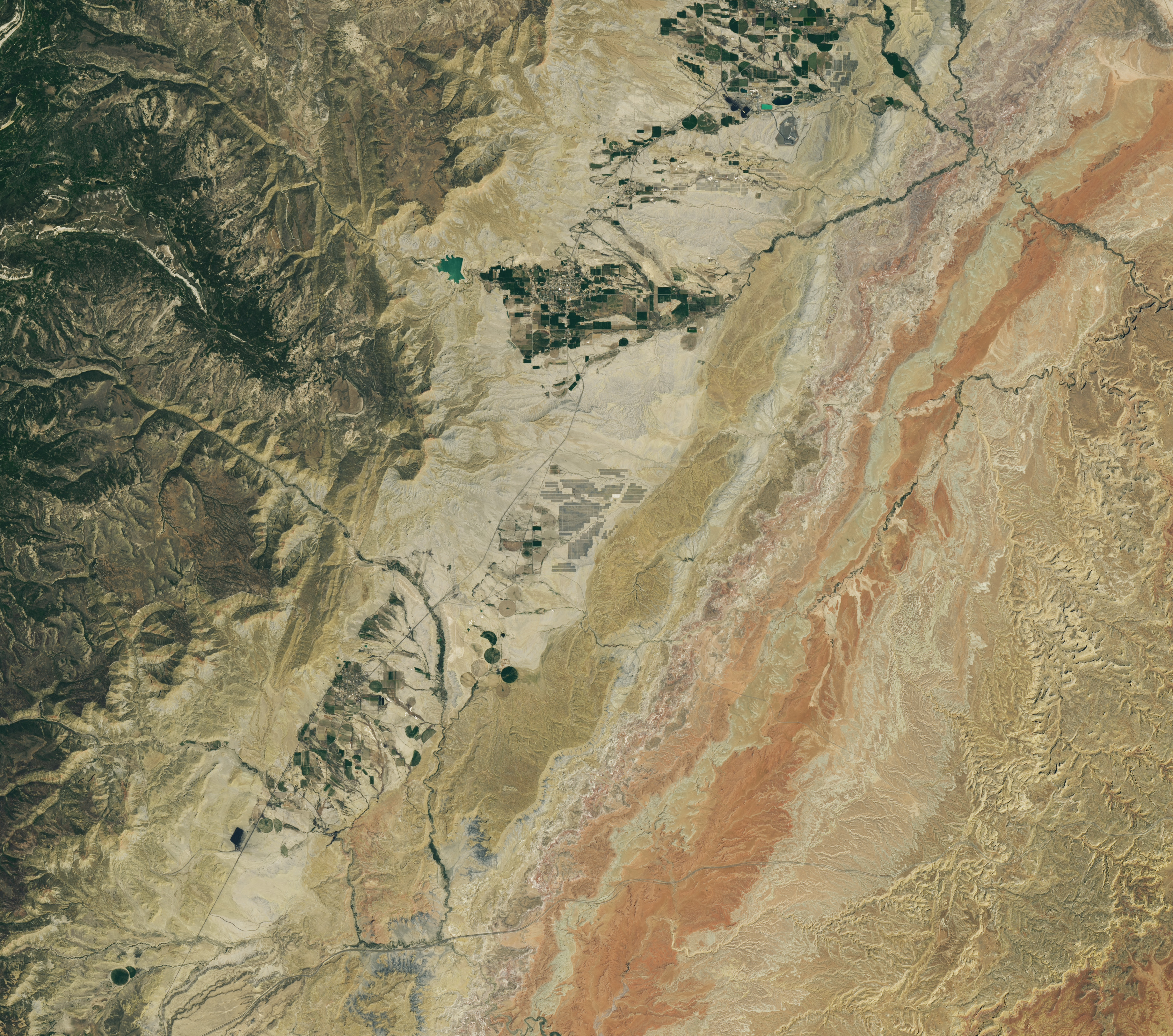
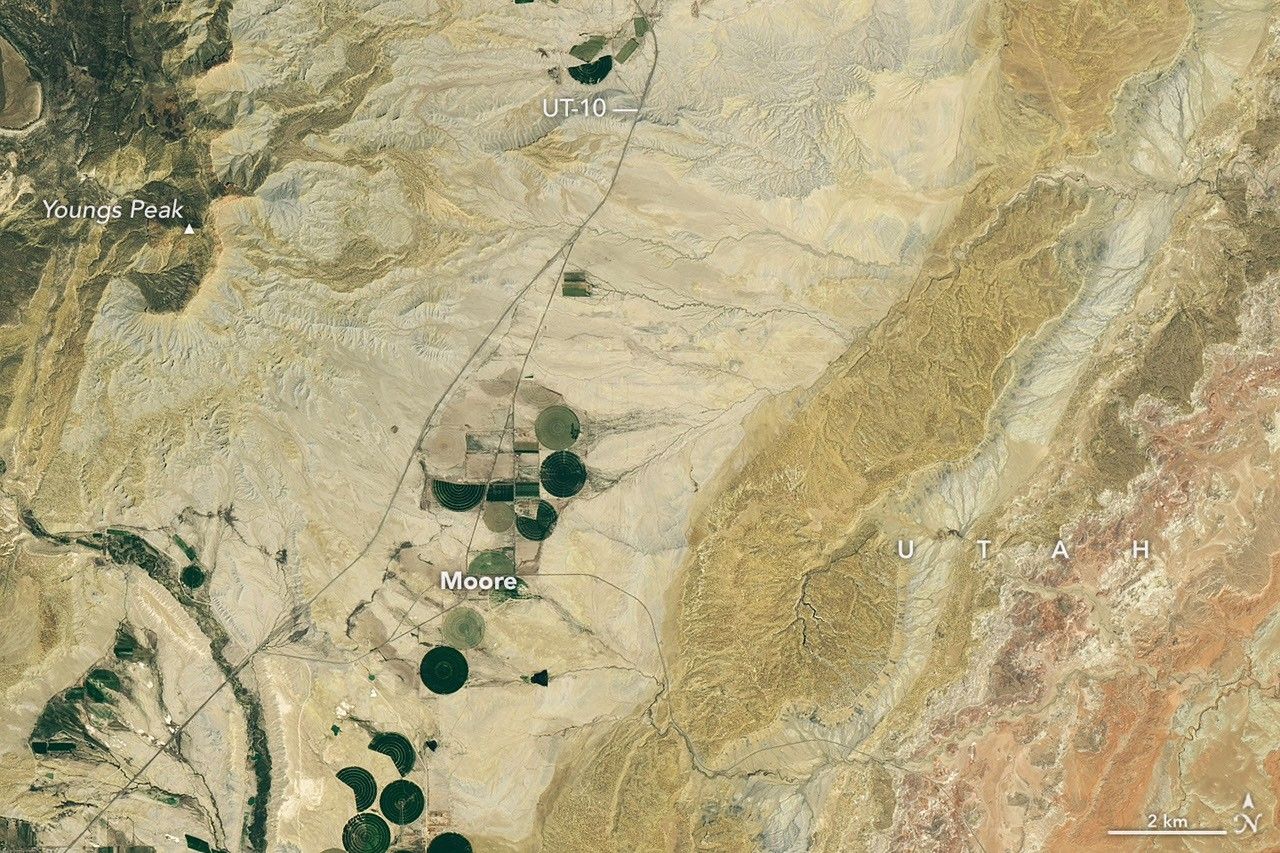
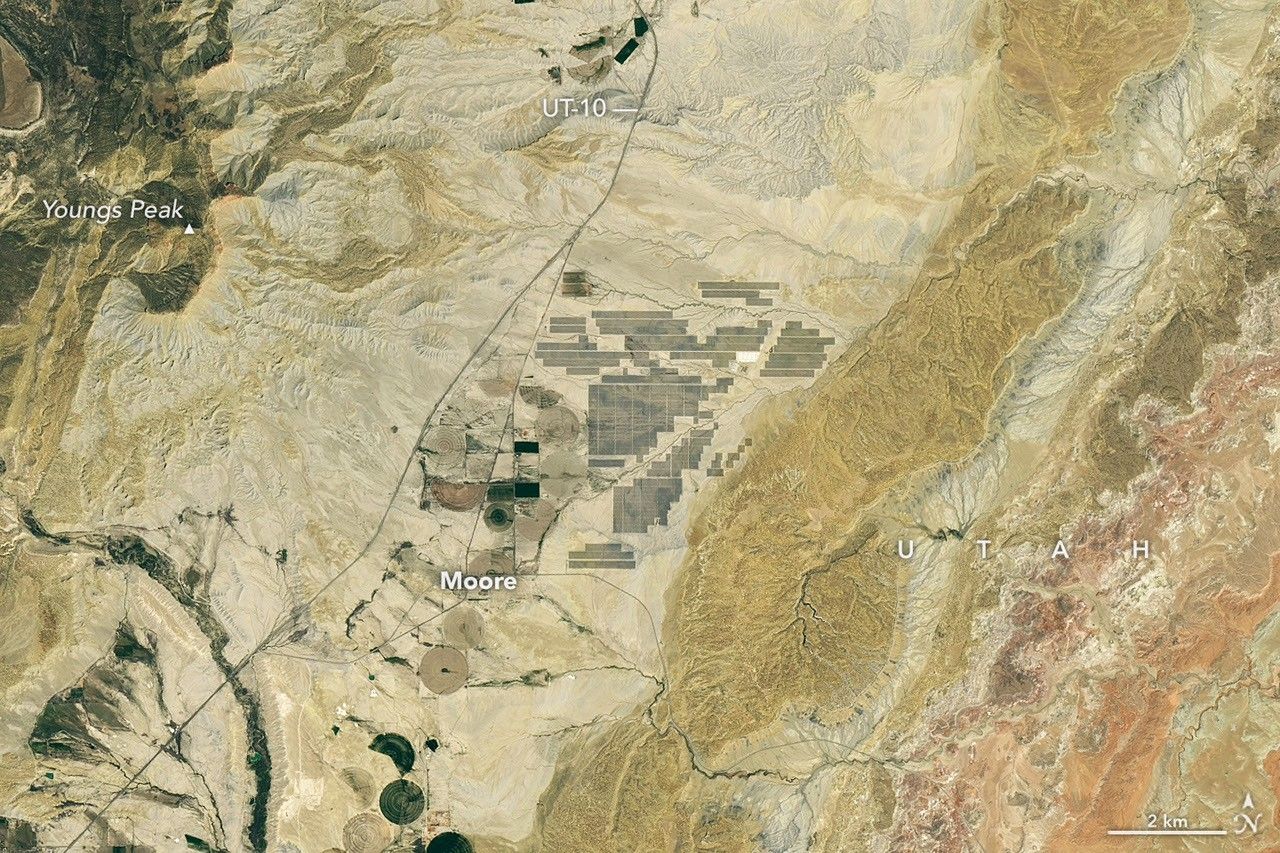
Historically, central Utah’s Castle Valley has been a coal hub, with mining operations on the slopes of the Wasatch Plateau to the west active since the late 1800s. A different energy development arrived in the region in June 2026, when a large solar power and battery storage plant came online in the sunny valley about 130 miles (210 kilometers) southeast of Salt Lake City.
The recently constructed Green River Energy Center, seen in the Landsat 8 image above (right), features nearly one million solar panels and roughly 500 batteries on several square miles of previously undeveloped land. The facility has 400 megawatts of solar-generating capacity with another 400 megawatts of battery storage. That places it among the many utility-scale solar power and battery storage projects that the U.S. Energy Information Administration expects to be plugged into the country’s grid in 2026.
The Utah facility is slated to supply power to Salt Lake City and other areas across the state, according to news reports, and project staff estimate it could produce enough electricity for more than 100,000 homes. With its integrated battery storage, the plant has the potential to generate power at all hours, even when the Sun isn’t shining. And the Green River Energy Center can build on Castle Valley’s energy legacy by utilizing existing transmission lines originally built for coal-fired power plants in the area.
Though Utah adopted coal as its state rock and has long relied on it for energy, other sources, such as solar and geothermal, are becoming larger parts of the state’s energy mix. In 2025, coal fueled about half of the state’s electricity generation, down from about 75 percent in 2015. Meanwhile, solar grew to account for about 14 percent of generation in 2025, up from nearly zero a decade before. Satellite data can be useful to planners and policymakers involved in energy transitions for assessing the potential of renewable energy systems and tracking their adoption and performance.
NASA Earth Observatory images by Lauren Dauphin, using Landsat data from the U.S. Geological Survey. Story by Lindsey Doermann.


References & Resources
- Deseret News (2026, June 23) Utah’s biggest solar farm comes online. Accessed July 23, 2026.
- Edwards MR, et al. (2022) Satellite Data Applications for Sustainable Energy Transitions. Frontiers in Sustainability, 3, 910924.
- KUER (2026, June 23) Utah just plugged in a huge solar and battery farm in Emery County. Accessed July 23, 2026.
- NASA (2021) ARSET – NASA Earth Observations for Energy Management. Accessed July 23, 2026.
- U.S. Energy Information Administration (2026, February 20) New U.S. electric generating capacity expected to reach a record high in 2026. Accessed July 23, 2026.
- U.S. Energy Information Administration, Utah. Accessed July 23, 2026.
You may also be interested in:
Stay up-to-date with the latest content from NASA as we explore the universe and discover more about our home planet.

A recent analysis revealed where artificial light at night has intensified, as well as where it has diminished.

From a geothermal hotspot to the one-time “Lighthouse of the Pacific,” the heat is on beneath the volcanic landscape of…

An astronaut’s photo, taken en route to the Moon, reveals our planet and its place in space in a novel…