4 min read
Curiosity Blog, Sols 4838-4844: Wrapping Up the Boxwork Terrain

Written by Deborah Padgett, MSL Operations Product Ground System Task Lead at NASA’s Jet Propulsion Laboratory
Earth planning date: Friday, March 20, 2026
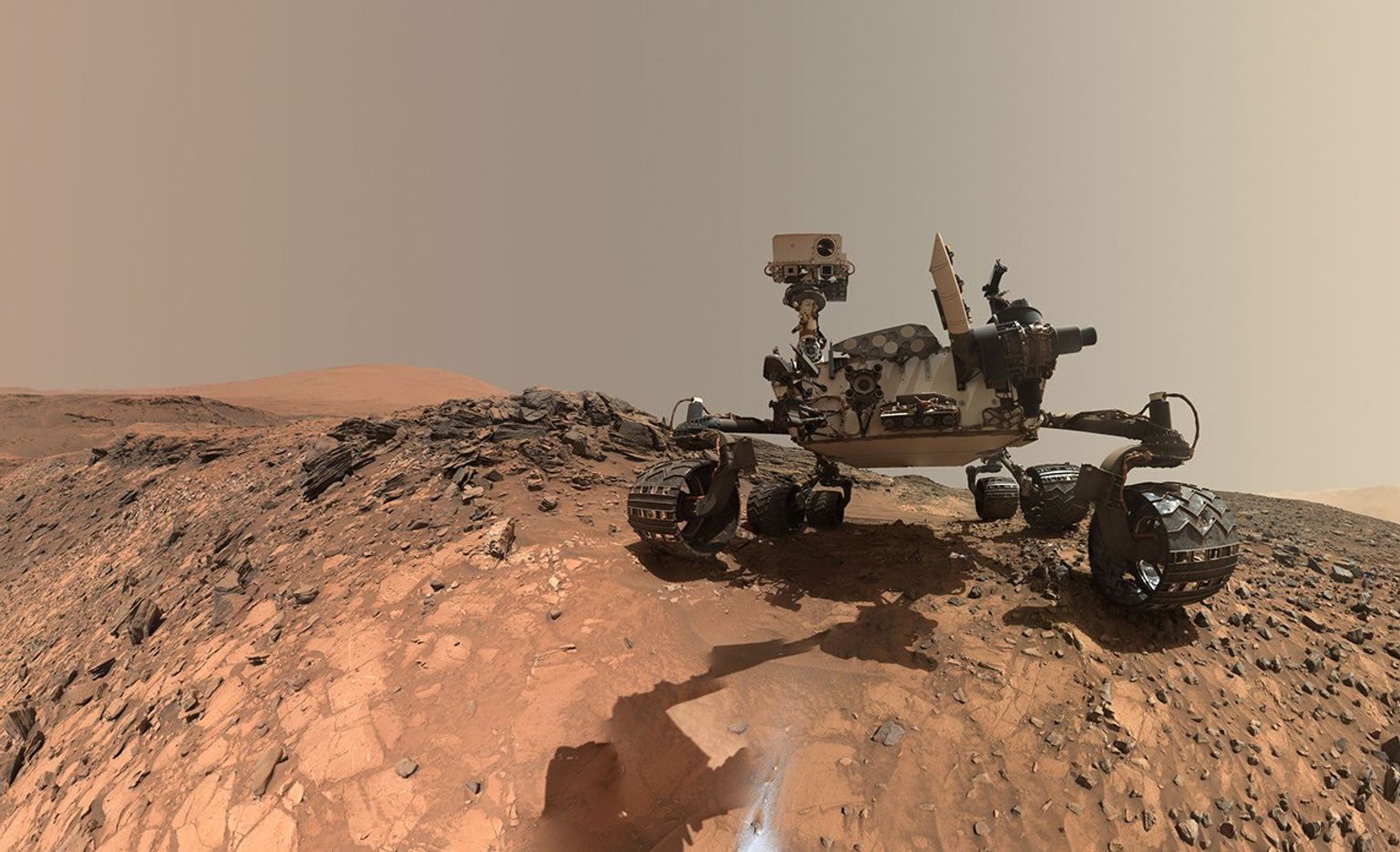
Curiosity has just concluded a very intense week of science observations and engineering activities, as it wraps up its monthslong investigation of the Martian boxwork terrain. Three days of planning this week by the MSL science and engineering team has led to three rover drives, three sets of targets for detailed study by instruments on Curiosity’s arm, and a vast array of in-situ data characterizing the southern reaches of the boxwork terrain on the shoulder of Mount Sharp on Mars.
As the week began on Mars sol 4838, Curiosity used cameras on Mastcam and ChemCam to image ridge and butte targets “Salar de Maricunga,” “El Misti,” “Saipina” ridges and the “Paniri” butte. Mastcam also looked at bedrock fractures on target “Sajta.” The laser spectrometer on ChemCam examined the composition of the target “Tacitas.” After brushing away a great deal of dust off the bedrock target “Toro Wharku” with the DRT, then MAHLI and APXS studied it in detail. MAHLI also performed detailed imaging of the nearby ledge “Rincodillas.” In the afternoon, Mastcam Tau and Navcam line-of sight observations measured the amount of dust in the Martian atmosphere.
On sol 4839 Curiosity finished up investigation of Toro Wharku with ChemCam laser spectroscopy and Mastcam imaging. A long-distance ChemCam RMI 10×1 mosaic was obtained on the Paniri butte, and Navcam took cloud and dust-devil movies. The rover then drove 35 meters (about 115 feet) toward the southern contact of the boxwork terrain with the adjacent sulfate unit, and performed post-drive photography of a 360-degree panorama around the vehicle using Navcam.
On Sol 4840, those images allowed selection of a uniquely shaped rock formation dubbed “Llisa” for laser spectrometer study with ChemCam and Mastcam. Although no reachable bedrock was smooth enough for DRT brushing, MAHLI obtained microscopic images of “Chusumayo” and APXS target “Sierra Gorda,” in bedrock showing very intriguing sedimentary layers. Mastcam also imaged these layers at targets “Limbaba” and “Limbaba2.” The ChemCam telescope RMI camera looked back along Curiosity’s path at the now distant Mishe Mokwa butte, viewing its stratigraphy from a different angle. Atmospheric studies included a Mastcam sky survey, Mastcam tau, and Navcam dust-devil movie. The following sol, 4841, concluded the study of Chusumayo with ChemCam LIBS observations of nearby target “La Troya.”
On Sol 4841, Curiosity drove 39 meters (about 128 feet) farther south. In Friday’s plan for sols 4842 through 4844, the sol starts with ChemCam laser spectrometer composition and Mastcam imaging studies of outcrop “San Julien,” followed by telescopic RMI images of the “Santa Rita” dark ridge material. Mastcam will then obtain a series of mosaics documenting the southern contact between the boxwork structures and the sulfate unit, from nearby bedrock to the more distant hillsides of the Paniri butte. Mastcam imaging will also investigate the possibility of regolith movement in a trough. A supra horizon cloud movie, dust-devil movie, and line-of-sight dust observations with Navcam will integrate atmospheric investigations into the morning science block. Curiosity will then unstow the arm, performing a DRT brushing, MAHLI imaging, and APXS measurement on target “Challapata.” Another Navcam line-of-sight plus a Mastcam tau will complete atmospheric dust measurements for the sol.
The following sol, 4843, will see ChemCam laser spectroscopy and Mastcam imaging of dark ridge target “Santa Laura.” Mastcam will then obtain additional mosaics of the southern contact (“Yungas de Arepucho”), as well as a “Limbaba lookback” target. ChemCam’s RMI telescope will image the upper reaches of Paniri butte, complementing the Mastcam coverage. Morning and evening studies by Navcam and Mastcam will continue the time series of dust and dynamics in the Martian atmosphere, accompanied by an overnight APXS atmospheric observation.
On the morning of sol 4844, ChemCam will complete the study of Challapata with laser spectroscopy, and Mastcam will document the changes in the target after it is zapped. After a ChemCam passive sky observation and Navcam dust-devil survey, Curiosity will drive 11 more meters to the south (36 feet), most likely crossing the long-awaited boundary between the Martian boxwork structures and the sulfate unit beyond. During the drive, MAHLI will perform a full set of wheel imaging to track the wear on the rover’s wheels. In concert with the post-drive imaging, ChemCam and Navcam will perform an AEGIS investigation, allowing the on-board processing of Navcam data to choose a ChemCam LIBS target before our human team sees the images. The plan concludes on the morning of sol 4845 with ChemCam laser spectroscopy of this new AEGIS target, in addition to atmospheric studies with Navcam and Mastcam.
Next week, Curiosity leaves the Martian boxwork terrain behind in its quest for new discoveries.