How NASA is Collecting Explosion Data for Next Generation Rockets
Commercial launch providers continue to advance propulsion technology with a renewed focus on liquid oxygen and methane propelled rockets and spacecraft.
As systems grow in scale, carrying millions of pounds of propellant, so too does the responsibility to fully understand the safety profile.
NASA has a proven ability to safely execute high-risk testing

Joe Schuyler
Director, NASA Stennis Engineering and Test Directorate
Engineers at NASA, with decades of cryogenic and test operations expertise, are conducting a final series of tests to quantify the explosive yield at Eglin Air Force Base in Florida. The data collected will provide knowledge that helps government and industry prepare with confidence.
“NASA has a proven ability to safely execute high-risk testing,” said Joe Schuyler, director, Engineering and Test Directorate, at the agency’s Stennis Space Center near Bay St. Louis, Mississippi. “This work shows how our expertise with cryogenic systems can go beyond propulsion testing and beyond our center to execute for the mission.”
The team is in the middle of this final test series to collect data to develop safety protocols for a tri-agency team effort consisting of NASA, the Federal Aviation Administration, and the United States Space Force.
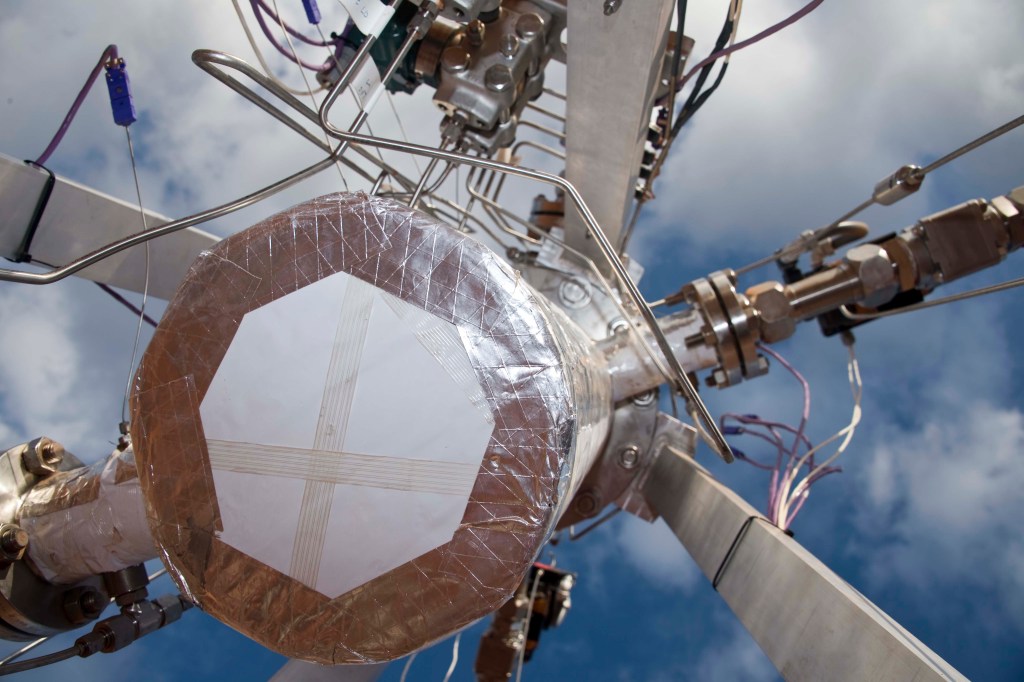
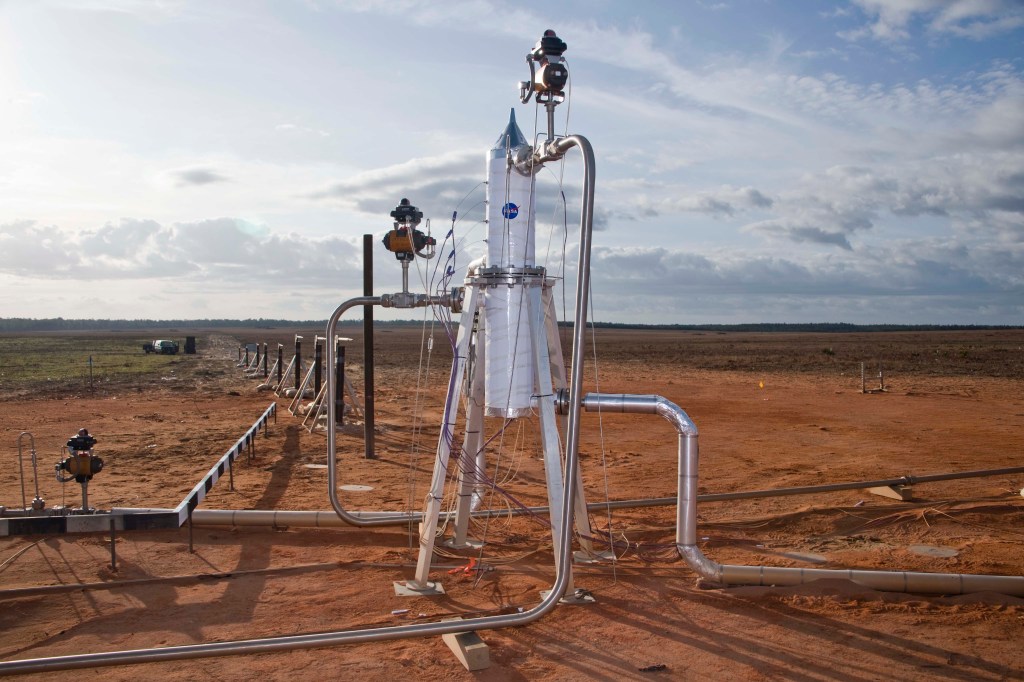
The test articles, developed by a team at NASA’s Wallops Flight Facility in Virginia, model a generic fuel storage tank with liquid oxygen and methane separated by a common bulkhead. The tests will evaluate explosion hazards across three scales, based on propellant weights of 100 pounds, 2,000 pounds, and 20,000 pounds.
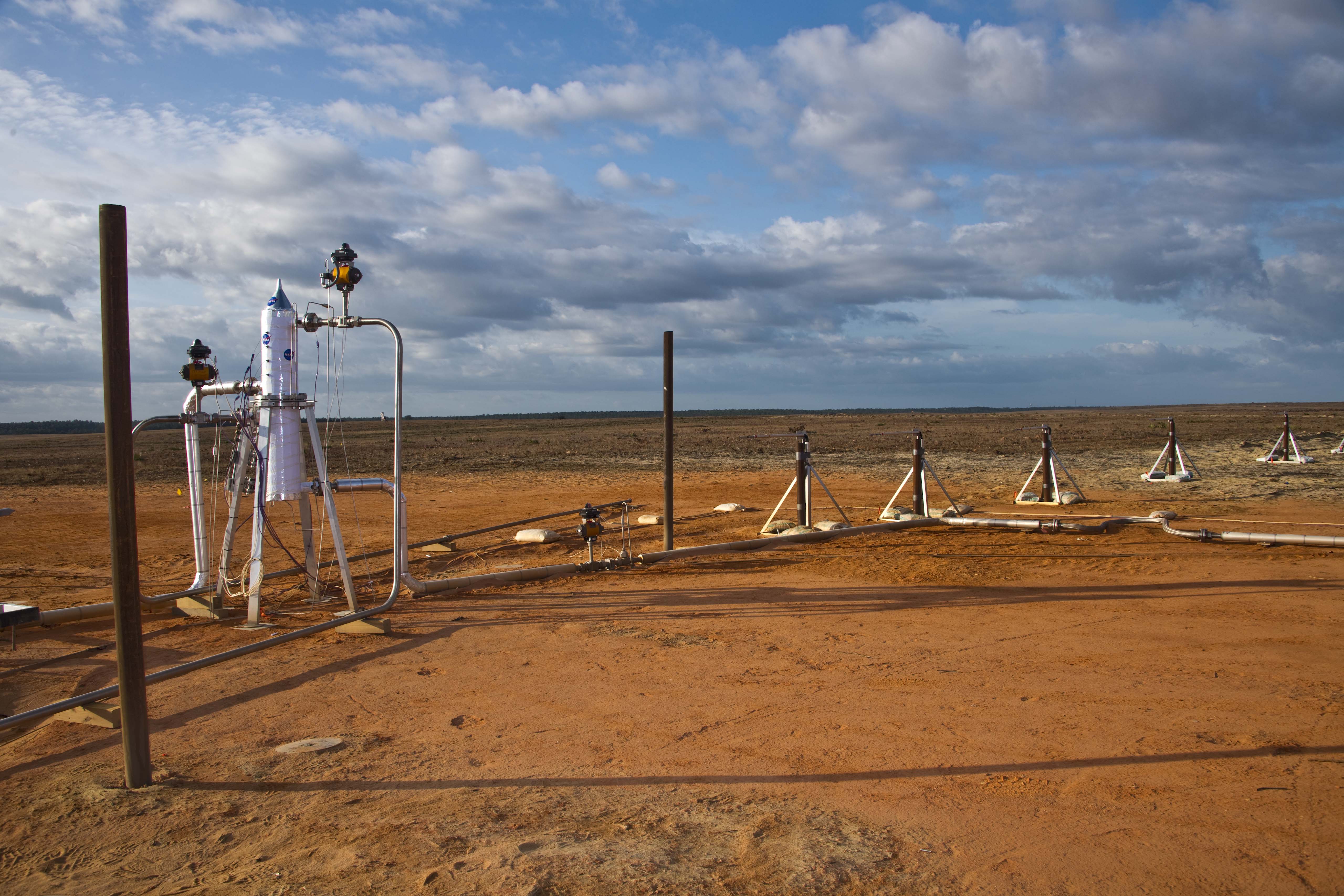
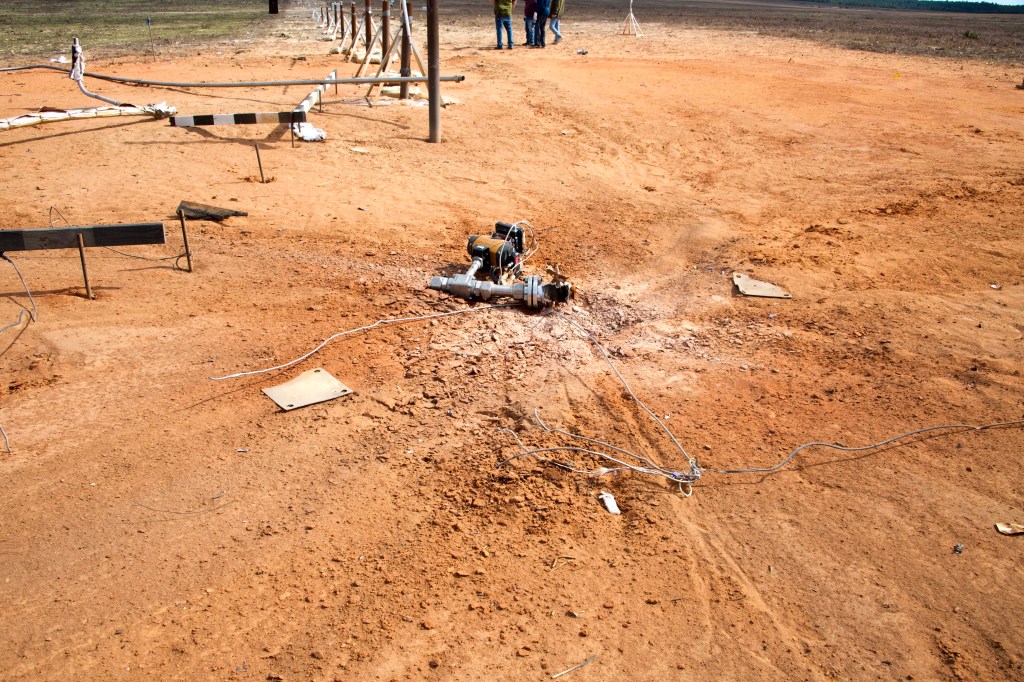
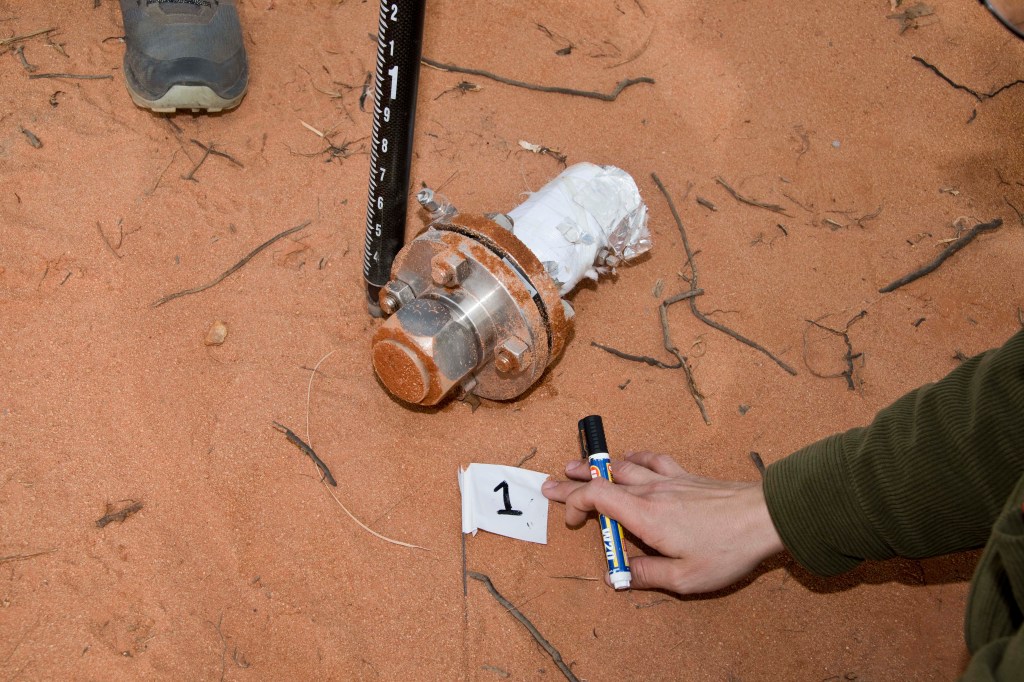
For many of the tests, the barrier separating the two propellants is intentionally ruptured to simulate a catastrophic failure scenario. As the mixing fluids are detonated, instruments located on the test articles, and throughout a test field, measure the intensity of the blast wave at certain prescribed distances. High-speed cameras also are used to measure thermal aspects of the explosion, along with capturing how fast and where the fragments travel.
We put fuel in a rocket, blow it up in a remote location, and measure how big the boom is
Jason Hopper
NASA Stennis Liquid Oxygen Methane Assessment Deputy Project Manager
“We put fuel in a rocket, blow it up in a remote location, and measure how big the boom is,” said Jason Hopper, NASA Stennis liquid oxygen methane assessment deputy project manager.
A final composite view brings all three angles together simultaneously, providing a complete picture of the detonation.
The audio delivers a sharp crack followed by a deep, rolling boom that reverberates for several seconds before settling into a crackling sound as the fire dissipates.
Behind Hopper’s straightforward explanation is complex work, where all NASA Stennis operations at the site are carried out by civil servants. The testing brings together expertise in test operations, execution, logistics, and cryogenics in ways rarely combined outside of actual launch operations.
“This type of testing only comes around once every few decades,” Hopper said. “With so many rockets launching now, this will contribute to public safety, site safety, and all the risk involved with the work.”
From Blank Space to Test Site
An immediate connection formed between the NASA team and the 780th Test Squadron Ground Test Flight personnel from Eglin Air Force Base during an early site visit.
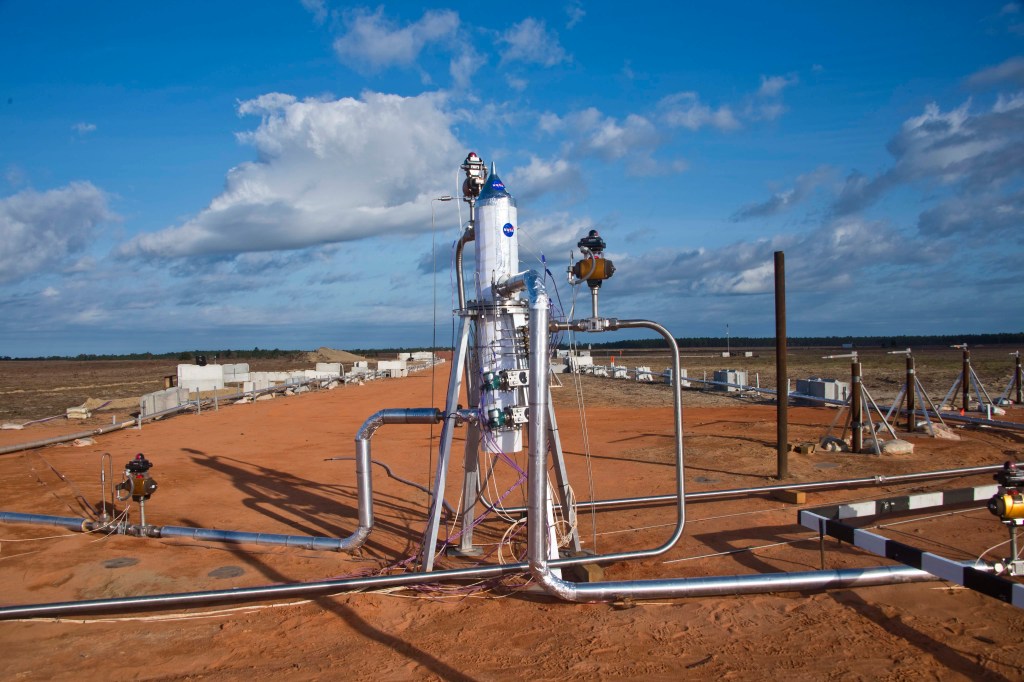
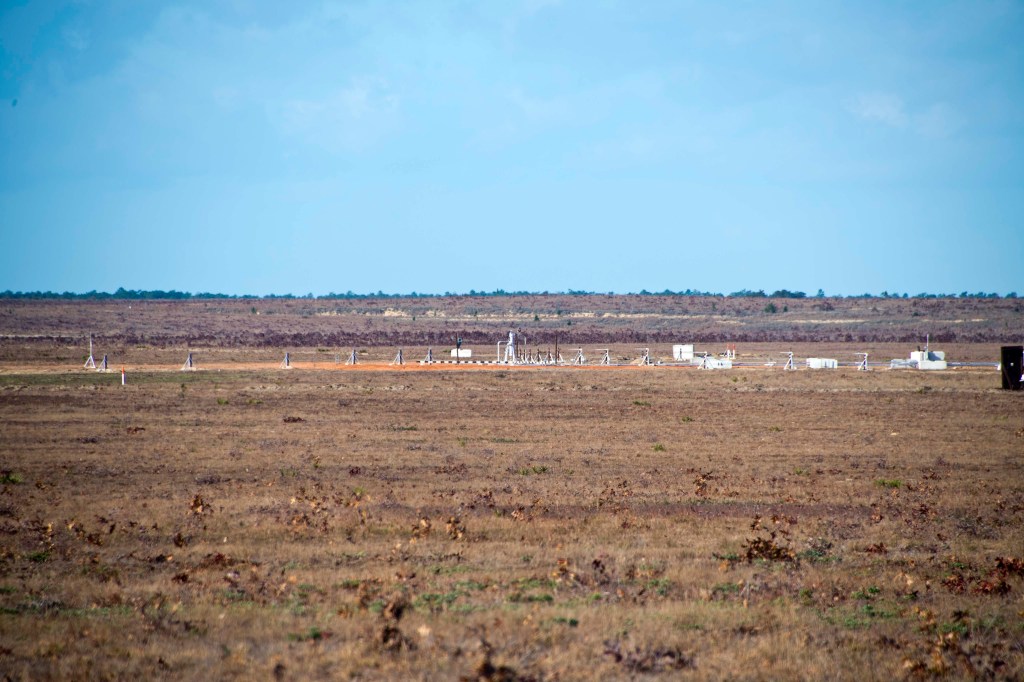
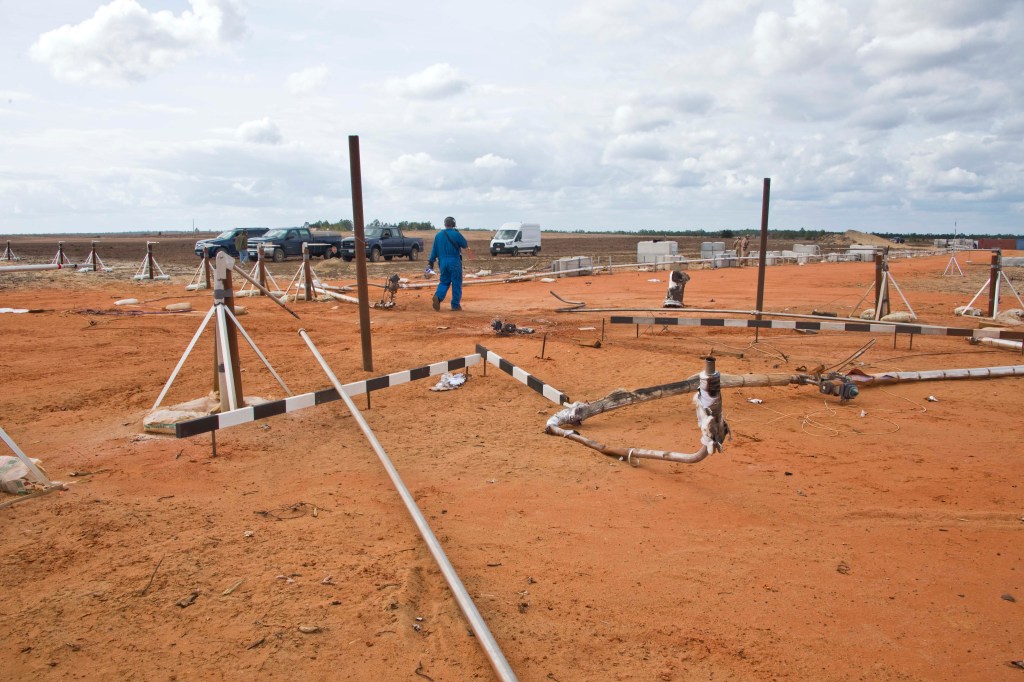
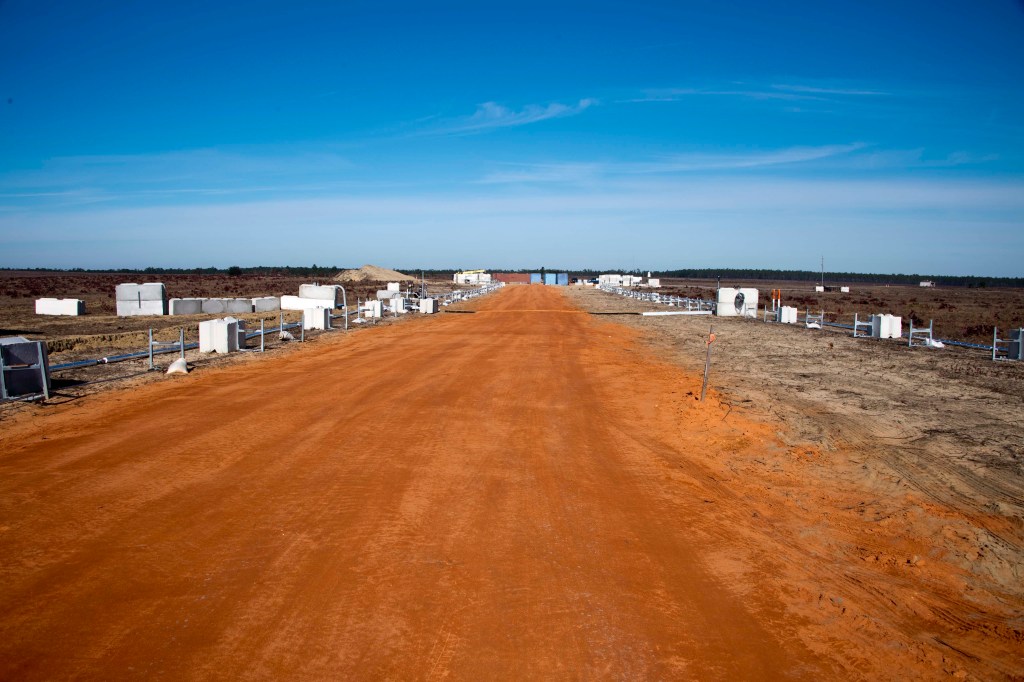
Starting from scratch with a greenfield and a remote concrete pad, the NASA team transformed the area into an operational test site in about four months, some of that time over the government furlough in October 2025.
Crews cleared the area, leveled the concrete pad, and brought in cryogenic storage vessels from NASA’s Kennedy Space Center in Florida to hold the super-cold liquid propellants, ranging from minus 260 degrees to minus 297 degrees Fahrenheit.
The custom infrastructure included fabricating 700 feet of cryogenic transfer lines and constructing support stands to route the lines to the test article location.
They brought in generators for power and modified a shipping container into a fully equipped fabrication workshop.
The team converted a mobile control center, provided by NASA Wallops, into a control room at NASA Stennis before moving it to the Florida test site. The control room is positioned 1.6 miles from the blast site for initial tests, and it will move to 4 miles away for larger detonations.
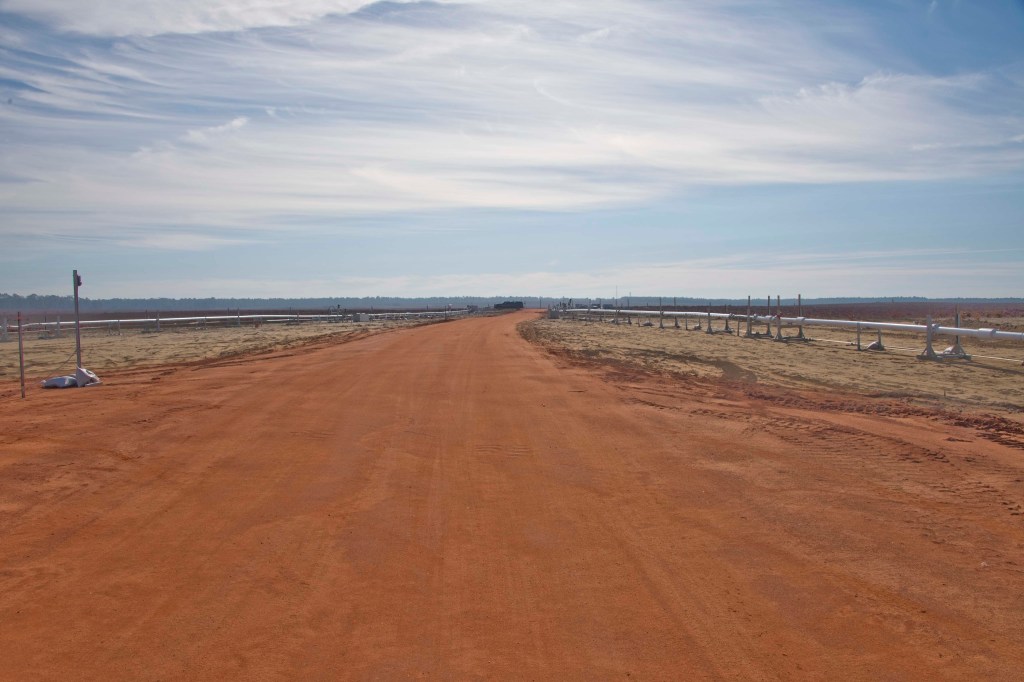
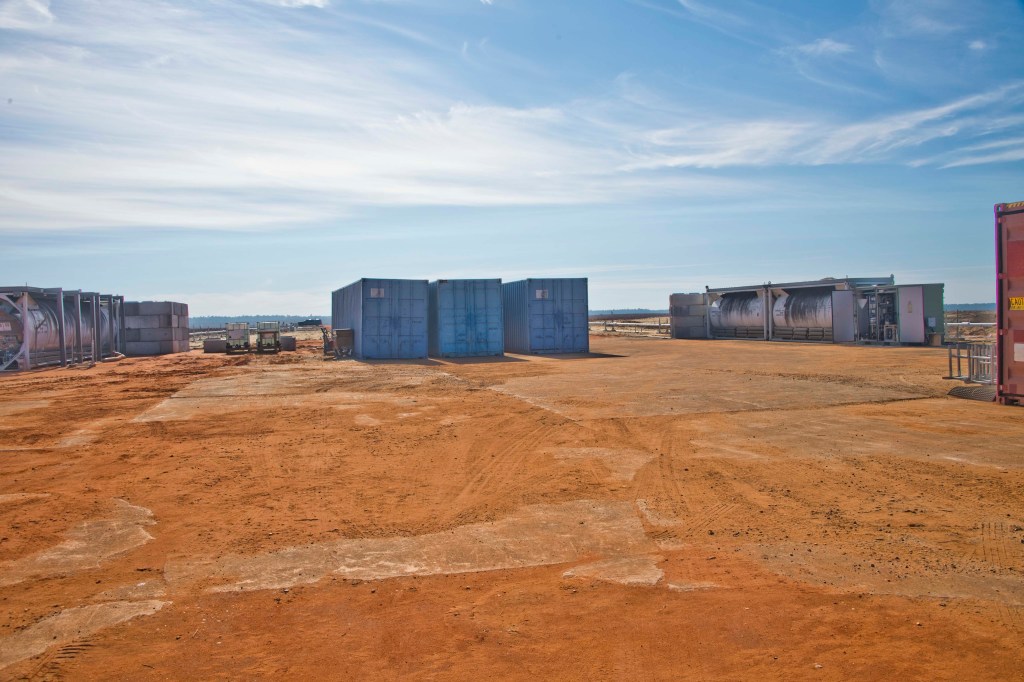
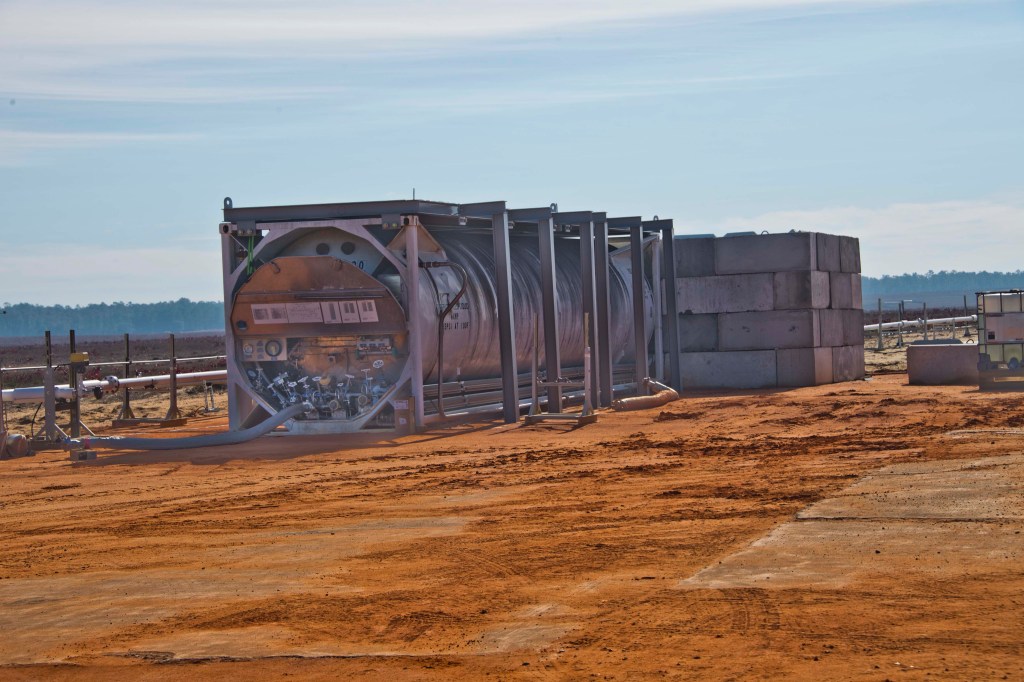
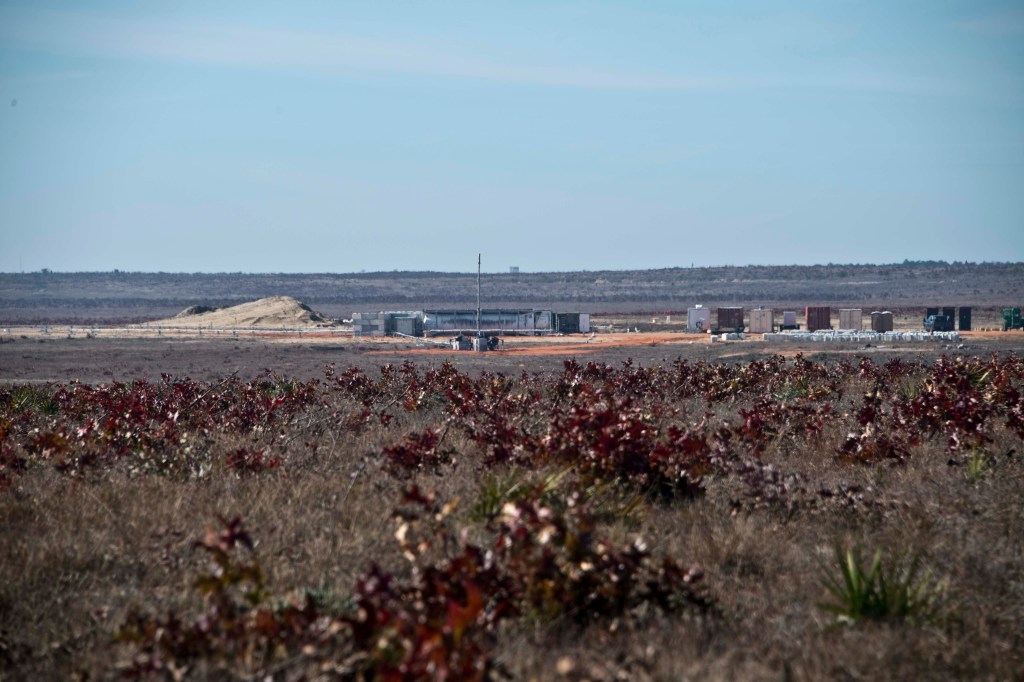
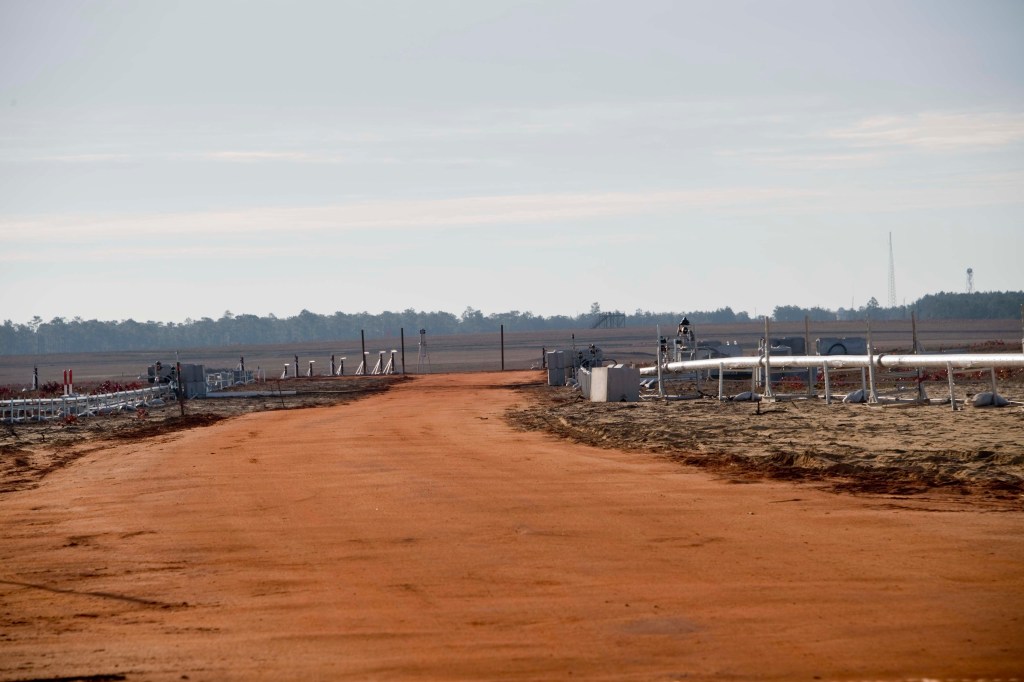
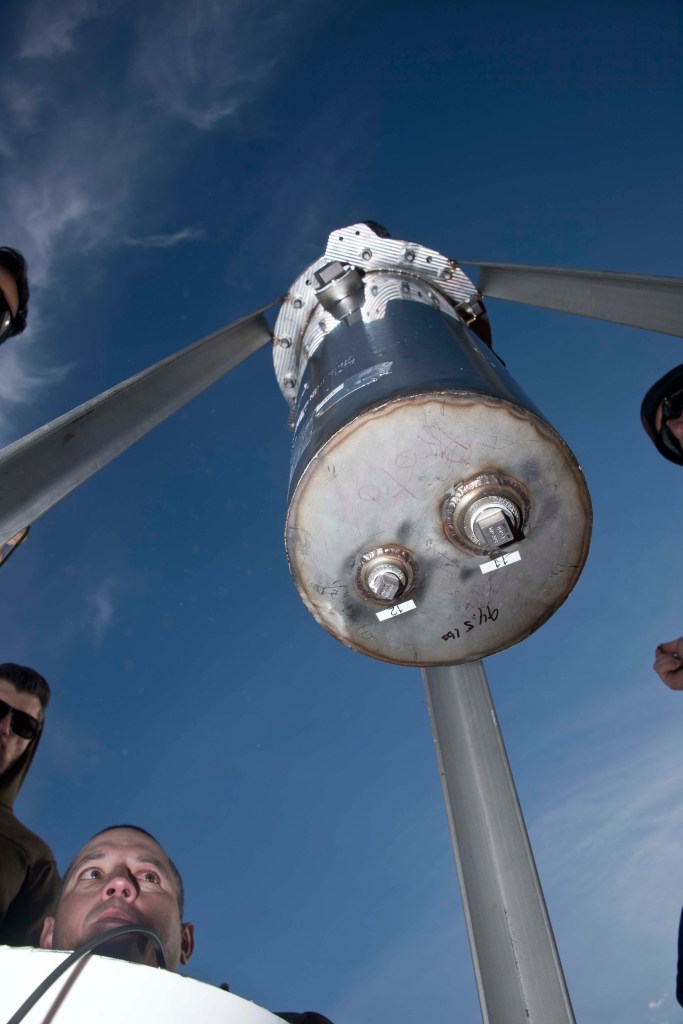
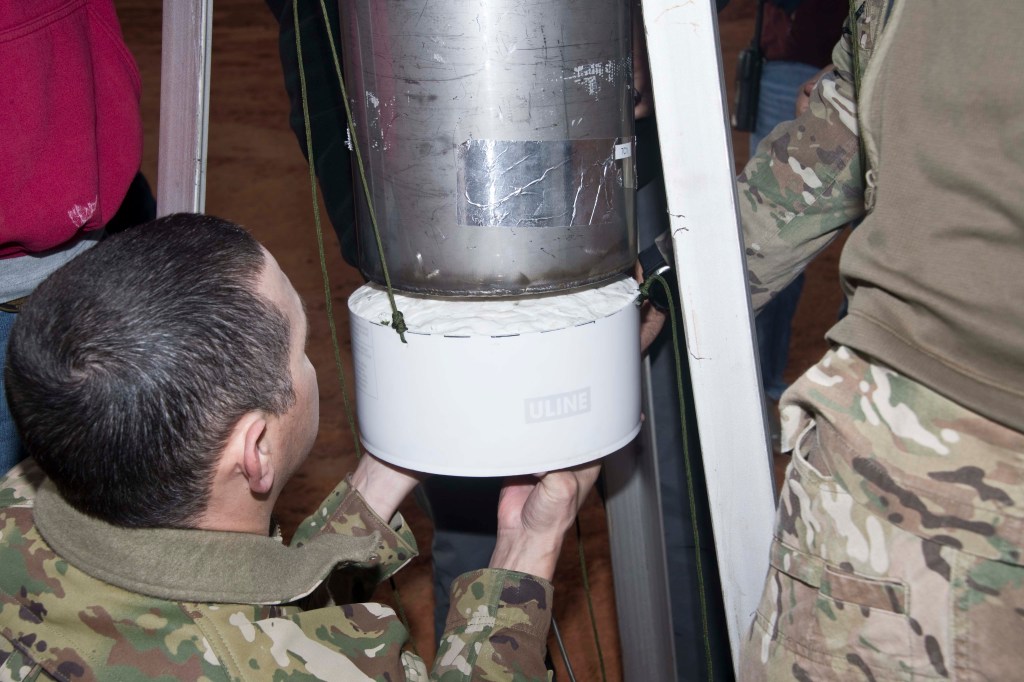
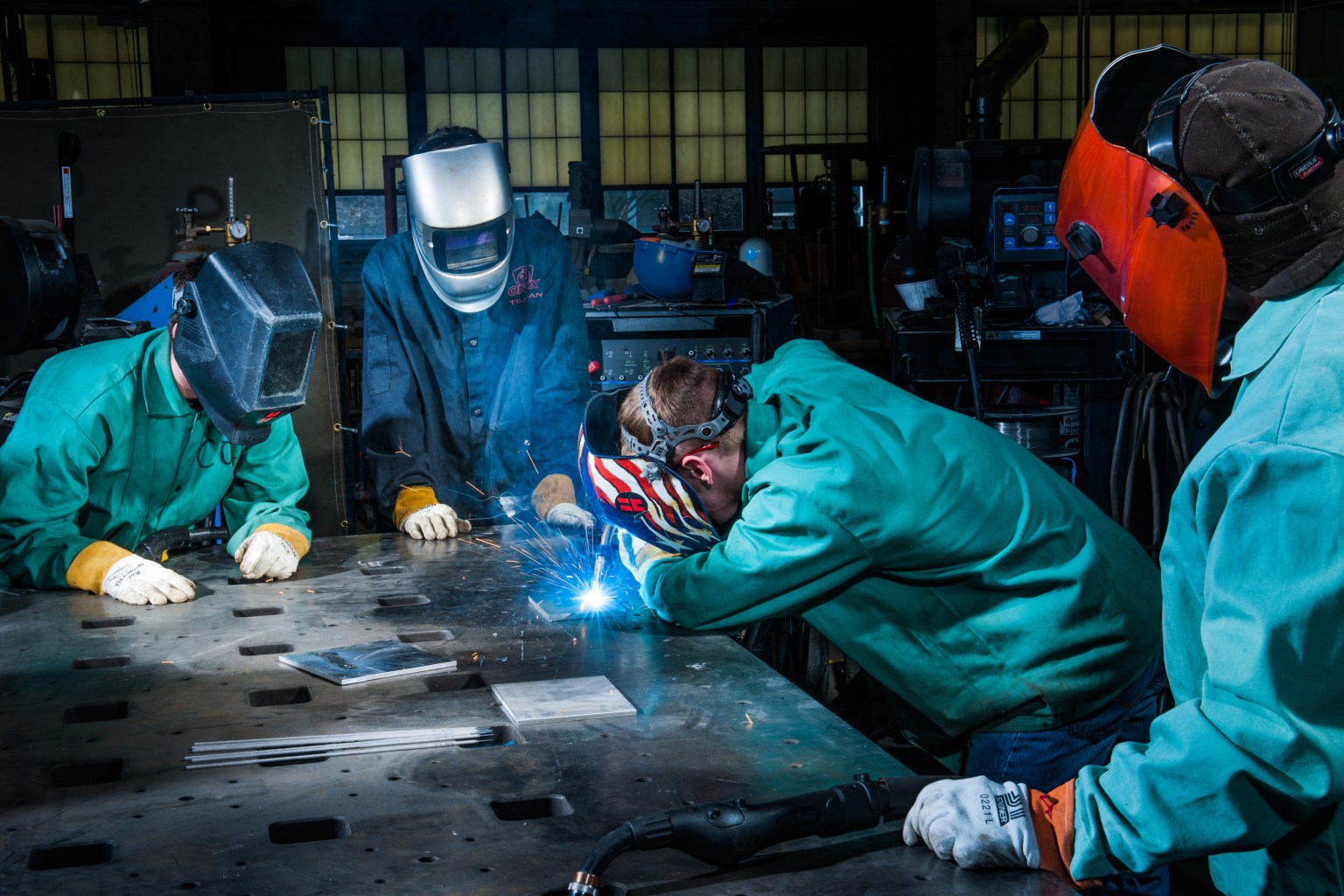
The requirements of this testing operation presented an additional challenge. The team needed to control a system that transfers propellants without using standard control equipment. Normally, NASA Stennis uses large industrial controllers to remotely operate equipment, but this project required compact equipment in a remote location. The NASA Data Acquisition System team provided the solution with a compact data acquisition and control system. The hardware is energy efficient and runs on lithium batteries and solar panels. The team modified existing redline software to create a custom control system.
During testing, operators use an on-screen diagram showing all valves and instruments, while the system collects test data and controls the cryogenic propellant transfer system.
Additionally, a crew from Eglin installed fiber optic lines for data transmission and three pressure sensor arrays, positioned 120 degrees apart, for the blast team from NASA’s Marshall Space Flight Center in Huntsville, Alabama, to plug in sensors and cables to capture data.
By December 2025, the team completed construction of the site and installed the test article.
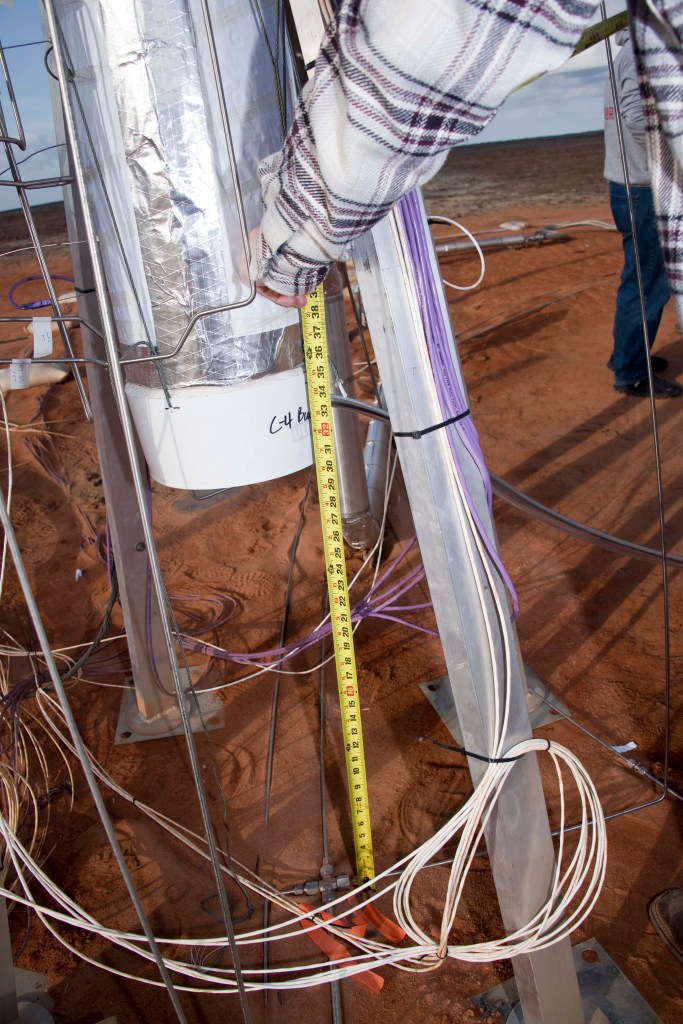
In January, two baseline tests using C-4, a powerful explosive with known blast characteristics, were conducted to establish a reference point for testing in February.
A successful cold shock test followed when crews flowed liquid nitrogen through the entire system to validate the cryogenic infrastructure.
Testing Underway
The team completed the first four tests of the series in February.
For these tests, the test articles were filled with liquid oxygen and liquefied natural gas, but not mixed, and C-4 was used to detonate the entire test article.
In subsequent tests, the cryogenics will be mixed, and instruments will measure the resulting explosion.
The team will scale up to 2,000-pound test articles in March with eight tests planned. These tests will examine two failure configurations. The first configuration is a transfer tube failure, which simulates a failure of the propellant line that runs from the top tank through the bottom tank. The second configuration is a common bulkhead failure, which simulates a failure of the shared wall between the two propellant tanks.
The largest test article, with 20,000 pounds of propellants, is planned for testing in June. This test will simulate a common bulkhead failure scenario.
Once complete, the test series will provide critical new data for methane-based propulsion systems. The findings are expected to help shape launch site planning, safety protocols, and safety requirements for years to come.