Miniature railway and model engineering is one of the most popular hobbies within the railway enthusiast community. It is enjoyed by multitudes of people, with millions more having fallen in love with the small creations as spectators and passengers, being pulled around beautiful track layouts behind spectacular little locomotives.

This was not always the case, however. As a hobby, it was once largely the preserve of engineers, apprentices in workshops, and those with means.
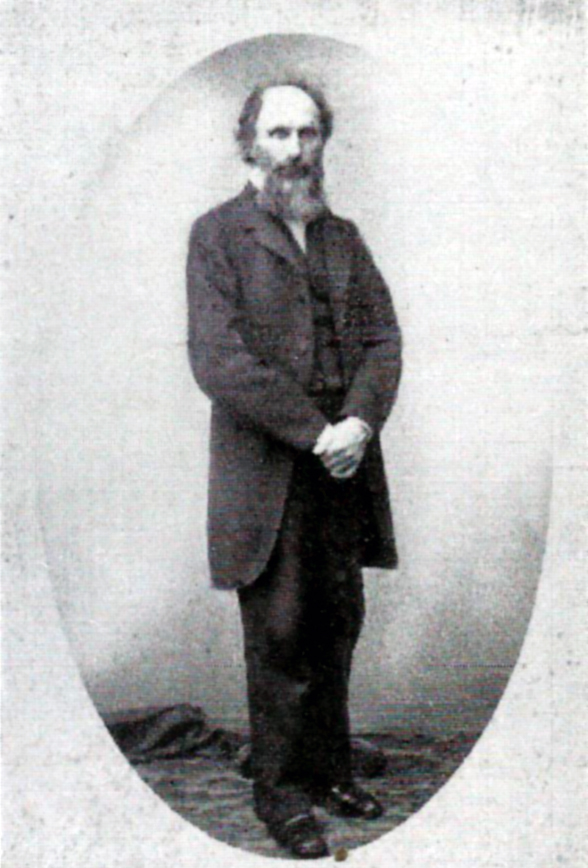
Born 27 September 1883, Lillian Lawrence (preferring the nickname, ‘Curly’) was a woman who would change the face of this hobby with her incredible pioneering mindset. A shy and anxious woman, living her life primarily through the pen, her deep desire to teach and share the joy of the things which delighted her led her to become a prolific writer. Her works opened miniature and model engineering to the masses.
Lillian’s Early Career in Rail
Like most people with a love of locomotives and dreams of being on the footplate, Lillian joined the railway as an engine cleaner, with the London, Brighton & South Coast (LBSC) Railway at the New Cross Locomotive Depot. She would go on to take LBSC as one of her monikers. In this role, Lillian would stay and progress to trainee fireman on the footplate before departing for better pay with the London Underground, and then onto tramways and busses after the Underground negatively impacted her health.
A Prolific Writer
Lillian began to appear in model engineering discourse by the early 1900s. In February of 1912, the editor of Model Engineer described an anonymous contributor called “Lylia”, who he labelled as “an enthusiastic amateur of the ‘make-as-much-as-you-can-yourself school for some years”. He went onto say she “built model locomotives from the simplest materials and with the simplest tools… [her] experiences are, therefore, worthy of every consideration by those whose model-making is not so extensive”.
‘Battle of the Boilers’
Possibly the most dramatic event in the history of model engineering, it was this event that established Lillian’s name and credentials within the field of engineering.
Beginning February 1922, Lillian began arguing against the prevailing practices in model engineering at the time, such as using methylated spirit to power miniature locomotives, which was advocated for by large established names in the field like Bassett-Lowke. Lillian was a firm advocate for coal, replicating the technology from full scale locomotives into miniature.

A consistent discourse played out through articles and letters in Model Engineer magazine, with Lillian arguing passionately for her position.
It came to a head in 1924 with a Model Engineer Exhibition contest to settle the matter. Henry Greenly of Bassett-Lowke entered ‘Challenger’—a 40lbs locomotive design capable of hauling 9 stones (126lbs). To compete against him, Lillian entered Ayesha—a little 18lbs locomotive.
Lillian’s point was made. Not only was it half the weight of its competition, but it could also haul an extra 3 stones, managing 168lbs.
This event gained her a life-long animosity with Henry Greenly, but the respect of both the engineering and modelling communities. Her mark as an authority on these matters had been made.
Living Through the Pen
Following her success in the Battle of the Boilers, she was invited to write a regular feature for Model Engineer (ME) with relatively free reign to explore her interests. The stipulation placed on her was only that she wrote like she did in the Battle of the Boilers—polite, but not shy of wit and personality.
In her time with ME, she would contribute thousands of articles, in addition to writing several books on the side.
Her writing was not only compelling and elegant, but rich with personality, personal anecdotes, and even occasional fictional stories she would write for holidays and special occasions. She focused her work on teaching the art of miniature engineering using only the tools her readers were already likely to possess.
Lillian also invited her readers to write to her at her personal address with their queries and challenges. This led her to hold long correspondences with many miniature and full-scale engineers around the world. Such was the respect she held, she was friends with several leading engineers of full-size locomotive design, supporting them with researching technical details in miniature scales. Famous names in her circle included Collett, Holcroft and Riddles. Lillian was even elected a member of the Institution of Locomotive Engineers.

Overcoming Adversity
Lillian’s story is one of industriousness, joy, and tragedy—illuminated by public writings and, thanks to the volume of correspondence she held, a large volume of personal letters. These provide uniquely clear insight into both her mindset, personal struggles, and self-identification.
First overcoming the dire poverty she was born into, Lillian had to fully self-teach herself engineering to pursue her passion. Through self-determination, she managed to learn both the principles behind steam design and how to fabricate components using only tools available to her, and which she could afford to acquire.
While publicly highly respected for her intricate understanding of engineering and ability to accessibly teach it, she lived in a time where her situation was challenging. Not only did being a woman in engineering hold difficulties, as a transgender person living at a time before the science of the sex-spectrum, gender-spectrum, and gender dysphoria were more fully understood and taught across society, most of her contemporaries struggled to comprehend she was actually a woman.

Why We Know She Was Transgender
Identifying individuals in the past who were transgender or held same-gender attraction is often a hard task. Due to the precautions people took to protect themselves and their loved ones, it is very rare to have an example like Lillian where we have their own words being explicit about their situation, allowing us to understand their identity beyond external observation.
For example, if all we had was references like the letter from Geoffrey Abbington below, we would not be able to extrapolate her own mind or sense of self—the reasons behind her choices:
Although only six at the time, I vividly remember my first meeting with this strange creature who wore a long overcoat of late Victorian style above ladies’ high heeled shoes. [Her] face was powdered, and [she] carried a handbag. [She] invited me to come and talk to Aunty Curly.
Lillian paints us a vivid picture of who she really was across both her public writing and personal letters. The flavour of her letters in later life is discernible almost irrespective of the selection researched. For example:
16 February 1954
Dear Geoff, Thanks for the letter and draft, but (hoping you won’t mind) I’ve revised same, first to cut out the “chez” business which I hate as much as being called “Maestro” or “model” engineer, and secondly to eliminate the masculine pronouns, which (thanks to nature) don’t apply any more. I meant to tell you some time ago, to address letters just to L.Lawrence, without any title. Most folks do now.
23 February 1954
Dear Geoff, Thanks for the note. Glad you tumble; I started life with a bonnet and pink ribbons, and my first name is Lillie. Nature does some funny things—nuff sed. If you want to make the readers of the News Sheet grin, just put under that screed, “GMC a la Curly—it’s catching!!
1959—after leaving ME due to differences with the Editor.
Thank you for the good wishes. If you write again, just address L. Lawrence without any head or tail lamp. Had I run the full course, I was going to give you all a shock in my goodby Lobby Chat, with a picture of myself signed with my full name.
1960—typed letter with Bob Cherry.
When I read your remark about the “grand old man”, and looked down at my skirt, nylons, and size 5 ½ Delta shoes, it seemed so ludicrous that I couldn’t resist the temptation to put you wise. There has only been one LBSC and that is the old auntie who is right now operating this clicking-toad. The story is too long for a letter, but you never should believe what you see in photos. I gave up 20 odd years ago when my throat muscles hardened, and I could no longer put on a deep voice.
You now know the reason why I never have any strangers call here. If anybody asks for “Mr. Lawrence” on the telephone, I just say “not here”, and if they ask when he will be, I reply “can’t say”. At one time I sometimes visited friends (I have very few left now) but it usually finished up with a “lobby chat” with their wives and daughters about clothes, kids, and the usual feminine gossip, and to avoid offending the boys I dropped out. I’ve now reached that stage of life when I just want to take it easy. As LBSC it was a constant fight against jealousy, snobbery and prejudice—only myself knows what I’ve had to put up with. It was a relief to be my natural self now and again.
George Murray and his pals, Al O’Niel and several more know the real Curly, I don’t know if anybody in the West does, but I was keeping it quiet generally until I quit for good.
1962—a follow up letter to the same Bob Cherry.
Dear Bob, I didn’t kid you, but kidded the world, and apparently did it as well as the army doctor [James Barry], the Lancashire works manager, and the French shoemaker who all went through life unsuspected until death shot the works.
In her 80s’ Lillian made enquiries about having gender affirming surgery after hearing the case of Roberta Cowell (an important figure in women’s history, as the first ever woman to be a fighter pilot) becoming the first person to have this surgery. This is highlighted in this letter to the Freemasons asking if her membership of the organisation would be jeopardised should she follow Roberta:
Dear Curly,
With further reference to your letter dated 20th March; I gave myself the pleasure of an interview with the Assistant Secretary of the Grand Lodge of England, with whom I discussed the hypothetical case of ‘Bob’ [sic]Cowell.
At the same time I put out a feeler as to what might happen to any other individual who might find himself inadvertently included in the same state of circumstances.
In her public writing, Lillian frequently recounts moments of her life where she highlights moments of gender euphoria or dysphoria towards her later years. One instance she recounted was of visiting the London Underground as a child. While beside one of the cabs, a driver, “seeing a small girl wistfully looking” asked her in. She described his expression when ‘missy’, a voracious reader at the local library, asked some searching technical questions, as something that “would have made his fortune in Hollywood”.
These highs and lows include one of the saddest parts of Lillian’s life. In December 1966 she fell ill with pneumonia, and a doctor was called who had Curly taken to Mayday hospital in Croydon. Lillian insisted that they respect her as a woman and that she be taken to the women’s ward. Unfortunately, the hospital staff’s limited understanding of sex and gender meant they did not understand and refused her request. This event—being stripped of her identity, who she was and had been her whole life, while at her lowest and unable to walk away—had a profound effect on her. She checked herself out of the hospital as soon as she was fit enough to do so.
As a result of this treatment, Lillian was unable to freely access healthcare in her later years as her health declined. She passed away on the 5 November 1967.
Legacy
Lillian (Curly) Lawrence was an extraordinary individual. Through her works she lowered the entry bar to the hobby she loved for millions, making it accessible.
She influenced full scale locomotive designs, and by the time she was in her 80s, she was the ‘Honorary President’ of railway modelling clubs from Argentina to New Zealand.

Lillian overcame an extraordinary amount of adversity. Despite navigating a society that didn’t understand her she, supported primarily by her loving wife and a close circle of friends, managed to change the face of model engineering.
Without her, it is doubtful we would have a miniature railway here in our own South Yard at the National Railway Museum in York, that has been, and will continue to be, enjoyed by thousands of happy passengers.
All images courtesy of Anthony Coulls.
The post The woman who gave us miniature railway models appeared first on National Railway Museum blog.