4 min read
Preparations for Next Moonwalk Simulations Underway (and Underwater)
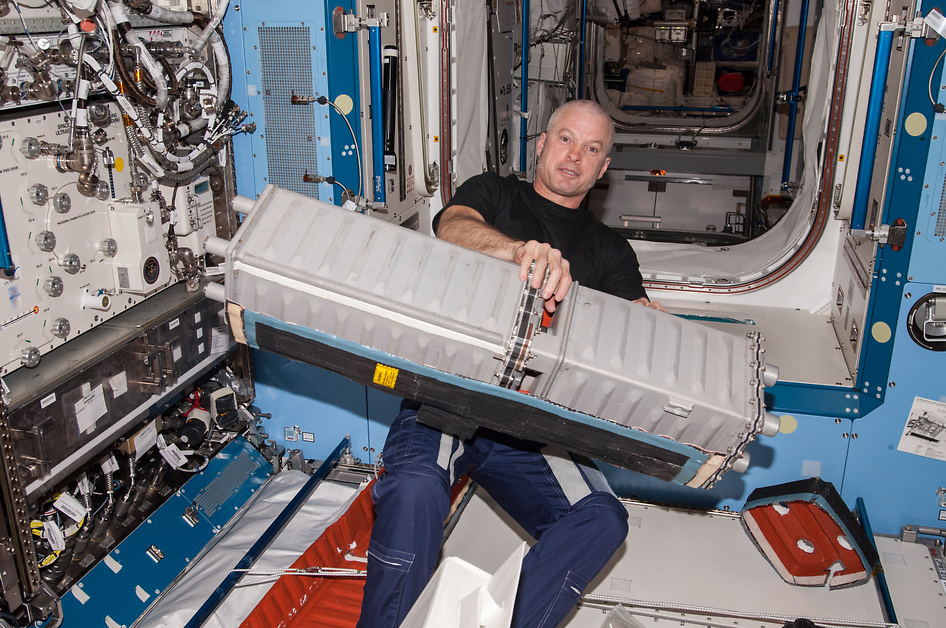
The JSC toxicologists establish guidelines for safe and acceptable levels of individual chemical contaminants in spacecraft air (SMACs) and drinking water (SWEGs) in collaboration with the National Research Council’s Committee on Toxicology (NRC COT) and through peer-reviewed publication. The framework for establishing these levels is documented for SMACs and SWEGs, and recent refinements to the Methods reflect current risk assessment practices.
In addition to official SMACs used for the evaluation of spacecraft air, JSC toxicologists set interim 7-day SMAC values that are listed in NASA Marshall Space Flight Center’s Materials and Processes Technical Information System (“MAPTIS”), which is used to evaluate materials and hardware off-gassing data.
Spacecraft Maximum Allowable Concentrations for Selected Airborne Contaminants
A table listing the official NASA SMAC values is published in JSC 20584 (PDF, 1MB) (Last revised – June 2024). References for the published values are provided below:
- NRC (1994) Spacecraft Maximum Allowable Concentrations for Selected Airborne Contaminants, Volume 1, National Academy Press, Washington, D.C.
- NRC (1996) Spacecraft Maximum Allowable Concentrations for Selected Airborne Contaminants, Volume 2, National Academy Press, Washington, D.C.
- NRC (1996) Spacecraft Maximum Allowable Concentrations for Selected Airborne Contaminants, Volume 3, National Academy Press, Washington, D.C.
- NRC (2000) Spacecraft Maximum Allowable Concentrations for Selected Airborne Contaminants, Volume 4, National Academy Press, Washington, D.C.
- NRC (2008) Spacecraft Maximum Allowable Concentrations for Selected Airborne Contaminants, Volume 5, National Academy Press, Washington, D.C.
- Meyers VE, Garcia HD, James JT. Safe Human Exposure Limits for Airborne Linear Siloxanes during Spaceflight. Inhalation Toxicology 2013; 25(13):735-46.
- Romoser AA, Ryder VE, McCoy JT. Spacecraft Maximum Allowable Concentrations for Manganese Compounds in Mars Dust. Aerosp Med Hum Perform. 2019; 90(8):709-719.
- Scully RR, Garcia H, McCoy JT, Ryder VE. Revisions to Limits for Methanol in the Air of Spacecraft. Aerosp Med Hum Perform. 2019; 90(9):807-812.
- Garcia, H.D, Acceptable Limits for n-Hexane in Spacecraft Atmospheres. Aerospace Medicine and Human Performance. 2021;92(12);956-961.
- Ryder, V.E. and Williams, E.S. Revisions to Limits for Propylene Glycol in Spacecraft Air. Aerospace Medicine and Human Performance. 2022; 93(5);467-469.
- Lam CW, Ryder VE. Spacecraft Maximum Allowable Concentrations for Hydrogen Fluoride. Aerospace Medicine and Human Performance. 2022; 93(10)746-748.
- Williams ES, Ryder VE. Spaceflight Maximum Allowable Concentrations for Ethyl Acetate. Aerospace Medicine and Human Performance. 2023; 94(1):25–33.
- Ryder VE and Williams ES. Revisions to Acute/Off-Nominal Limits for Benzene in Spacecraft Air. Aerospace Medicine and Human Performance. 2023; 94(7):544–545.
- Wimberly, AA and Ryder VE. Exposure Limits for Hydrogen Sulfide in Spaceflight. NASA/TM-20240000101, NASA Johnson Space Center, 2024.
- Tapia CM, Langford SD, Ryder VE. Revisions to Limits for Toluene in Spacecraft Air. Aerosp Med Hum Perform. 2024; 95(7):399-402.
- Ryder VE. Revisions to limits for 2-propanol in spacecraft air. Aerosp Med Hum Perform. 2025; 96(4):360–362.
- Williams ES, Tapia CM, Ryder V. Revisions to spacecraft maximum allowable concentrations for acetaldehyde. Aerosp Med Hum Perform. 2025; 96(11):1019–1023.
- Ryder VE. Revisions to Spacecraft Maximum Allowable Concentrations for 2-Butanone. Aerosp Med Hum Perform. 2025 Dec;96(12):1094-1097.
Spacecraft Water Exposure Guidelines for Selected Waterborne Contaminants
A table listing the official NASA SWEG values is published in JSC 63414 Rev A (PDF, 426KB) (Last revised – November 2023). References for the published values are provided below:
- NRC (2004) Spacecraft Water Exposure Guidelines for Selected Contaminants, Volume 1, National Academy Press, Washington, D.C.
- NRC (2006) Spacecraft Water Exposure Guidelines for Selected Contaminants, Volume 2, National Academy Press, Washington, D.C.
- NRC (2008) Spacecraft Water Exposure Guidelines for Selected Contaminants, Volume 3, National Academy Press, Washington, D.C.
- Ramanathan R, James JT, McCoy T. (2012) Acceptable levels for ingestion of dimethylsilanediol in water on the International Space Station. Aviat Space Environ Med. 83(6):598-603.
- Garcia, HD, Tsuji, JS, James, JT. (2014) Establishment of exposure guidelines for lead in spacecraft drinking water. Aviat Space Environ Med. 85:715-20.