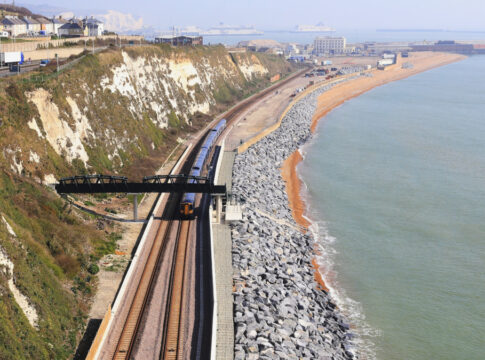
Network Rail and supplier WSP are working together to create a framework to improve the railway’s readiness for – and resistance to – potential floods and coastal erosion.
Climate change has led to an increase in disruption from extreme weather over the last five years, with the worst year for flooding – 2023/24 – seeing more than 1,200 incidents recorded on the railway. Last year also saw significant disruption from floods thanks to Storm Bert in particular.
That trend is only expected to increase.
Network Rail’s industry weather response director Lisa Angus said: “When our railway was built between 200 and 150 years ago, engineers chose the most level routes they could, usually along rivers or the beach, cut into hillsides or raised on embankments made of whatever material was nearby.
“This means our railway is often the lowest part of the landscape, providing an accidental drainage channel, or sits just above water level. In addition, railway embankments were never designed to be flood defences, and are not classed as such, but they often still act that way for communities.
“Climate change means those weaknesses are becoming a greater problem and we need a new approach to tackle flooding, not on our own but as part of the country’s critical infrastructure.”
The nature of flood response in the railway industry is currently split between different regions and relies heavily on local knowledge of high-risk areas. In addition, different train operators have different rules about how they run through flood waters, which means the impact of a flood in one part of the country might be very different to another.
The Flood and Coastal Risk Management Framework being created with partners WSP will bring a level of standardisation and greater knowledge of potential problems across the network.
Dr Kat Ibbotson, strategic advisory director at WSP, said: “We’re proud to be working with Network Rail to improve the railway’s resilience to climate change. The partnership will enable a more consistent, data-driven approach to risk management across the network. By helping Network Rail shift from reactive responses to proactive flood and coastal erosion risk management, we’re not only safeguarding vital transport assets but, also shaping a transformative blueprint for long-term climate adaptation and national resilience.”
Among the aspects to be tackled by the framework are:
- Improving understanding of our vulnerability to flood and coastal risks now and in the future.
- Improving the effectiveness of processes, forecasting and decision-making tools.
- Agreeing the organisations’ role in wider emergency response and risk management.
Along with the WSP framework, Network Rail partners with MetDesk Ltd who provide specialist forecasting for the railway and has recently signed an MOU with the Met Office to enable closer sharing of research data and probabilistic forecasting.
Image credit: Network Rail