In December 2023, a freight train derailed along the Malmbanan (also known as Iron Ore Line) in Sweden. Swedish authorities have now concluded that the accident was caused by a cracked wheel, excluding previous hypotheses of sabotage or climate change.
“The direct cause of the derailment was a wheel moving along its axle”, the Swedish Accident Investigation Authority (SHK) stated in its final report. The wheel moved due to a fracture resulting from a fatigue crack on its flange, “which led to the wheel losing its press fit on the axle”.
Two derailments in short succession
The derailment occurred on 17 December 2023. It started in Tornehamn, north of Kiruna, and continued for 15 kilometres to Vassijaure, causing significant damage to the infrastructure but, luckily, no injuries. The line had to remain closed until 20 February 2024. Less than a week after the reopening, another train derailed and the line was closed until 6 March 2024.
The short time between the two derailments raised suspicions of sabortage. However, for the second derailment, SHK identified strong winds, temperature difference between the ground and air, and a hole in a snow gallery as the main causes.
In both instances, the train was operated on behalf of LKAB, Europe’s largest mining company and the main user of the Iron Ore Line. The continuous problems along this line had a massive impact on the company’s profitability and production capacity. The situation is expected to improve with the upgrade projects launched by the Swedish government this month, which will also include the rollout of ERTMS by 2029.
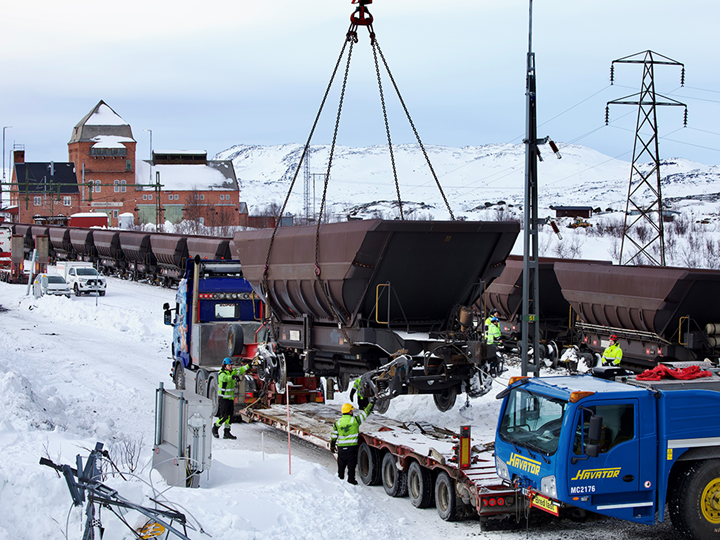
The wheel problem
The fractured wheel that jumpstarted the derailment “met applicable requirements and standards”, according to SHK. “The wheel damage was likely caused by a combination of unfavourable and interacting factors that had not previously been assessed in relation to the risks of fatigue cracks in the flange and brittle fracture into the hub”, the final report said. In other words, it was not possible to detect the crack in the wheel and prevent the derailment.
This story sounds awfully similar to the derailment that took place in August 2023 in the Gotthard Base Tunnel, in Switzerland. This accident was caused by an issue with the newer brake pads made in composite and their scarce ability to dissipate heat, which caused a wheel to crack and the train to consequently derail. In this case as well, the conclusion was that detecting the problem in advance would have been impossible with the current means.
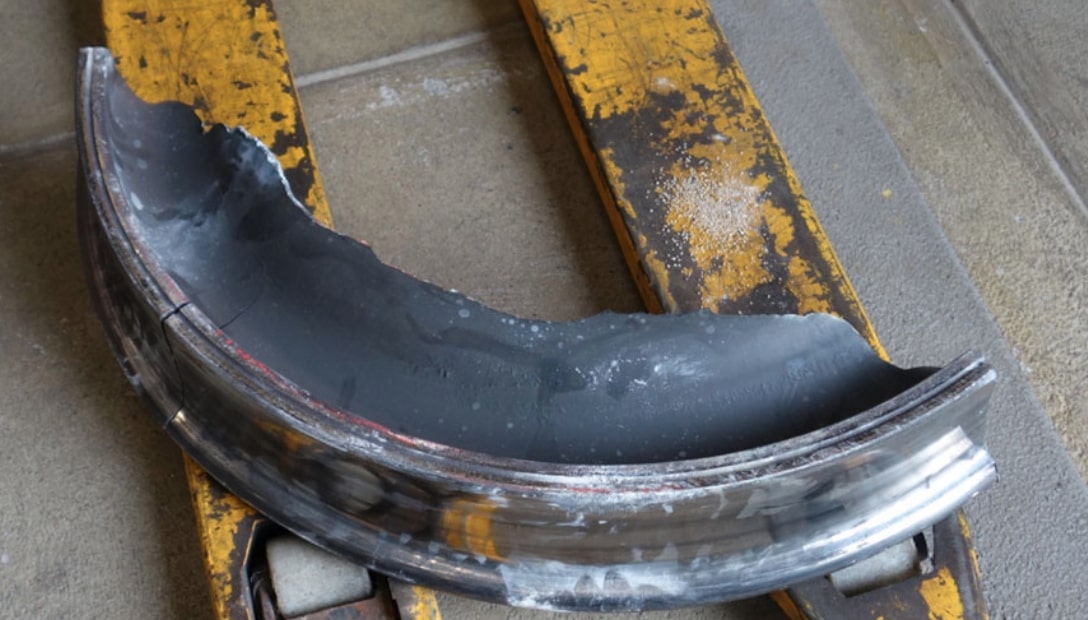
Despite being two different problems, the derailments in Sweden and Switzerland exposed the difficulties in detecting faults in wheels of freight trains. If the Swedish SHK said it “refrains from issuing any safety recommendations”, the Swiss Transportation Safety Investigation Board (SUST) took another route. In its report, SUST claimed that all wheels equipped with brake pads made of composite materials should be checked and maintenance practices should drastically change.